Video Analysis

The video discusses a global bond sell-off with UK 30-year yields reaching 6% and US 10-year yields hitting their highest since 2002, driven by persistent inflation and increased spending on AI. While one expert suggests current bond yields are returning to normal and present a buying opportunity, concerns about financial market shocks from the AI boom and geopolitical tensions are highlighted.
- UK 30-year gilt yield reached 6% for the first time since 1998; US 10-year Treasury yield hit its highest since 2002.
- Global bonds experienced their worst quarter since 2024, fueled by higher oil prices, AI spending, and sticky inflation.
- Jim Bianco, President & Macro Strategist at Bianco Research, turned bullish on US Treasuries, arguing current yields are returning to historically normal levels.
- Bank of England Governor Andrew Bailey warned of potential financial market shocks from the AI boom, urging preparedness.
- Netflix's co-CEO Ted Sarandos discussed the effectiveness of live events for sign-ups, retention, and advertising, despite not contributing significantly to overall watching hours.
The discussion focuses on rising energy prices, particularly diesel, and potential government interventions. The U.S. White House is reportedly pressuring Germany and France to release emergency diesel stockpiles, while also considering a domestic diesel export ban. Simultaneously, Chinese refiners have reportedly suspended oil product exports, adding complexity to global supply dynamics.
- U.S. reportedly tells France and Germany to release emergency diesel stockpiles or face a U.S. export ban.
- Chinese refiners have reportedly suspended exports of oil products until further notice.
- U.S. national average diesel prices are $6.39/gallon today, significantly up from $3.71/gallon a year ago, highlighting inflationary pressures.
The Fox Business panel discusses the White House's options to combat surging diesel prices, including banning exports, requesting European reserve releases, and allowing untaxed red-dyed diesel. Panelists express skepticism about these short-term fixes, warning of potential market distortions, exacerbating inflation, and increasing recession risks.
- White House is weighing options to lower diesel prices, such as banning exports, asking Europe to release diesel from reserves, and allowing untaxed red-dyed diesel on public roads.
- Diesel prices are currently 73% higher than a year ago, significantly impacting industrial and agricultural sectors.
- Panelists are concerned that proposed short-term solutions could backfire, raise other fuel prices, or disrupt markets, advocating for long-term resolutions to underlying economic issues like inflation and supply shocks.

The segment discusses President Trump's call for Jerome Powell's resignation due to massive cost overruns on the Federal Reserve's headquarters renovation. The conversation expands to criticize current economic policies, particularly 'cumulative inflation' under the Biden administration, contrasting it with the Trump era and urging the GOP to highlight these economic failures.
- President Trump demands Jerome Powell's resignation over the Federal Reserve's headquarters renovation, citing 'deficiencies' and 'hundreds of millions of dollars over budget'.
- Marc Thiessen attributes 82% of the cumulative 27.2% consumer price increase since January 2021 to 'Bidenflation', criticizing Democratic policies for driving up costs like gasoline.
- The hosts advocate for the GOP to actively counter the media narrative by emphasizing the economic failures of the current administration, including high inflation and rising gas prices.

Financial experts debate the U.S. economic outlook, with differing views on inflation and Fed policy. While some see disinflationary trends and strong growth, others warn of persistent inflation and the need for further Fed tightening, highlighting the impact of technology, fiscal policy, and monetary policy on market conditions.
- Larry Kudlow argues for disinflation, citing low core CPI/PCE and strong productivity, suggesting the Fed should pause rate hikes.
- Joe Lavorgna predicts higher inflation and further Fed rate hikes due to a booming economy, accelerating M2, and rising commodity/import prices.
- Mohamed El-Erian expresses concern that current monetary policy, rather than fiscal containment, risks sacrificing economic growth to combat inflation.
- Kudlow's final advice is to buy stocks, not bonds, indicating a bullish outlook for equities despite differing views on inflation.

Former Dallas Fed President Robert Kaplan suggests the Fed should be deliberate and likely skip an October rate hike, preferring to wait until December. He notes the economy's strength is concentrated in specific sectors, while interest-sensitive areas are sluggish. The bond market's recent yield surge reflects uncertainty about Fed communication and a geopolitical risk premium, particularly concerning elevated diesel prices.
- Kaplan believes the bar is high for an October rate hike, advocating for a more deliberate approach and waiting until December.
- He highlights that economic strength is driven by AI, infrastructure, and defense, while interest-sensitive sectors and low-to-moderate income consumers are sluggish.
- The bond market's rise in yields is attributed to uncertainty regarding Fed communication and a risk premium from geopolitical events impacting diesel prices.
President Trump announced a $54 billion Alaska LNG project, part of a larger $200 billion South Korean investment in U.S. energy infrastructure. This initiative aims to open new natural gas routes to Asian markets and includes investments in natural gas projects in Texas and nuclear plants across four other states. The administration is also considering a diesel export ban to lower prices, while noting overall positive economic trends.
- Trump announced a $54B Alaska LNG project, part of a $200B South Korean investment in US energy infrastructure.
- The Alaska LNG project involves an 807-mile pipeline to deliver liquefied natural gas to Asian markets, enhancing energy security for allies.
- The broader investment package includes natural gas projects in Texas and eight new nuclear plants in Kentucky, Tennessee, South Carolina, and Ohio.
- President Trump is considering a diesel export ban to lower prices, acknowledging potential impacts on other fuel prices.
- The administration highlights positive economic conditions with falling taxes, inflation, and regulations, alongside record job growth.
The video discusses Bitcoin's recent rally and the outlook for the broader crypto market, considering historical seasonality, macroeconomic factors like Fed rate hikes and US debt, and altcoin performance. While Q4 historically favors crypto, current trends suggest caution on altcoins and a potential return of leadership to Bitcoin, alongside regulatory uncertainties.
- September is historically the weakest month for crypto, but Q4 tends to be strong.
- Fed rate hikes and a stronger dollar are typically negative for non-dollar assets like crypto, but the 'debasement trade' narrative (due to US debt) could provide tailwinds.
- Recent altcoin outperformance against Bitcoin is noted, but declining relative momentum and stagnant on-chain activity suggest a tactical shift back to Bitcoin's leadership.

Clough Capital's Vince Lorusso believes the AI trade is evolving beyond just GPU plays, becoming more nuanced. He advises focusing on physical constraints like compute, connectivity, and power, as well as cybersecurity. While some software companies face disintermediation risk, others are poised for growth within this significant investment cycle. Micron's upcoming earnings are crucial for insights into the memory market.
- The AI trade is evolving, shifting from a broad GPU focus to more specific investments in infrastructure bottlenecks.
- Companies with seat-based licensing models like Adobe and Intuit face disintermediation risk from generative AI capabilities.
- Cybersecurity firms such as Crowdstrike and Palo Alto Networks are attractive long-term investments due to increasing endpoints and identities in the AI ecosystem.
- Micron's earnings report is highly important for understanding the cyclical memory market and demand for high-bandwidth memory, which is critical for AI development.
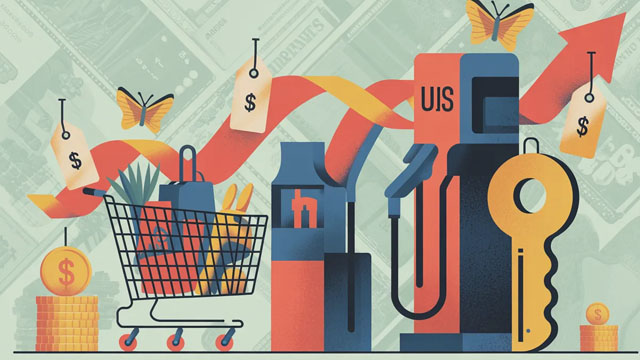
Financial market analyst Dale Smothers remains bullish on equities, projecting the S&P 500 to reach 8,000 or higher by year-end 2026. He attributes this optimism to strong earnings growth and robust AI demand, which he believes will overcome inflation and potential Fed rate hikes. He emphasizes the need for market broadening beyond tech and healthcare.
- The market reacted positively to a cooler PCE print, but inflation, largely driven by oil, remains a significant headwind.
- Continued double-digit earnings growth and AI demand, build-out, and margin expansion are expected to drive the market higher.
- Smothers sets an S&P 500 price target of 8,000+ by the end of 2026, contingent on broadening market participation beyond tech and healthcare into financials and industrials.
- Micron's earnings report is highlighted as a key indicator for the state of AI demand, memory demand, and infrastructure buildout into 2027.

The discussion highlights a significant increase in capital raised by AI-related companies, including hyperscalers, data centers, and neo-clouds, through debt and equity. However, the analyst points out 'red flags' such as widening credit spreads and rising credit default swap spreads, indicating increased risk and cost of capital. Companies like OpenAI are raising substantial funds due to high operational costs and lack of profitability.
- Capital raised by AI-related companies surged from $172 billion in 2025 to $346 billion year-to-date in 2026, according to Barclays.
- Credit spreads have widened materially, and credit default swap spreads have risen sharply for hyperscalers, signaling increased risk.
- OpenAI is reportedly seeking to raise $30 billion (or more) as it needs significant capital for compute and data centers, despite not being profitable.
- Alphabet issued a 100-year bond, and Meta is raising billions, reflecting a broader trend of tech companies leveraging debt.
The video discusses the deepening diplomatic stalemate between the US and Iran regarding nuclear issues and the Strait of Hormuz. Despite mediation efforts, both sides remain far apart on their priorities, leading to a low likelihood of a deal and a growing risk of escalating hostilities in the region.
- US and Iran are moving 'farther apart' in negotiations over nuclear issues and the Strait of Hormuz.
- Iran prioritizes discussing the Strait of Hormuz first, while the US insists on the nuclear issue.
- Oil exports returning to near pre-war levels may reduce US leverage for concessions from Iran.
- A deal without major concessions from Iran is deemed unfeasible, with conditions being 'very different now'.
- There is a 'growing risk of miscalculation' and escalation of hostilities between the two sides.
Ashok Bhundia, Deputy Chief Economist at the Institute of International Finance, suggests that geopolitical risks from the Middle East, specifically the Strait of Hormuz, are a more pressing concern than US-China tensions. He warns of dwindling oil and diesel inventories, elevated crack spreads leading to cost-push inflation, and the potential for sudden, non-linear market events.
- US-China strategic competition is currently less of a concern compared to Middle East risks.
- Growing worry over the stalemate in the Strait of Hormuz and its impact on global oil and diesel inventories.
- Elevated crack spreads are contributing to cost-push inflation globally.
- Risk of non-linear market events due to inventory depletion in oil and oil products.
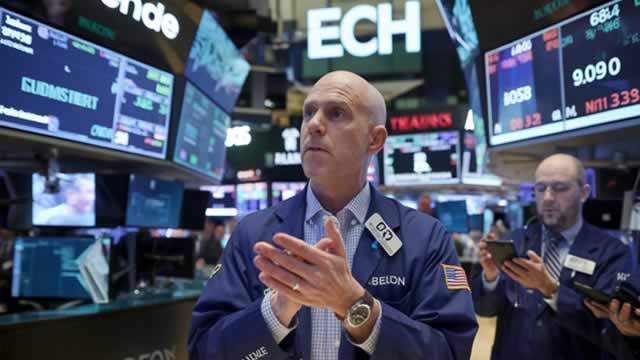
Bill Ackman discusses the current IPO market, noting its narrow focus on big names like Anthropic and SpaceX. While he acknowledges Anthropic as an 'amazing' business story, he expresses caution about investing in fast-growing, capital-intensive companies, preferring predictable businesses like Microsoft or Visa. He also shares his nuanced view on AI risks, being more concerned about rogue actors than established frontier model companies.
- Market is 'very narrowly focused' on big IPOs like Anthropic and SpaceX, and supporting 'picks and shovels' companies.
- Ackman finds Anthropic an 'amazing' company, potentially 'the greatest business story I've ever seen,' but would not invest due to its capital-intensive, fast-growing nature and unpredictable long-term outlook.
- He prefers 'boring' and predictable businesses such as Microsoft, S&P Global, Visa, and Mastercard for long-term investment.
- Ackman is less concerned about established AI companies like Anthropic or Open AI causing harm, and more concerned about 'bad actors' utilizing open-source AI models.

The discussion highlights a bifurcated market where tech and large-cap indices show resilience, but broader market breadth, particularly small caps, is deteriorating due to rising yields. The analyst notes that 'healing needs to be done' in rate-sensitive sectors, and anticipates potential volatility in early October, despite a cooler PCE print.
- Market breadth, including the S&P equal weight and Russell 2000, is showing significant weakness, with the Russell 2000 nearing its 200-day simple moving average.
- Money flow is seeking relative safety in tech and large-cap stocks, leading to new highs in the Nasdaq composite, while interest-rate-sensitive sectors face negative revisions.
- Despite a cooler PCE print, 10-year and 30-year yields remain buoyant and at multi-year highs, creating headwinds for the broader market.
- Volatility is expected in early October due to quarter-end rebalancing and historical trends, with Q3 earnings from big banks potentially influencing market positioning.
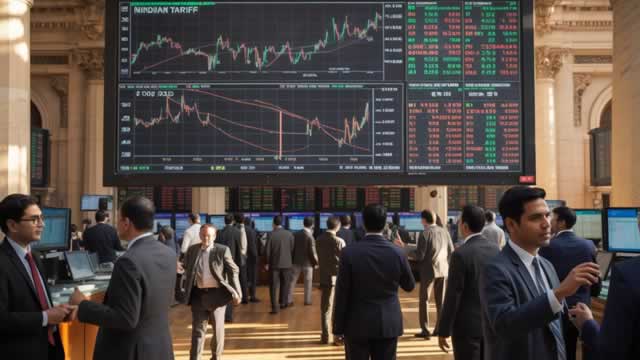
The video analyzes recent economic data, highlighting that August Core PCE inflation came in lighter than expected, which significantly reduced the probability of an October interest rate hike. Additionally, private payrolls grew more than anticipated in September, and second-quarter GDP was revised upward, signaling a resilient economy and positive market sentiment.
- August Core PCE inflation (month-over-month and year-over-year) was lighter than expected, reducing the likelihood of a Fed rate hike in October to 37.1%.
- ADP private payrolls grew by 90,000 in September, exceeding estimates and showing broad gains across various company sizes and industries, despite some losses in financial and professional services.
- Second-quarter GDP was revised upward to 2.2%, and personal consumption expenditures also saw an upward revision, indicating continued economic resilience.
- Crude oil prices are up, but yields are lower, with Middle East oil flows reported at 98% of pre-Iran war levels, raising questions about future price trends.
U.S. officials and business leaders are urging Europe to address its economic challenges, dubbed 'Eurosclerosis,' and strengthen its economy and defense. JPMorgan Chase CEO Jamie Dimon proposes a 'big, beautiful economic and free-trade agreement' between the U.S. and Europe, contingent on Europe's reforms. The discussion also highlights European automakers' struggles against Chinese competition and the complexities of achieving seamless trade.
- NEC Director Kevin Hassett warns 'Eurosclerosis' (long-term stagflation in Europe) is a global threat, emphasizing the U.S. interest in a strong Europe.
- JPMorgan Chase CEO Jamie Dimon advocates for a comprehensive U.S.-Europe economic and free-trade deal, requiring Europe to reboot its economy and boost defense.
- Ford CEO Jim Farley notes European automakers are losing significant market share to Chinese competitors, suggesting the U.S. should learn from Europe's 'mistakes'.
Ken Fisher, Executive Chairman of Fisher Investments, expresses a bullish outlook on the U.S. economy, stating it's in an 'acceleration phase' with strong GDP growth. He dismisses inflation concerns, attributing current price increases to past money supply expansion rather than current growth. Fisher also highlights the positive historical performance of the stock market in the nine months following midterm elections.
- U.S. economy is in an 'acceleration phase' with Q3 GDP estimates around 3.5-5%, indicating strong growth.
- Inflation is not a concern when excluding energy prices, and current rates are not historically high.
- The period following midterm elections (starting this quarter) has historically shown strong stock market performance, with 92% positive returns and 19% average gains over 100 years.

China's securities regulator is implementing stricter requirements for humanoid robot IPOs, following a significant drop in Unitree's stock price post-listing. These new 'window guidance' criteria aim to ensure companies have sustainable revenue, a path to profitability, and core technological capabilities, potentially slowing down listings in this previously hot sector.
- Regulators are considering 'window guidance' requiring sustainable revenue and commercial orders for humanoid robot IPOs.
- Companies must show narrowing losses with a potential three-year forecast.
- Applicants need to possess core technology, such as a robotic brain or hands.

President Trump met with top tech CEOs, including those from Nvidia, Meta, Palantir, and Google, to discuss AI. He advocated for 'tremendous self-regulation' and 'unfettered' growth for AI, emphasizing a hands-off approach from the government. Separately, a Senate bill concerning AI data centers and local electricity bills faces an uphill battle for passage.
- President Trump expressed a desire for 'tremendous self-regulation' in AI, opposing government intervention to stifle tech growth.
- CEOs from Meta, Nvidia, Palantir, Google, Anthropic, Tesla (Elon Musk), and Nvidia (Jensen Huang) were in attendance at the White House meeting.
- A Senate vote is scheduled for Wednesday on the 'Ratepayer Protection Act,' a bill aimed at pushing local utilities to consider data centers in rate-making, but it faces strong opposition and is unlikely to pass.