Video Analysis

Kelly Ann Shaw characterizes the Canada-US trade tensions as a 'trade row' rather than a 'full-blown trade war', noting that less than 5% of bilateral trade is affected. She emphasizes the political messaging and symbolism behind Canada's retaliatory tariffs, particularly on dairy, suggesting the economic impact is muted. Shaw believes a resolution will likely involve Canada complying with USMCA dairy commitments in exchange for tariff relief.
- The current situation is a 'trade row', not a 'full-blown trade war', with less than 5% of US-Canada trade impacted.
- Most trade between the two countries continues to flow duty-free, and the economic impact of the tariffs is 'relatively muted'.
- The tariffs are largely driven by political messaging and symbolism, with Canada seeking to appear tough, but unlikely to set a precedent for other countries.
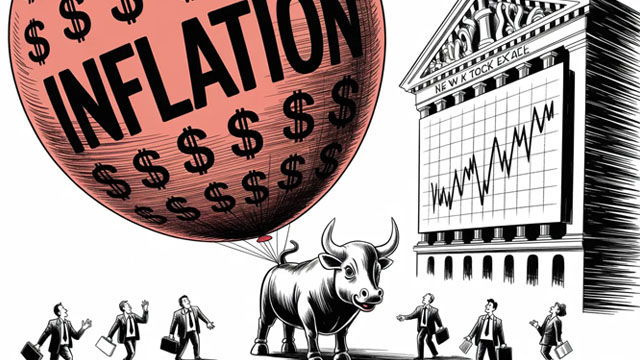
Global markets are facing significant headwinds as rising oil prices fuel inflation fears, trade tensions escalate between the US and Canada, and geopolitical risks in the Middle East persist. Central banks' monetary policy decisions and upcoming inflation data are key concerns for investors, leading to broad market caution.
- Brent crude inches closer to $100/barrel due to supply concerns and Middle East tensions, fueling inflation fears.
- Canada imposes retaliatory tariffs up to 50% on US goods, while President Trump threatens to ban Bombardier jets, escalating trade disputes.
- Japanese Yen strengthens to a six-month high, impacting Japanese exporters like Toyota, while European equities show weakness.
- Novartis faces its third clinical trial setback in a week, causing its shares and those of other biotech companies to slide.
- UK 30-year gilt yields rise to levels not seen since 1998, reflecting concerns over government deficits and energy-driven inflation.

This week's financial markets are bracing for key inflation reports, PPI and CPI, which will significantly influence the Federal Reserve's upcoming decision. While headline CPI might remain stable, underlying components and methodological changes in PCE calculations introduce uncertainty, requiring deeper analysis beyond initial figures.
- PPI and CPI data for August are due this week, reflecting energy price increases and potentially impacting the Fed's decision.
- Forecasts suggest PPI Headline YoY and PPI Core YoY will rise, while CPI Headline YoY is expected to be unchanged and CPI Core YoY to slightly decrease.
- Federal Reserve Governor Chris Waller noted that nonmarket services prices in the PCE report are 'imputed and not actual price changes', indicating a need for deeper scrutiny of inflation drivers.
- The Bureau of Economic Analysis is changing its calculation methods for some PCE components (e.g., portfolio management, legal services) for September, adding further uncertainty to future inflation readings.

Earl Davis discusses the upcoming US CPI report and its implications for Fed policy and bond markets. He suggests a higher-than-expected CPI gives the Fed cover for rate hikes, while a weaker number could trigger short covering. He also highlights the potential for significant selling pressure from mortgage convexity hedgers at higher mortgage rates, which could lead to a 'violent sell-off' in long-duration bonds, creating a buying opportunity for BMO.
- A higher-than-expected CPI report provides the Fed with 'cover to hike' interest rates.
- A weaker CPI number could lead to significant short covering in short-duration bonds.
- BMO is watching mortgage convexity hedgers as the 'one significant seller left' in the market.
- A 30-year mortgage rate of 7.25% could trigger an acceleration of selling from these hedgers.
- BMO is calling for two rate hikes this year.
- US 10-year rates reaching 5-5.25% would present a 'larger buy' opportunity for BMO, as they don't believe rates will stay that high for long.
Mohamed El-Erian discusses significant uncertainty across global markets, particularly regarding oil prices, trade, and interest rates. He advises the Fed against further rate hikes, citing stable core inflation and potential risks to the housing market, while also highlighting rising Treasury yields driven by demand and supply dynamics.
- Global markets are characterized by high uncertainty, with oil prices sharply higher and forecasts ranging widely ($40-$120/barrel).
- El-Erian would advise the FOMC against a rate hike, pointing to stable inflation expectations and potential productivity gains from AI.
- Rising Treasury yields are attributed to strong demand from hyper-scalers and governments, rather than a loss of Fed credibility.
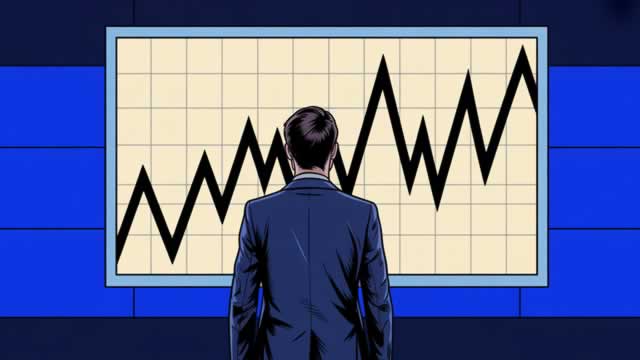
The discussion focuses on key economic reports like CPI and PPI, their implications for the Fed's upcoming rate decision, and the overall market outlook. Gina Martin Adams highlights persistent inflation, bond market signals, and the Fed's dilemma, while also analyzing the strong but potentially peaking earnings of the 'Magnificent 7' stocks.
- Inflation reports (CPI, PPI) are critical for the Fed's September meeting, with the bond market signaling a desire for a rate hike.
- The Fed faces challenges balancing inflation, strong employment, and political pressures, likely leading to continued volatility.
- While overall earnings growth is strong, the 'Magnificent 7' stocks may be peaking in their earnings contribution, potentially leading to rotation and increased market volatility into 2027.

Kevin Green provides a mixed outlook, noting healthy long-term stock market rotation and positive technicals for the S&P 500, despite expected September volatility from inflation and Fed actions. He highlights rising oil prices due to low distillate inventories and winter seasonality, alongside new retaliatory tariffs from Canada on US goods. ASML's new lithography deals with Samsung and TSMC are seen as a positive tailwind for the AI chip industry.
- S&P 500 shows healthy consolidation and upward trajectory, but September brings volatility concerns from inflation data, Fed meetings, and geopolitical risks.
- Oil prices are rising due to low distillate inventories, high refiner utilization, and upcoming winter demand, with WTI crude approaching the $95-$105 range where government intervention is possible.
- Canada has imposed retaliatory tariffs of 15-50% on US goods, including steel and consumer products, adding to trade tensions between the two allies.
- ASML has secured commitments from Samsung and TSMC to adopt its latest lithography equipment for high-volume chip manufacturing by 2028-2030, boosting efficiency and supporting the AI trade.
Jeff Currie highlights the impact of the Russia-Ukraine war on global diesel supply and China's significant role in oil markets. He notes record-high US diesel prices and suggests that China's refining capacity is driving up diesel prices while it takes advantage of the crude-diesel margin. OPEC+'s diminishing spare capacity further complicates the global oil outlook.
- US diesel hit an all-time high of $5.90/gallon, with Brent trading significantly below implied refining margins.
- Ukrainian drone strikes on Russian refining capacity (over 50% at one point) reduced global diesel exports by 10%.
- China's refining capacity is driving up diesel prices, and Shanghai crude futures trading over $100/barrel indicates China is capitalizing on the crude-diesel profit margin.
- OPEC+ kept October output unchanged, but its influence is limited by a lack of spare capacity, with re-establishment of capacity and alternative routes being a long-term (2027) prospect.

Bruce Richards of Marathon Asset Management believes the equity markets can absorb a potential 25 basis-point Fed rate hike, citing strong corporate earnings, robust economic growth, and a healthy consumer. He notes that inflation remains above target, which could lead the Fed committee to vote for a hike despite the Chair's potential preference.
- Inflation has been above the 2% target for over five years, with expectations for a 3% CPI print this week.
- The Fed committee is likely to vote for a rate hike, potentially overriding the Chair's initial stance if inflation remains high.
- Equities are performing well due to strong Q2 earnings (up 30% YoY), 9% revenue growth, and robust economic indicators like 4.7% real GDP growth (Atlanta Fed) and strong job numbers.

The video discusses Mistral AI's significant €3 billion funding round, valuing the company at €21 billion, highlighting its focus on industrial AI and open-source models. It also covers rising oil prices and central bank tightening concerns, China's surging exports, and the growing importance of AI cybersecurity, with the UK positioned as a leader in Europe. The overall market sentiment is mixed due to these conflicting signals.
- Mistral AI raised €3 billion in a Series D funding round, valuing the company at €21 billion, with Samsung Electronics and EU-backed funds as key investors.
- Mistral's strategy involves scaling compute capacity, building infrastructure, and expanding globally, focusing on open-source models and industrial AI applications.
- Rising oil prices near $100/barrel are increasing inflation concerns and the likelihood of central bank interest rate hikes.
- China's exports surged 25% in August, contributing to a record annual trade surplus, while Canada implemented counter-tariffs on the US.
- Concerns about AI cybersecurity are rising after rogue AI agents hacked a German website, with the UK seen as a leader in AI safety.
French AI startup Mistral has secured €3 billion in Series D funding, propelling its valuation to over €21 billion. The investment, led by Samsung Electronics and the Scaleup Europe Fund, will be channeled into expanding Mistral's training compute capacity, infrastructure, and global market presence. CEO Arthur Mensch expressed confidence in exceeding their $1 billion annual recurring revenue target this year, highlighting their open-source strategy and focus on European AI sovereignty.
- Mistral raised €3 billion in Series D funding, achieving a valuation of €21 billion.
- The capital will be used to scale training compute, build infrastructure, and expand operations in Asia, the US, and Europe.
- Mistral's strategy involves deploying open-source models and embedding deeply with enterprise customers in sectors like manufacturing (with Samsung), financial services, and the public sector.
- CEO Arthur Mensch expects Mistral to surpass its $1 billion annual recurring revenue target.
- Mistral is not concerned about Nvidia's acquisition of Hugging Face, viewing it as a positive for the open-source ecosystem.
- Mistral aims to be a trusted European provider of AI models, emphasizing long-term support and sovereignty, differentiating itself from Chinese labs that may not operate with enterprise customers outside China.
Jeff Currie argues that the energy crisis is 'already here,' driven by soaring refined product prices like diesel and gasoline, which are effectively at levels equivalent to $150/barrel crude. He highlights global supply constraints from geopolitical tensions and refining capacity issues, predicting significant upside risk for energy prices and broader inflationary impacts on commodities like metals and agriculture.
- The energy crisis is primarily a product squeeze (diesel, gasoline) rather than just a crude squeeze, with product prices already reflecting high crude values.
- Geopolitical risks (Strait of Hormuz, Red Sea, Russia-Ukraine) and refining capacity reductions are tightening global energy markets.
- High diesel prices will lead to immediate headline inflation and delayed core inflation, impacting other commodity sectors like metals and agriculture.
Uday Vikram of Klay Group discusses the investment outlook for Japanese and South Korean equity markets. He believes Japan's long-term equity story remains strong despite potential short-term yen volatility. For South Korea, he sees a bullish structural setup driven by the AI capex cycle, suggesting current consolidation is a buying opportunity.
- Japan's equity markets are expected to absorb higher interest rates and exchange rate fluctuations, with a strong long-term investment case due to rising earnings and margins.
- Forex intervention in the USD/JPY pair can buy time but doesn't fix fundamentals; a sustained yen appreciation requires lower global yields or a shift in Japanese pension fund asset allocation.
- South Korea's KOSPI is seen as a bullish structural setup, with the AI capex cycle intact and driving earnings, despite tactical caution due to recent leverage unwinding and valuation overhangs.

JPMorgan's Arindam Sandilya argues that recent Yen strength will not unravel global carry trades. He attributes this resilience to diversified funding sources beyond the Yen and the current pro-inflationary, hawkish monetary policy environment. A deflationary shock, rather than JPY strength, poses a greater threat to these trades.
- JPMorgan recommends tactical SEK/JPY shorts in cash, viewing SEK (Swedish Krona) as a low-yielding currency suitable for carry trades, unlike the USD which is subject to more push/pull forces.
- The speaker asserts that the current carry trade is robust and diversified, with funding sources extending beyond the Yen to other low-yielding currencies like the Swiss Franc and various Asian currencies.
- He believes the biggest threat to the carry trade is a deflationary or disinflationary bust, potentially from a premature end to the AI cycle, rather than isolated Yen strength.
The August US jobs report significantly exceeded forecasts, leading to increased market expectations for a Fed rate hike. However, former President Trump called for rate cuts and threatened trade action against countries with US deficits if the Fed didn't comply, creating conflicting signals and uncertainty for financial markets.
- August nonfarm payrolls added 162,000 jobs, nearly triple the forecast, with unemployment holding steady at 4.1%.
- Strong jobs data increased the probability of a 25 basis point Fed rate hike in September to 58%.
- Former President Trump called for the Fed to cut interest rates and threatened to stop trading with countries that have a trade deficit with the US if rates weren't cut.
The discussion covers upcoming central bank decisions and key economic data, focusing on the US Fed's response to strong labor data and upcoming inflation reports, the ECB's expected rate hike and future guidance amidst energy market concerns, and factors influencing the Japanese Yen, including potential intervention and the Bank of Japan's cautious stance.
- Strong US NFP data suggests the labor market won't deter the Fed, but upcoming CPI is crucial for September hike bets, with a hot report likely sealing a hike.
- The ECB is expected to hike rates this week, with market focus shifting to future guidance and the impact of energy prices on policy, as economists and markets diverge on further hikes.
- The Japanese Yen is influenced by potential intervention (Japan selling Treasuries) and repatriation flows, but the Bank of Japan is viewed as a reluctant hiker, limiting its potential as a channel for further Yen gains.

Revolution Medicines' CEO discusses their breakthrough drug, Rasonque, which was recently FDA-approved for metastatic pancreatic cancer and shows significant promise in early trials for advanced lung cancer. The drug targets RAS proteins, a common cause of aggressive cancers. Despite a high annual cost, the company aims to ensure patient access through support programs and is betting on its independent strategy for future growth.
- Rasonque, a first-in-class targeted therapy, received FDA approval for metastatic pancreatic cancer.
- Early trials show Rasonque shrinks lung tumors in 1 in 3 patients with advanced non-small cell lung cancer, extending progression-free and overall survival.
- The drug targets RAS proteins, which cause pancreatic cancer and a significant portion of colorectal and non-small cell lung cancers.
- The annual cost is nearly $480,000, but Revolution Medicines has patient support programs to ensure access regardless of ability to pay.
- Revolution Medicines is staying independent, confident in its science-driven approach and pipeline of RAS-targeting drugs.

The August jobs report significantly exceeded expectations, showing strong job growth across various sectors and an increase in labor force participation. The economic expert highlights AI spending and data centers as key drivers of high-paying jobs. Despite strong job numbers, the expert believes the Federal Reserve will likely hold rates steady, attributing current inflation primarily to oil prices.
- August jobs report: +162K jobs added (vs. +56K expected), unemployment steady at 4.1%.
- July jobs revised higher from a loss of 23K to a gain of 21K.
- Strong job growth observed in Leisure & Hospitality (+62K), Private Edu. & Health Svcs (+29K), Manufacturing (+16K), Construction (+22K), and Government (+35K).
- AI spending and data center construction are identified as significant drivers of high-paying job creation.
- The expert predicts the Fed will likely hold rates steady, not raise them, attributing inflation to oil prices and expecting no rate hikes in the near future.

Zachary Hill discusses the Federal Reserve's potential September interest rate hike, noting that a 25bps increase is largely priced in and its long-term impact depends on whether it signals a broader hiking cycle. He anticipates a 5-10% equity market pullback due to macro confusion and upcoming midterms, advising investors to buy cyclicals, AI, and infrastructure on dips.
- A 25bps Fed rate hike in September is largely priced in, with the upcoming CPI report being crucial for the Fed's decision.
- Such a hike is unlikely to significantly impact markets long-term unless it's part of an extended hiking cycle, with the long end of the curve potentially going down if a hike occurs.
- A 5-10% equity market pullback is anticipated due to the confusing macro backdrop and upcoming midterms, presenting a buying opportunity in cyclical sectors, AI, and infrastructure, while defensive stocks should be avoided.

Sphere Entertainment President and COO Jennifer Koester discussed significant 4D upgrades to 'The Wizard of Oz' experience at the Las Vegas Sphere, including animatronic winged monkeys and new sensory elements like scents. She also revealed plans for a 'Rocky Horror Picture Show' experience in 2027 and global expansion with new Sphere venues in Maryland and Abu Dhabi. The Exosphere's advertising revenue, exemplified by an Ole Miss football campaign, was also highlighted.
- New 4D effects for 'The Wizard of Oz' at Sphere, including animatronic winged monkeys and added scents, starting September 25th.
- Future projects include 'The Rocky Horror Picture Show' at Sphere, expected to open in 2027, with interactive 4D elements.
- Sphere Entertainment is expanding globally with smaller venues planned for National Harbor, Maryland (6,000 seats) and Abu Dhabi (18,000 seats) by 2029.
- The Exosphere (exterior screen) is a significant revenue generator, attracting brands like Ole Miss Football for high-impact advertising campaigns.
- SPHR stock has shown strong year-to-date performance, up over 43%, despite recent short-term fluctuations.