Video Analysis

President Trump met with top tech CEOs, including those from Nvidia, Meta, Palantir, and Google, to discuss AI. He advocated for 'tremendous self-regulation' and 'unfettered' growth for AI, emphasizing a hands-off approach from the government. Separately, a Senate bill concerning AI data centers and local electricity bills faces an uphill battle for passage.
- President Trump expressed a desire for 'tremendous self-regulation' in AI, opposing government intervention to stifle tech growth.
- CEOs from Meta, Nvidia, Palantir, Google, Anthropic, Tesla (Elon Musk), and Nvidia (Jensen Huang) were in attendance at the White House meeting.
- A Senate vote is scheduled for Wednesday on the 'Ratepayer Protection Act,' a bill aimed at pushing local utilities to consider data centers in rate-making, but it faces strong opposition and is unlikely to pass.

Eric Diton discusses the current financial market environment, emphasizing that the Fed's current rate hiking cycle is different from 2022 due to lower inflation and higher starting yields. He highlights the positive long-term impact of AI and advises investors to stay diversified, particularly noting new opportunities in bonds and value stocks outside the concentrated mega-cap tech sector.
- The current market environment is not comparable to 2022, with inflation in the 3s and 10-year Treasury yields in the low 4s (now 5.21%), which historically has not been detrimental to equities.
- The Fed is expected to hike rates 1-2 more times, not 11, and the AI buildout is taxing resources but will drive significant cost efficiencies across many companies.
- Investor sentiment shows a worrying trend of more new lows than new highs, reminiscent of the 1999 tech bubble, prompting a recommendation for global diversification and exploring rewarding opportunities in municipal bonds (5% yields) and cheaper stocks outside mega-cap tech.
The video discusses a weakening economic outlook, with consumer confidence and job openings missing estimates. It also highlights significant IPO news, including Oura's delay due to market uncertainty and leaked details from Anthropic's prospectus revealing large losses and potential existential risks. Tomorrow's focus will be on Micron's earnings and August PCE inflation data.
- Consumer confidence plunged in September to its lowest level since April 2014, missing estimates and reflecting worries about costs and the labor market.
- US job openings fell in August, coming in below consensus, with declines concentrated in professional/business services and healthcare.
- Oura delayed its IPO due to market uncertainty, while a leaked prospectus for Anthropic revealed significant losses, customer concentration risks, and warnings about AI's 'catastrophic or existential risk to humanity.'
- Tomorrow's key events include Micron's earnings, with a high bar for revenue and EPS growth, and the August PCE inflation data, which is the Fed's preferred gauge.

The discussion highlights the positive impact of regulatory clarity from the SEC and CFTC on the crypto market, despite the failure of the Clarity Act. This rule-making is seen as crucial for institutional adoption, shifting focus from legality to investment sizing. The speaker predicts a significant bull run for Bitcoin and other digital assets.
- Regulators (SEC, CFTC) are actively establishing rules for crypto, providing much-needed clarity after the Clarity Act's failure.
- Recent regulatory actions include exemptions for tokenized stocks, a CFTC framework, and token buyback guidance, which are critical for institutional engagement.
- This clarity is expected to drive institutional adoption, as the question shifts from 'am I allowed to own this?' to 'how big should our position be?'.
- The speaker anticipates Bitcoin reaching $120,000-$150,000 in the next 12-16 months, driven by these trends and the tokenization of various assets.

JPMorgan Chase CEO Jamie Dimon's Op-Ed outlines a vision for the Western world's revival, emphasizing Europe's need for bold economic reforms and stronger defense. Michelle Caruso-Cabrera discusses Europe's current challenges, including de-industrialization, energy crisis, and fragmented leadership, suggesting a crisis might be necessary for meaningful change.
- Jamie Dimon's Op-Ed calls for Europe to reboot its sluggish economy and strengthen defense capabilities for the Western world's long-term strength.
- Michelle Caruso-Cabrera highlights Dimon's global influence and Europe's need for deregulation and scale to compete.
- Europe faces significant challenges like de-industrialization (e.g., Germany's auto industry), energy crises, and fragmented governance.
- A crisis is suggested as a potential catalyst for Europe to enact necessary reforms and address competition from countries like China.

Charles Bobrinskoy of Ariel Investments discusses the end of a 40-year cycle of falling interest rates and the implications of a new, increasing rate environment. He highlights that this shift, driven by structural inflation, will significantly impact investment strategies, particularly for leveraged companies, long-duration assets, and real estate, requiring investors to adapt to a 'new world' where the change in rates is paramount.
- Interest rates are headed higher due to structural inflation drivers, including immigration controls, infrastructure spending, wars, tariffs, trade wars, and AI spending.
- The market has ended a 40-year period (1980-2020) of falling interest rates, which previously favored leveraged companies, long-duration tech stocks, LBOs, and real estate.
- The current increasing rate cycle is not expected to end quickly, and this reversal will negatively impact assets that benefited from falling rates by changing multiples, valuations, and financing costs.
- The speaker emphasizes that the 'change' in rates is the critical factor, and investors will need to be smarter and more selective in this new environment.

The video highlights the rapid growth of the prediction market industry, with Bloomberg Intelligence estimating a potential $1 trillion annual volume by 2030. While executives from major players are optimistic about the opportunities, the sector faces significant legal and regulatory challenges, particularly regarding its classification as sports betting or a financial market, leading to calls for greater clarity.
- Prediction markets are experiencing a boom, with NFL Week 1 volume increasing over 85% year-over-year.
- Bloomberg Intelligence forecasts prediction markets could achieve $1 trillion in annual volume by 2030.
- The industry is navigating a complex legal landscape, with regulators battling over control and the fundamental question of whether these markets are closer to casinos or Wall Street.
- Executives from DraftKings, FanDuel, Robinhood, and Fanatics emphasize the need for regulatory clarity to foster continued growth and innovation.

Schwab analysts discuss the current fixed income market, advising caution despite attractive yields due to ongoing inflation risks and the Federal Reserve's hawkish stance. Energy prices, particularly diesel, are highlighted as a critical swing factor for global inflation, influencing central bank decisions and equity valuations.
- Fixed income yields are attractive, but investors should not 'get ahead of the steamroller' as momentum for higher interest rates persists.
- The Fed is clearly biased towards hiking rates, with market probabilities suggesting at least one more hike this year, potentially early next year.
- Energy prices, especially diesel, are a significant swing factor for inflation globally, impacting central bank actions like the RBA's recent rate hike.
- Tomorrow's PCE print is identified as the most crucial economic metric this week, with expectations for a year-over-year gain over 3% and a month-over-month gain of 0.3%, which is likely 'too hot' for the Fed.

JPMorgan Chase CEO Jamie Dimon emphasizes that a strong US economy is fundamental to its military power and the dollar's reserve currency status. He advocates for robust domestic and foreign economic policies, specifically urging the completion of trade deals with key Western allies to foster global economic stability and mutual protection.
- A preeminent US economy is crucial for national security and maintaining the dollar's reserve currency status.
- Domestic and foreign economic policies, including extensive relationships and investments with allies, are vital for US economic strength.
- Dimon advocates for completing trade deals with Western allies (Europe, UK, Japan, Australia, Mexico, Canada, South Korea) to protect the US and its partners, highlighting 40 military alliances and 20 free trade agreements.

The discussion highlights a significant divergence in natural gas prices between the U.S. and Europe, with European prices being ten times higher due to infrastructure bottlenecks and geopolitical factors. A new secular demand driver for natural gas is emerging from AI data centers, which require massive power and are increasingly turning to natural gas for behind-the-meter solutions. While short-term winter volatility is a concern, the long-term outlook for natural gas demand, particularly in the U.S., appears robust.
- European natural gas prices are approximately ten times higher than U.S. prices, driven by supply worries and geopolitical instability, while U.S. prices remain relatively low.
- The rapid growth of AI data centers is creating substantial new demand for power, with natural gas becoming a critical fuel source for these facilities due to delays in grid expansion and the need for reliable, on-site energy.
- Infrastructure limitations, particularly for LNG exports from the U.S., prevent the arbitrage window from fully closing, but new projects are expected to come online, and winter weather remains a key short-term volatility factor for global energy markets.
The Wall Street Journal reports that Goldman Sachs' John Waldron may succeed David Solomon as CEO as early as next year. This follows a period where Waldron was given incentives to stay, and he is seen as a well-known and groomed successor, currently leading the bank's AI adoption efforts.
- WSJ reports Goldman Sachs' board has discussed a plan for John Waldron to succeed David Solomon as CEO as early as 2027.
- Waldron, currently President & COO and a Board of Directors Member, is considered the 'heir apparent' and has been groomed for the role since joining the bank in 2000.
- He is leading the bank's 'GS 3.0' initiative, focusing on AI adoption across business units, making him a known and experienced figure to internal and external stakeholders.
Edward Yardeni of Yardeni Research discusses the 'revenge of the bond vigilante algorithms,' attributing rising global bond yields to the Bank of Japan's rate hikes, an unwind of the global carry trade, and algorithmic trading exacerbating volatility. He suggests that while current bond yields are attractive, they may not have peaked, and the market is approaching a point where 'something will break' due to sustained tightening pressures from central banks and geopolitical factors like the Middle East.
- Bond yields are rising due to a synchronized global trend, partly driven by the Bank of Japan's policy shifts and the unwind of the global carry trade.
- Algorithmic trading is amplifying market volatility, causing rapid increases in bond yields in response to news headlines.
- Yardeni suggests that the market is nearing a breaking point, with central banks likely to continue tightening due to sticky inflation and geopolitical risks, pushing yields potentially higher than current levels.
Edward Yardeni believes that while current bond yields around 5.25% are attractive, he is not convinced they have peaked and expects them to rise further, potentially to 5.5% or even closer to 6%. He attributes this to the 'revenge of the bond vigilantes' reacting to accumulated debt and sticky inflation, leading central banks to remain in a tightening mode.
- Bonds yielding 5.25% are attractive, but Yardeni is 'not convinced' this is the peak.
- He suggests yields could go higher, possibly to 5.5% or even closer to 6%, driven by 'bond vigilantes' and sticky inflation.
- Central banks are in a 'tightening mode' due to higher oil prices and persistent inflation, pushing bond yields up.

The discussion centers on the potential CEO succession at Goldman Sachs, with COO John Waldron positioned to replace David Solomon as early as 2027. Solomon's tenure has faced scrutiny, particularly regarding the failed consumer banking expansion, highlighting the need for a leader with strong internal and external relationship management skills.
- Goldman Sachs' board is reportedly discussing COO John Waldron as the next CEO, potentially by 2027/2028.
- Current CEO David Solomon's push into consumer banking 'ended quite badly', leading to billions in losses and internal unrest.
- John Waldron is characterized as a more 'people-oriented' leader, adept at managing relationships, which could be a key asset for Goldman's future.
- Solomon's recent comments suggest a shorter remaining tenure than previously indicated, fueling succession speculation.

Chinese AI models are rapidly gaining global traction on developer platforms like OpenRouter and Vercel, driven by their enhanced capabilities and cost-effectiveness. This surge in adoption is observed across the Global South, Europe, and the US, indicating a significant competitive shift in the AI model landscape.
- Chinese AI models are experiencing a surge in popularity and token usage on developer platforms, reflecting increased adoption.
- Key drivers for this growth include improved capabilities and lower costs compared to US-developed AI models.
- The trend extends beyond the Global South, with notable uptake in Europe and the US, intensifying competition in the AI market.

The discussion focuses on AI safety concerns from companies like Nvidia, OpenAI, and Anthropic, which could create a 'headwind' and volatility for tech stocks in the near term. Additionally, the conversation touches on a 'doom spiral' in bond yields and oil prices, driven by strong US growth data and expectations of further Fed rate hikes, leading to a 'panicked' market dynamic.
- AI safety concerns from major players like OpenAI and Anthropic are seen as a potential 'headwind' for tech stocks and a source of market volatility.
- Nvidia's new chip aiming for 'double safety' in AI agents is highlighted amidst these concerns.
- A 'doom spiral' is described for bond yields and oil, where inflation hedging via oil purchases fuels further inflation worries and expectations of more aggressive Fed action.
Mistral AI CEO Arthur Mensch discusses the critical need for robust monitoring systems in AI development to contain agents and prevent unexpected actions. He emphasizes Europe's strategic imperative to produce its own AI technology for governance and autonomy, rather than relying solely on external solutions, highlighting the political recognition of AI's importance beyond mere competitiveness.
- Mistral AI CEO criticizes US AI safety debate as a 'cover for negligence' by some competitors.
- Stresses the necessity of strong systems and monitoring to contain AI agents and manage dynamic, unexpected behaviors.
- Advocates for Europe to produce its own AI technology to ensure strategic autonomy and influence governance, rather than becoming an 'extractive economy'.
- Notes a growing political realization that AI is crucial for both competitiveness and cyber defense.
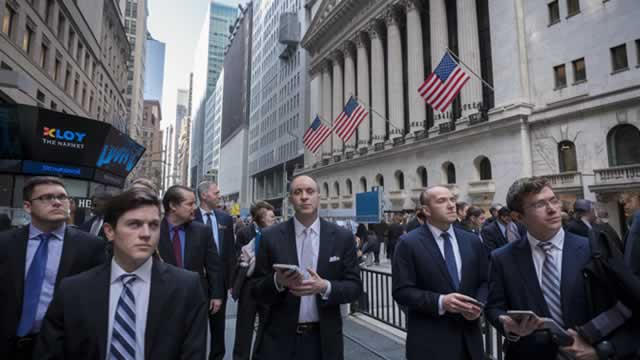
The video highlights escalating geopolitical tensions between the US and Iran, driving oil prices higher and dimming hopes for a diplomatic resolution. This, coupled with persistent inflation and rising US Treasury yields, is creating a bearish outlook for global markets. Despite some positive developments in the AI sector, the overall sentiment remains cautious.
- US-Iran tensions and stalled Hormuz talks are pushing Brent crude prices towards $107/barrel.
- US Treasury yields are climbing to multi-decade highs amid expectations of further Fed tightening due to persistent inflation.
- Asian equities are falling, reflecting a risk-off sentiment driven by geopolitical and inflation concerns.
- Nvidia is launching new AI security systems, while AMD is acquiring an AI startup, indicating continued growth in the tech sector.
- Brookfield remains bullish on Middle East investments despite regional conflicts, focusing on reliable partners and long-term trends.
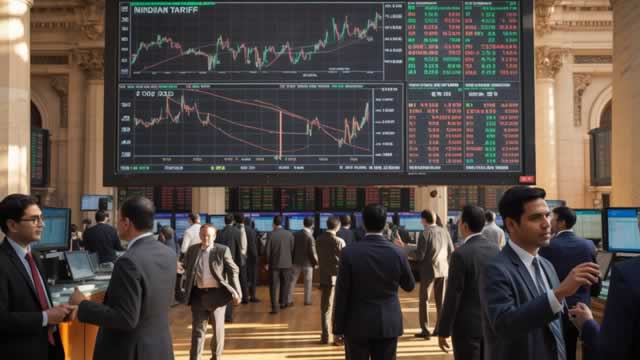
The discussion centers on the 'software stumble' driven by AI disruption fears, which has led to underperformance compared to semiconductors. While some software names face challenges, Citi's analyst highlights specific companies well-positioned for AI integration and potential M&A, offering a nuanced view of the sector's future.
- Software stocks (IGV) have significantly underperformed semiconductors (SOX) and the broader market (S&P 500) due to concerns about AI disruption.
- High short interest in many software names reflects market skepticism regarding their long-term viability in an AI-dominated landscape.
- Despite the broader concerns, companies like Microsoft, Palantir, and Snowflake are identified as strong AI software winners, while Braze, Klaviyo, and Docusign are seen as potential M&A targets due to attractive valuations and growth prospects.

The market session closed with crude oil prices remaining elevated due to geopolitical tensions and lower fuel economy standards, leading to higher fuel costs. Treasury yields hit 19-year highs, driven by inflation concerns and government borrowing. Meanwhile, the U.S. and China agreed on tariff cuts, and China is considering approving NVIDIA chip purchases, impacting domestic chip stocks.
- Crude oil prices remain elevated, with Brent around $106 and WTI near $93, due to global supply uncertainties and higher fuel costs for consumers.
- Treasury yields reached their highest levels since 2007, with the 10-year above 5.2% and the 30-year topping 5.5%, driven by inflation concerns, fiscal deficits, and potential Fed rate hikes.
- The U.S. and China agreed to cut tariffs on $60 billion worth of goods, and China is reportedly considering approving NVIDIA chip purchases for companies like Alibaba and ByteDance.
- Carnival (CCL) earnings are expected tomorrow, providing insight into the cruise industry's performance amid elevated fuel costs, as the company does not hedge its fuel expenses.