Video Analysis

Larry Kudlow presents a bullish analysis of the latest jobs report and broader economic indicators, arguing that the U.S. economy is 'hot' and 'booming' with plentiful jobs and rising wages that are outpacing inflation. He criticizes the media for not adequately covering these positive developments.
- September's Household Employment Survey showed 406K jobs added, with a slight unemployment rate increase attributed to a massive influx of new job entrants.
- Production worker wages increased by 3.3% and hours worked by 1.9% over the past 12 months, leading to a 'wage income proxy' of 5.2%, which beats August's PCE inflation of 3.4%.
- Business-to-business spending (Gross Output) grew 13.8% in Q2, indicating a robust and 'booming' economy, with capital goods orders rising at a near 20% rate.

The video discusses the financial market's reaction to a weak September jobs report, which saw the US add fewer jobs than expected and wage growth slow. This data has curbed expectations for further Federal Reserve interest rate hikes, leading to a rally in stocks and a drop in bond yields. However, individual company news and ongoing inflation concerns present a mixed picture.
- US September nonfarm payrolls rose by only 29,000 (below +90k estimate), and the unemployment rate increased to 4.2%.
- Stocks (S&P 500, Nasdaq 100, Dow Jones) rose, and US Treasury yields fell, as traders reduced bets on further Fed rate hikes.
- G7 nations are set to release 100 million barrels of emergency oil to help lower fuel prices, with WTI crude down and Brent crude slightly up.
- Nike shares fell 4% after an 'ugly' earnings report, while Seagate Technology shares dropped 11% due to news of Toshiba's hard drive investment.
- Broadcom Inc. and Nvidia Corp. saw gains, with Broadcom securing $60 billion in AI chip financing and Nvidia reaching a $5.7 trillion market capitalization.

The US Justice Department is not reopening a criminal investigation into former Federal Reserve Chairman Jerome Powell regarding cost overruns on a central bank building renovation project. Attorney General Todd Blanche stated that while oversight was deemed inappropriate, it did not amount to criminal conduct, and the focus remains on accountability for the board's actions.
- The criminal investigation into Jerome Powell for building renovation cost overruns is not being reopened.
- Attorney General Todd Blanche clarified that inappropriate oversight by Powell did not constitute criminal conduct.
- The focus is on accountability for the Federal Reserve board's actions and inactions, as detailed in the Inspector General's report.

The video features a debate on the October market outlook, with a bullish perspective emphasizing strong Q3 earnings and AI-driven growth, while a bearish view highlights geopolitical conflicts, high commodity prices, and global rate hikes. A third analyst notes narrow market leadership but warns of tight credit spreads and potential market fragility if capital expenditure slows.
- Bullish arguments center on robust Q3 earnings and the significant growth and capital expenditure in the AI sector.
- Bearish arguments cite ongoing geopolitical conflicts, elevated commodity prices, and global interest rate hikes as detrimental to equity markets.
- Concerns are raised about the bond market's stability, particularly in Europe, and historically tight credit spreads, indicating potential systemic risks.

Economists discuss the bifurcated US economy, driven by strong tailwinds from AI spending and infrastructure, but facing headwinds from high interest rates impacting consumers. They recommend a strategic shift towards fixed income and high-quality private markets due to 'higher for longer' interest rates and the potential for AI to disrupt traditional banking.
- Economic tailwinds from AI, infrastructure, and new business formation are driving nominal GDP to record highs.
- Consumer confidence is low due to high interest rates affecting housing, autos, healthcare, and education costs.
- Interest rates are expected to remain higher for longer, making fixed income and high-quality private markets attractive for investors.
- AI and blockchain technology could lead to frictionless money movement, potentially increasing market volatility and disrupting traditional checking accounts.

The discussion revolves around the current state of financial markets, focusing on Treasury yields, inflation, and Fed policy. Experts offer mixed but generally bullish outlooks for Q4, with a strong emphasis on tech and AI-driven growth despite some underlying concerns about market concentration and economic slowdowns.
- The U.S. 10-year Treasury yield pulled back after a soft jobs report, with a low likelihood of a Fed rate hike in November.
- Some analysts believe the 2-year Treasury yield is 'overrun' and will settle, suggesting inflation may cool without further aggressive Fed action.
- Despite geopolitical tensions and elevated rates, the market, particularly tech and AI-related sectors, has shown resilience and is seen as an opportunity for a 'Q4 reload'.

Torsten Slok, Chief Economist at Apollo, discusses the current economic environment, stating that interest rates and inflation are expected to remain higher for longer. He highlights that fixed income yields are now 'juicy,' offering attractive returns not seen in decades, which implies a need for investors to reconsider their portfolio allocations towards fixed income.
- Interest rates are expected to stay higher for longer due to persistent inflation.
- Fixed income yields are currently very attractive, offering 'juicy' returns compared to historical levels.
- Investors should consider increasing their allocation to fixed income given the current yield environment.

The defense tech sector is undergoing a significant transformation, driven by the Pentagon's push for faster, cheaper, and more innovative weapons, particularly in AI and autonomous systems. Large primes like Lockheed Martin are embracing new business models, investing in startups, and leveraging advanced manufacturing to meet evolving national security needs and address geopolitical challenges.
- The Pentagon is shifting from traditional, rigid procurement to a more agile model, encouraging defense firms to proactively develop and prototype new technologies.
- AI and autonomous systems are considered critical for the future of warfare, with Lockheed Martin heavily investing in secure, internal AI development and autonomous drones like Vectis.
- Strategic partnerships between established defense primes and innovative startups (e.g., Lockheed with Fortem and Divergent) are key to accelerating technology deployment and scaling manufacturing capacity.
- Advanced manufacturing techniques, such as 3D printing of metals, are being utilized by companies like Divergent to produce defense components faster and at lower unit costs, addressing production bottlenecks.

Divergent CEO Lukas Czinger highlights how advanced manufacturing, particularly 3D printing of metals, can significantly accelerate and reduce the cost of defense production. The company aims to provide an 'infrastructure layer' for defense contractors, enabling faster development and scalable manufacturing of critical components for the Pentagon.
- Divergent's advanced design and manufacturing platform allows for rapid prototyping and production, moving from engineering inputs to flight-ready hardware in under three months.
- The company acts as a manufacturing partner, not a prime competitor, for defense contractors like Lockheed Martin and RTX, focusing on speed, quality, and scale.
- Divergent is expanding with a new 430,000 sq. ft. facility in Long Beach, CA, targeting an 8x increase in annual production capacity and planning to add about 1,000 employees.
- Czinger emphasizes that the current defense cycle is long-lasting, driven by modern warfare needs, and advanced manufacturing is key to meeting demand for new systems at lower price points.

Goldman Sachs Chief Economist Jan Hatzius discusses the September jobs report, which came in weaker than expected, showing nonfarm payrolls at +29K versus an estimated +84K and an unemployment rate of 4.2%. This data, combined with recent inflation figures, suggests less aggressive monetary tightening from the Fed, potentially pushing back the next rate hike to December or even foregoing it if inflation remains soft.
- September nonfarm payrolls were +29K (vs. +84K est.), and the unemployment rate rose to 4.2% (vs. 4.1% est.).
- Goldman Sachs pushed back their forecast for the next Fed rate hike from October to December, citing recent PCE numbers and the jobs report.
- Hatzius believes markets are over-discounting future hikes, suggesting that if soft inflation numbers continue, even a December hike might not be necessary.
- Financial conditions, excluding equities, show significant tightening due to rising long-term interest rates, but overall, they are a 'very small headwind to growth'.

The video discusses how a weak jobs report is bullish for Bitcoin and other assets, as it signals potential Fed rate cuts. Key developments include the SEC proposing a framework for investment advisors to directly custody crypto, Fiserv launching a bank stablecoin on Solana, and Ethereum Foundation introducing a zkAPI for private AI payments. These events collectively point to increasing institutional adoption and real-world utility for crypto.
- Weak jobs report and slowing wage growth suggest the Fed may pause or cut rates, which is bullish for risk assets like Bitcoin.
- The SEC's proposal for registered investment advisors (RIAs) and regulated funds to directly custody crypto assets is a 'very big deal' for institutional adoption and market clarity.
- Fiserv's launch of 'Roughrider Coin' on Solana for interbank settlement in North Dakota demonstrates real-world blockchain utility, potentially boosting Solana's network usage.
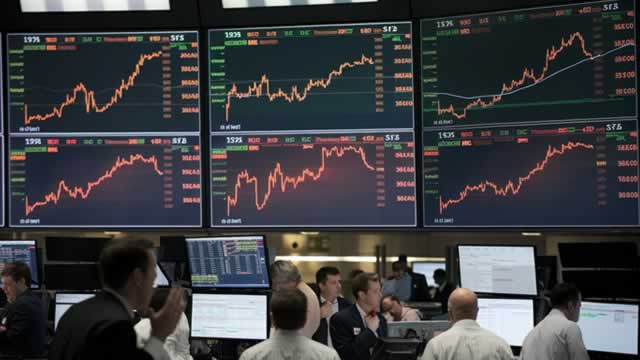
The September US jobs report showed a significant slowdown, adding only 29,000 jobs against an estimated 90,000. Additionally, July and August job numbers were revised down by a combined 60,000. This weaker-than-expected data, coupled with moderating wage growth, has led to a 'bad news is good news' market reaction, with bond yields falling and stock futures rising due to reduced expectations for future Fed rate hikes.
- US added 29,000 jobs in September, significantly below the 90,000 estimate.
- July and August job numbers were revised down by a total of 60,000.
- Average hourly earnings rose 0.1% month-over-month and 3% year-over-year, both below estimates.
- Healthcare, construction, and manufacturing saw job gains, while government and financial activities experienced losses.
- Market reaction was positive, with bond yields falling and stock futures rising, as the weaker data implies a less hawkish Federal Reserve.

Huw van Steenis from Apollo discusses the robust health of European banks, the rising bond risk premium in France, and the significant increase in AI-driven corporate bond issuance in Europe. Despite some economic fraying and stress from energy prices, the overall sentiment highlights resilience and problem-solving within the European financial landscape, with a notable shift towards private credit for project finance.
- European banks are in their best health in 30 years, supported by reasonable yield curves, benign credit conditions, and increased loan growth.
- France's bond risk premium has risen to euro-crisis levels (150bps over Germany), driven by fiscal consolidation pressures and strong entitlement spending.
- AI-related corporate bond issuance in Europe has tripled this year, absorbed well due to longer durations, with further growth expected next year.
- Project finance is increasingly shifting from traditional banks and bond markets to the private credit market in Europe.

Kevin Hassett, White House National Economic Council Director, discusses the Federal Reserve's composition and interest rate policy. He suggests that Jerome Powell's continued presence on the board after his chairmanship is unusual and has led to a partisan voting pattern. Hassett expresses confidence that future Fed actions, potentially influenced by Kevin Warsh, will lead to stable or lower rates, which he views as positive.
- Hassett views Jerome Powell's continued presence on the Fed board after his chairmanship as 'unusual' and contributing to a 'partisan' voting pattern.
- He believes that a 'Jay Powell Fed' would have hiked rates into the election, implying a negative view of past Fed actions.
- Hassett sees federal funds futures indicating no future rate hikes as a 'positive sign' of progress, suggesting a preference for stable or lower interest rates.

Kevin Hassett, White House National Economic Council director, discusses the September jobs report, emphasizing that President Trump's supply-side policies are fostering low inflation, high GDP growth (around 4%), and a 'productivity boom' driven by capital spending. He also highlights the significant cost of socialist policies and the potential for Europe to release diesel reserves to impact prices.
- The September jobs report (29k added) is viewed positively, indicating a 'supply-side' realignment of the American economy with increased factory and construction jobs.
- Current economic policies are achieving low inflation (core PCE 2% annual rate, 1% including food/energy) and high GDP growth (around 4%), driven by capital spending and productivity gains.
- A Council of Economic Advisers (CEA) report details the 'real cost of socialism' as a $49 trillion federal deficit or $355,000 per household over ten years, warning of economic decline if such policies are implemented.
- The U.S. is pressuring European allies to release diesel reserves from their stockpiles, which could lead to a 'massive positive effect' or reduction in diesel prices.

Former Cleveland Fed President Loretta Mester discusses the September jobs report, noting it reflects a steady labor market not driving inflation. She suggests the Fed will likely hold rates in October to gather more data, despite a potential economic case for a hike. This outlook is generally seen as friendly for markets.
- September jobs report showed lower-than-expected nonfarm payrolls (+29K vs +84K est.) and average hourly wage growth (+0.1% M/M vs +0.3% est.).
- The unemployment rate ticked higher to 4.2% (vs 4.1% est.), indicating a cooling labor market.
- Mester believes the Fed will likely hold rates in October to accumulate more data, with Fed futures showing a 76% probability for a December hike, and only 19% for October.
- She emphasizes that inflation remains the main problem, but the current labor market data doesn't suggest it's primarily driving inflation up.

Neil Dutta suggests that while an October rate hike might be 'on life support' due to weak September payrolls, the Federal Reserve is still 'one bad inflation number away' from pulling the trigger on another hike. He expresses caution about fully embracing a dovish outlook, noting that core inflation has consistently run above the Fed's targets despite some weak labor cost data.
- Weak September payrolls put an October Fed rate hike on 'life support'.
- The Fed's core inflation forecast for Q4 2027 is 2.5%, but Q1 core inflation has been near 4% annually since 2023.
- Despite low unit labor costs and weak wage pressure, actual inflation remains above target, making the speaker reluctant to fully buy into a dovish thesis.

The September US jobs report showed significantly weaker-than-expected payroll growth (29k vs. 90k est.) and subdued wage increases, while the unemployment rate ticked up. This 'dovish' report led to a rally in equity futures, a plunge in bond yields, and a weaker dollar, as traders pared back expectations for aggressive Fed rate hikes.
- US September nonfarm payrolls rose by only 29,000, significantly below the 90,000 estimate, with a net revision subtracting 60,000 jobs from prior months.
- The unemployment rate increased to 4.2% (vs. 4.1% est.), and average hourly earnings grew by a mere 0.1% M/M (vs. 0.3% est.).
- Equity futures (S&P, Nasdaq, Russell) surged, bond yields (2-year, 10-year, 30-year) plunged, and the dollar weakened, as markets interpreted the data as reducing the urgency for the Federal Reserve to hike interest rates.
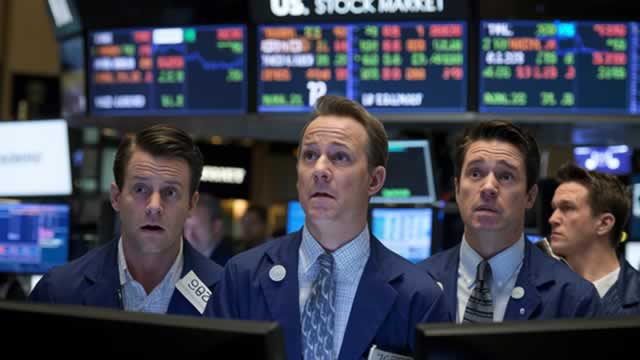
The September jobs report showed significantly weaker-than-expected non-farm payrolls (29K vs. 89K estimate), leading to a slight increase in the unemployment rate to 4.2%. Economist Joe Brusuelas highlights that despite the soft report, the labor market remains at full employment, and the U.S. economy is accelerating with strong Q3 growth.
- September non-farm payrolls came in at 29K, well below the 89K estimate, with prior months also revised down.
- The unemployment rate rose slightly to 4.2%, but this is attributed to more people entering the workforce, indicating a tight labor market.
- Average hourly earnings (M/M and Y/Y) were lower than anticipated, suggesting a potential easing of wage inflation.
- The weak jobs data is expected to lead the Federal Reserve to hold interest rates in October, though further hikes are anticipated in December and March.
- The overall U.S. economy is seen as healthy, with strong growth expected in Q3, driven by sectors like artificial intelligence and infrastructure.

The discussion focuses on the global bond market sell-off, leading to a flight to safety in assets like US Treasuries and German Bunds. France's fiscal and political instability is highlighted as a significant risk, causing fragmentation in the European bond market and widening credit spreads. Upcoming US jobs data is also a key focus, with potential implications for Federal Reserve policy.
- Global bond market sell-off is driving demand for safe-haven assets such as US Treasuries, Japanese Government Bonds (JGBs), and German Bunds.
- France's fiscal woes and political uncertainty are causing fragmentation in the European bond market, with contagion spreading to Italy and Belgium, and credit spreads widening.
- The upcoming US Non-Farm Payrolls report is a critical event; a strong number could surprise markets and pressure the Federal Reserve for more rapid rate hikes.