Video Analysis

Megan Horneman of Verdence Capital Advisors expresses a cautious outlook on the markets, believing investors are too optimistic about the Fed's actions and inflation. She highlights risks from a hawkish Fed, high earnings expectations, and potential issues in the bond market, suggesting that current market conditions are unsustainable.
- The market is too optimistic about the Fed's future actions; the Fed remains hawkish and inflation is still too high.
- Earnings growth expectations for this year and next are very high and at risk, especially for tech stocks.
- Long-term bonds are a big risk, with 10-year and 30-year Treasury yields at multi-year highs.
Robert Kaplan, former Dallas Fed President and current Goldman Sachs Vice Chairman, assesses the economy as mixed, with strong AI-related growth contrasting with sluggishness in other sectors. He believes the Fed was right not to raise rates in July and should remain flexible, suggesting that without the oil price spike linked to Middle East tensions, further rate hikes might not even be considered. He highlights both inflationary and disinflationary forces at play.
- Economy shows strength in AI infrastructure and adoption, but weakness in housing, autos, and low/moderate-income consumer spending.
- Job market is 'okay, not great' with stable hiring/firing, and unit labor costs are well-behaved, leading to increasing profit share of GDP and muted labor share.
- Kaplan suggests the Fed made the 'absolutely right decision' not to raise rates in July and should avoid being rigid, noting that without the oil price spike (possibly related to Iran/Middle East tensions), a September hike might not be on the table.
- Identifies AI infrastructure build, tariffs, labor constraints, and oil spikes as inflationary, while AI adoption and Chinese overcapacity are disinflationary.
Record low water levels on the Rhine River at Kaub, Germany, are severely disrupting shipping, a vital artery for European industry. This extreme weather event is causing significant economic losses for German companies and is projected to impact German GDP growth, with major industrial players already facing operational challenges.
- Water levels on the Rhine at Kaub have fallen to a record low of 11 cm, below the previous record of 25 cm set in 2018.
- The shallow point at Kaub effectively bisects the Rhine, a crucial waterway connecting the North Sea to Switzerland and linked to the Danube, impacting trade across Europe.
- Companies like BASF and Thyssenkrupp are experiencing supply chain issues, with BASF considering 'force majeure' due to the low water levels.
- The disruption could reduce German GDP growth by 0.3% this year, and German states are suspending Sunday truck driving bans to mitigate transport bottlenecks.
Eddie Ghabour discusses the July CPI print, anticipating a Fed tightening move in September, likely through balance sheet reduction rather than rate hikes. He expects a market correction in late August/September, which he views as a buying opportunity, projecting the S&P to reach new highs by year-end. He highlights the broadening market rally, evidenced by the Equal Weight S&P, and favors healthcare and software sectors.
- July CPI print was in line with expectations, but Ghabour anticipates Fed tightening in September, likely via balance sheet reduction, despite it not being a consensus view.
- He expects a market correction in late August/September, presenting a buying opportunity, with a year-end S&P target potentially above 8000.
- The Equal Weight S&P (RSP) hitting new highs indicates a healthy, broadening market rally beyond just technology stocks.
- Favors Eli Lilly (LLY) due to accelerating GLP-1 growth and international expansion, and software names like Unity Software (U) due to lower earnings expectations, but advises caution on tech during Fed tightening.
Brian Kessens, Senior Portfolio Manager at Tortoise Capital, discusses opportunities in the energy sector, particularly in liquefied natural gas (LNG) and US energy infrastructure. He believes the sector is undervalued and sees further upside for specific energy stocks, citing geopolitical factors and strategic importance.
- Energy sector, especially liquefied natural gas (LNG), is considered undervalued and attractive.
- Geopolitical 'stalemate' in the Middle East is expected to keep commodity prices elevated, benefiting energy companies.
- US energy infrastructure is deemed strategic for both domestic and global needs, with growing production.
- Specific stock picks include Diamondback Energy (FANG), Williams Cos Inc (WMB), and Targa Resources Corp (TRGP), all showing significant year-to-date gains but still having 'room to run'.
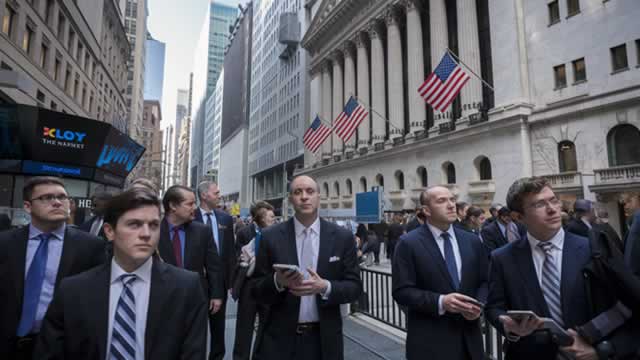
Wednesday saw a mixed close for major averages, with the Dow slightly down and the S&P 500 and Nasdaq up. The US budget deficit surged to a high not seen since March 2021, and July inflation ticked slightly higher. Google launched new AI-powered phones, and a Chinese planemaker made its first international flight.
- Market close was mixed: Dow down 21, S&P 500 up 20, Nasdaq up 143 points (0.5%).
- Oil companies (Marathon Petroleum, Phillips 66, Valero) and banks (JPMorgan Chase, Bank of America) hit fresh all-time highs.
- US budget deficit surged to its highest level since March 2021, driven by debt financing, Medicare, and war costs.
- July CPI showed headline year-over-year inflation up 3.4%, with a 2.9% monthly decline in gasoline prices but increases in airline fares and food costs.
- Google launched new Pixel phones featuring its Gemini AI, and Apple is set to release a rebuilt Siri powered by Gemini models.

The video discusses Wednesday's market takeaways, highlighting the strong performance of the tech sector, which boosted the Norway Sovereign Wealth Fund to a record first-half profit. Conversely, Tencent experienced a sell-off after mixed earnings. Looking ahead to Thursday, key earnings from Applied Materials, Lenovo, and JD.com, along with July's Producer Price Index, are on watch.
- Tech sector shines with solid earnings from CoreWeave, Lumentum, and Super Micro, all part of Nvidia's ecosystem, and a rally in memory chips.
- Norway's Sovereign Wealth Fund posted a record first-half profit of over $184 billion, largely due to gains in Asian tech stocks and holdings in US equities like Nvidia, Microsoft, Tesla, and Apple.
- Tencent shares fell after Q2 profits missed expectations, despite revenue beats driven by gaming and AI-driven advertising, with increased CAPEX for AI spending.
- Thursday's focus includes earnings from Applied Materials (AMAT), Lenovo (LNVGY), and JD.com (JD), as well as the release of July's Producer Price Index (PPI).
David Kelly, JPMorgan Asset Management's chief global strategist, argues that US inflation is disinflationary and not sticky, despite the in-line July CPI report. He attributes current inflation to supply-side shocks and policy decisions, not a wage-price spiral, and believes the Federal Reserve should pause rate hikes to avoid harming leveraged financial markets.
- US July Core CPI rose 0.2% M/M, in line with estimates, with disinflationary trends noted in energy and future tariff costs.
- Wages have risen less than CPI inflation for four consecutive months (3.2% vs. 3.4% Y/Y), indicating 'Teflon inflation' that won't stick due to lack of a price-wage spiral.
- Kelly suggests the Fed should 'stay on hold' and allow inflation to gradually heal, as further rate hikes are unnecessary for the economy and could negatively impact leveraged financial markets.
Pimco Economist Tiffany Wilding analyzes the in-line US July CPI report, noting core CPI rose 0.2% month-over-month. She views this as a 'relief' for the Fed, suggesting they will likely remain on hold in September. Disinflation in shelter and moderating energy prices are key factors, though airfares were stronger, and the Fed remains cautious, ready to hike if necessary.
- US July Core CPI rose 0.2% M/M, aligning with expectations and providing 'good news' for Fed officials.
- Pimco anticipates the Federal Reserve will remain on hold in September, awaiting further data releases.
- Shelter categories are showing disinflationary trends, and while energy prices might see short-term increases, their one-time price adjustment effects are expected to wear off next year.

Marta Norton discusses the US July Core CPI data, noting that subdued inflation eases pressure on the Federal Reserve for a September rate hike, providing some market relief. While retail investors remain enthusiastic about equities, underlying concerns about the economy, inflation, and fiscal issues persist. She emphasizes the complex dynamics in the bond market and the strategic value of holding cash for optionality.
- Retail investors maintain enthusiasm for equities, as seen in retirement accounts and DIY investing, but clients still express consternation regarding AI, inflation, and the economy's trajectory.
- The July core CPI print was subdued, which likely eases pressure on the Federal Reserve for a rate hike in September, offering a measure of relief to the market.
- The bond market is characterized by relatively constrained inflation expectations (break-evens) but rising real yields, driven by term premium, uncertainty in future rate paths, and fiscal concerns, necessitating judicious credit exposure.
- Cash provides valuable optionality for investors, particularly retirees, allowing for liquidity and the ability to capitalize on market opportunities during downturns or manage unexpected expenses.

Analysts discuss the bullish market sentiment, driven by strong earnings growth, particularly in the tech sector due to AI. Ed Yardeni raises his S&P 500 target to 8,400, citing unprecedented earnings expectations. Despite some caution on elevated expectations, the overall outlook remains positive for tech's continued leadership.
- Ed Yardeni raises S&P 500 target to 8,400, noting an 'earnings-led meltup' and record-high consensus earnings expectations for current and coming years.
- Tech sector earnings beat rate is at a high of 85.1%, with tech seeing its second biggest inflow week ever from hedge funds, indicating strong institutional buying.
- Nvidia (NVDA) is highlighted for its strong revenue growth, high analyst buy ratings (96%), and significant free cash flow generation, with expectations for $100 billion in revenue next year, despite potential post-earnings volatility.

Nancy Tengler, CEO of Laffer Tengler Investments, expresses a bullish outlook on the current market, comparing it favorably to the 1990s due to strong earnings and a technological revolution. She highlights opportunities in AI infrastructure, electrification, and cybersecurity, while advising investors to stick with growth stocks and use volatility to their advantage.
- The current market, despite record highs, is fundamentally different from the 1990s dot-com bubble, driven by real earnings and pristine balance sheets rather than speculative multiple expansion.
- Key investment themes include AI infrastructure (e.g., Eaton, GE Vernova, Williams), electrification, and cybersecurity (e.g., CrowdStrike, Palo Alto Networks).
- She views Amazon and Nvidia as 'value plays' within growth, and suggests adding to names like CrowdStrike and Walmart, while avoiding staples, most utilities, and REITs.
- Tengler anticipates the S&P 500 could close the year up 12-15%, with inflation being the biggest market risk.

Nancy Tengler highlights that current market strength is driven by robust earnings and significant productivity improvements across sectors, fueled by an 'economy in transition' due to technological advancements like AI. She remains optimistic, advising investors to stay long on stocks, particularly those benefiting from infrastructure build-out and strategic CapEx investments.
- Market strength is attributed to strong earnings and widespread productivity improvements, reminiscent of the 1990s.
- AI is driving an 'economy in transition' with job dislocations but ultimately leading to a stronger job market and disinflationary growth.
- Companies are making substantial CapEx investments in compute, data centers, and power, indicating early stages of a long-term growth trend.
Goldman Sachs is acquiring ETF provider Neos Investments for $2.3 billion, a strategic move to expand its asset management business into options-based ETFs. This acquisition allows Goldman to offer products that manage risk by capping downside while providing upside potential, leveraging Neos's established expertise and team in this growing market segment.
- Goldman Sachs is acquiring Neos Investments for $2.3 billion to bolster its asset management division.
- Neos specializes in options-based ETFs designed to manage risk by offering upside potential while capping downside exposure.
- This acquisition provides Goldman Sachs with an established player and expertise in a growing ETF product area, rather than building in-house.

The discussion centers on the accelerating AI buildout, with experts debating its sustainability and potential risks. While strong profitability and increasing demand for AI infrastructure are highlighted, concerns about rising leverage in private credit markets and the Federal Reserve's monetary policy decisions are also raised. The overall sentiment suggests a continued AI boom, but with underlying financial risks.
- AI CapEx is translating into significant profitability, as evidenced by CoreWeave's strong earnings and gross margins.
- A 'price war' among AI model providers, driven by open-source models, is making AI more accessible and increasing demand for data centers, thereby prolonging the AI CapEx boom.
- Concerns are mounting over the opaque private credit market's involvement in financing AI, with warnings about potential leverage risks and the Fed's stance on supply-side inflation.
The video discusses the escalating diplomatic standoff between the US and Iran over the Strait of Hormuz. President Trump claims 'total control' and warns Iran against aggressive actions, while Iran and the US harden their stances, dimming hopes for a deal. This geopolitical tension is causing Brent Crude prices to whipsaw and global oil inventories are expected to tumble, indicating significant market implications for energy.
- President Trump asserts 'total control' over the Strait of Hormuz, warning Iran of severe consequences for any hostile actions.
- Diplomatic talks between the US and Iran are deadlocked, with both sides hardening their positions and little indication of a breakthrough.
- Brent Crude prices are whipsawing after five days of gains, and the International Energy Agency (IEA) forecasts a significant drop in global oil inventories this quarter due to the tensions.

The US July CPI report showed headline inflation rising 0.1% month-over-month and 3.4% year-over-year, while core CPI rose 0.2% month-over-month and 2.5% year-over-year. These figures were largely in line with expectations, easing pressure on the Federal Reserve for aggressive rate hikes and leading to positive market reactions in futures and bond yields.
- US July CPI was in line with forecasts: headline +0.1% M/M, +3.4% Y/Y; core +0.2% M/M, +2.5% Y/Y (matching slowest pace since March 2021).
- Food at home and energy prices (including gasoline) decreased, while owner's equivalent rent rose 0.3% M/M, accounting for two-thirds of the overall core increase.
- Market reaction included slight gains in S&P and Nasdaq futures and declining bond yields, as the in-line print marginally reduced the probability of a September Fed rate hike.

The July CPI report came in line with Wall Street estimates, offering a sense of relief to the stock market, with equity futures trading higher. Core inflation showed signs of cooling, which could influence the Federal Reserve's future rate hike decisions. However, rising crude oil prices due to ongoing Middle East tensions remain a potential concern for upcoming inflation reports.
- July CPI (headline and core) met analyst estimates, with month-over-month headline CPI at 0.1% and core CPI at 0.2%.
- Year-over-year headline CPI was 3.4% (down from 3.5% prior) and core CPI was 2.5% (down from 2.6% prior).
- Energy components like gasoline (-2.9% M/M) and fuel oil (-1.7% M/M) saw declines, while food at home also decreased by 0.1% M/M.
- Stock futures (S&P 500, NASDAQ-100, Dow Jones, Russell 2000) rallied post-report, while the 10-year Treasury yield remained relatively flat.
- CME Fed Watch probabilities for rate hikes, particularly for September and October, are still notable but the speaker suggests cooling core inflation could lead to a reassessment by the Fed.
- Crude oil futures, despite the CPI report, are up over 8% this week due to Middle East headlines, posing a potential inflationary risk for future reports.

The discussion centers on the current AI boom, with Mitchell Green of Lead Edge Capital asserting that the market is 'absolutely' in an AI bubble, likely to 'pop' due to excessive spending and implicit leverage. He draws parallels to the dot-com era, highlighting that while AI is transformative, current valuations and capital intensity are concerning, especially as open-source models drive down costs.
- Mitchell Green states the market is 'absolutely' in an AI bubble that will 'probably pop', citing excessive spending and implicit leverage.
- He compares the current AI boom to the dot-com bubble, noting that while AI is transformative, current capital intensity and valuation metrics are unsustainable for many companies.
- The rise of open-source AI models is expected to drive down 'token prices' and commoditize some aspects of AI, putting pressure on large, proprietary models.
- Companies like Google are better positioned due to their cash flow and vast training data, while highly capitalized private AI firms may need to go public to sustain their spending.
New shipping attacks in the Bab el-Mandeb Strait and the Gulf of Oman are escalating Middle East tensions, leading to fears of supply disruptions. These incidents, including a deadly Houthi attack and a U.S. vessel disabling operation, are driving oil prices higher despite U.S. assurances about continued oil flows through the Strait of Hormuz.
- Yemen's Houthis are blamed for a deadly attack on a cargo ship in the Bab el-Mandeb Strait, killing four crew members and two rescuers.
- The U.S. disabled a Panama-flagged vessel (M/V Vela Nova) in the Gulf of Oman for attempting to violate its blockade against Iran.
- Tensions remain high in the Gulf of Oman and Strait of Hormuz, with Iran threatening to close the strait if its conditions are not met.
- U.S. Energy Secretary states that almost 9 million barrels per day of oil are currently moving through the Strait of Hormuz, attempting to reassure markets.