Video Analysis
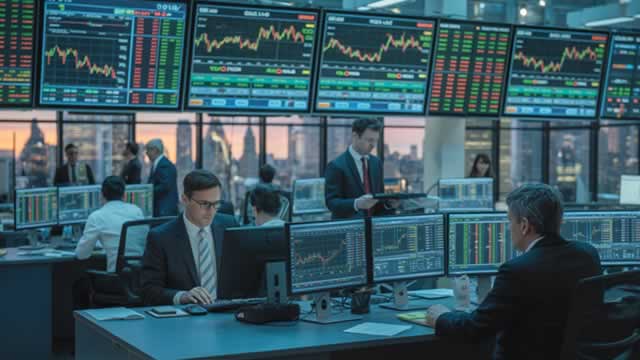
The video discusses cooling US inflation, leading to reduced expectations for a September Fed rate hike, and a rebound in South Korea's KOSPI index. However, concerns persist regarding rising US borrowing costs, European economic impacts from heatwaves and low river levels, and commodity price surges in coffee and cocoa. The tech sector, particularly AI-related chips, remains a focus despite some market caution.
- US July producer prices came in unchanged, easing inflation concerns and reducing bets on a September Fed rate hike.
- South Korea's KOSPI index has rebounded into a bull market, up over 20% from July lows, fueled by AI demand and stricter ETF rules.
- US Treasury 30-year bond auction saw the highest borrowing costs since 2001, raising concerns about Washington's escalating debt pile.
- European economies face challenges from heatwaves impacting transport and energy, while global coffee and cocoa prices have surged due to supply issues.
- The AI trade continues to drive strong performance in semiconductor stocks like Nvidia, TSMC, and Broadcom, though market maturity is leading to more discerning investor approaches.

China-U.S. divide evolves: Expert warns full ban on Chinese AI models could cross Beijing's red line
The discussion highlights the increasing strain in US-China relations, with AI becoming the central point of conflict, potentially overshadowing traditional geopolitical issues like Taiwan. George Chen warns that a full US ban on Chinese AI models could provoke significant Chinese retaliation against American tech companies, leading to higher risks and miscalculations.
- US-China 'strategic stability' is increasingly strained, with AI now the core of conflict, surpassing even Taiwan in importance.
- Recent US actions against Chinese tech (robotics, drones) have frustrated Beijing, which expects the US to 'do nothing' for stability.
- A potential full US ban on American companies using Chinese AI models could trigger Chinese retaliation against major US tech firms, impacting a trillion-dollar market.
- Both sides are urged to pursue 'co-opetition' and establish AI guardrails to manage risks, especially concerning non-state actors and automated weapons, to avoid miscalculation.
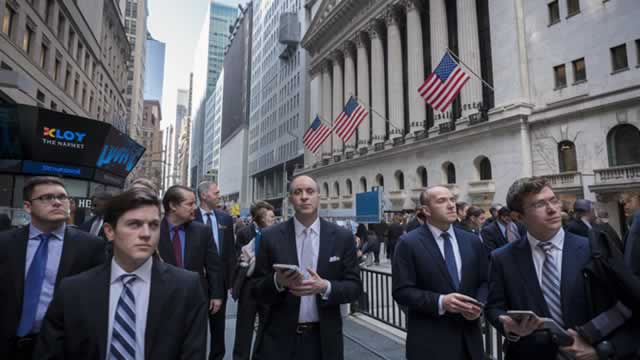
The market is currently in a bullish environment, driven by strong global earnings and the ongoing AI trend. While long-end bond yields are expected to rise, the consensus view suggests this might be priced in, leading to a slower ascent. Geopolitical risks, particularly regarding Iran, are not seen as a major threat to energy prices or equities in the near term, fostering a 'choppy bullishness' in low-liquidity summer markets.
- Global stocks are in a bullish environment, supported by strong earnings and the AI bubble.
- Long-end bond yields are expected to rise, but the consensus view might mean the premium is already priced in, leading to a slower rise.
- Geopolitical risks (Iran) are acknowledged but deemed unlikely to cause significant market disruption (especially oil prices) before the US midterms.
- Investors are advised to 'sit back, collect carry, expect vol to go lower, and equities to go higher' in the current low-liquidity, low-volatility summer market.
The discussion centers on the persistent rise in US bond yields, driven by a combination of inflation expectations, fiscal deficits, and increased bond issuance from both the Treasury and corporates. Experts express concerns about the Federal Reserve potentially falling behind the curve and anticipate continued upward pressure on long-term yields, making a sustained bond market rally unlikely.
- Rising US bond yields are attributed to inflation expectations, term premium, and fiscal concerns.
- Significant bond issuance from both the Treasury and corporates is contributing to upward pressure on the long end of the yield curve.
- The Federal Reserve risks being behind the curve if it doesn't act on inflation, leading to an asymmetric risk profile for the bond market where a sustained rally is improbable.
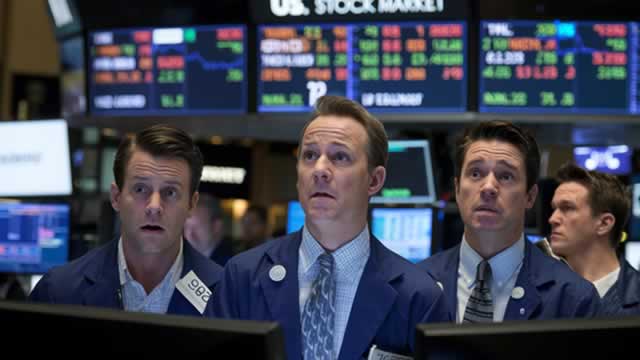
The discussion focuses on the healthcare sector's recent strong performance, with the SPDR Healthcare Select ETF (XLV) hitting an all-time high. CIO Eric Sterner attributes this to increased M&A activity and the leveraging of AI to shorten drug trials. He also highlights Japan and emerging markets as attractive investment opportunities due to corporate governance reforms and expanding consumer bases, respectively.
- Healthcare sector (XLV) has become a top-performing sector since May, after a slow start to the year.
- AI is identified as a major tailwind for healthcare, helping to shorten drug trials and improve economic feasibility.
- Significant M&A activity in healthcare and biotech (over $236 billion announced) is driving growth, as pharmaceutical companies fill pipelines due to patent cliffs.
- Japan is favored due to corporate governance reforms and export growth, while emerging markets offer an expanding consumer base and semiconductor opportunities.

Alec Young of MoneyFlows.com highlights an 'everything rally' in the market, characterized by broad participation across technology, cyclicals, and rate-sensitive sectors. He attributes this to a stable macro backdrop, with oil and interest rates expected to remain range-bound, fostering catch-up opportunities. Technology, including mega-caps and AI infrastructure plays, continues to lead earnings.
- The market is experiencing a broad-based 'everything rally' with widespread participation beyond just technology stocks.
- Oil prices and interest rates (10-year Treasury yield) are expected to remain range-bound, providing a favorable macro environment.
- Technology, including software, cyber names, and mega-caps, continues to demonstrate strong earnings leadership and institutional inflows.
- This 'great setup' offers catch-up opportunities in various sectors, encouraging investors to enjoy the current market ride.
The discussion centers on global oil flow through the Strait of Hormuz and the impact of U.S. economic pressure on Iran. Speakers highlight that 15 million barrels per day (bpd) flow through Hormuz, with an additional 5-7 million bpd via pipelines, and emphasize that U.S. sanctions have halted oil shipments to Iranian ports, causing severe economic distress in Iran. The U.S. is positioned as a dominant force in global oil production, capable of 'replacing OPEC'.
- Total average oil flow through the Strait of Hormuz is estimated at 15 million barrels per day (bpd), combining direct passage and alternative pipelines.
- U.S. sanctions have effectively blocked all oil shipments into Iranian ports, leading to massive inflation and currency devaluation in Iran.
- The U.S. is producing and exporting significant amounts of oil (around 14-20 million bpd including distillates), asserting its role in stabilizing global oil markets and reducing reliance on traditional OPEC suppliers.
Jeremy Siegel discusses the S&P 500 and Russell 2000 hitting all-time highs, driven by strong earnings and improving inflation data. He believes the Fed will not raise rates in September if oil prices remain stable and sees significant future gains from AI-driven productivity and margin improvements across various sectors, including a rotation into value stocks.
- S&P 500 and Russell 2000 hit all-time highs, with earnings continuing to impress.
- Recent CPI/PPI reports are favorable, leading to lowered PCE deflator estimates by Goldman Sachs.
- Siegel predicts no Fed rate hike in September if oil stays in the low $80s, and anticipates a significant boost in productivity from AI in Q3/Q4.
- AI is expected to reduce costs and increase margins for non-tech firms, driving a rotation from growth to value stocks.
- He favors value stocks with potential AI gains that haven't yet been realized.
Mike Pyle of BlackRock discusses the current market dynamics, highlighting the interplay between strong corporate earnings and rising interest rates. He notes that while earnings, particularly in tech, are robust, significant demand on capital markets (CapEx, fiscal spending) is creating upward pressure on long-term interest rates. He frames the market as a 'race between earnings and interest rates,' with future productivity gains being key to alleviating scarcity and supporting a positive equity environment.
- Stock prices are a function of both historic earnings (especially in tech) and interest rates, with recent market gains partly attributed to easing long-term yields.
- There is significant upward pressure on interest rates due to high demands on capital markets from corporate CapEx, global government fiscal spending, and other borrowing needs.
- The market is in a 'race between scarcity and abundance,' with ongoing earnings strength needing to be matched by enhanced productivity to overcome current bottlenecks and sustain growth.
Larry Kudlow celebrates recent cooler inflation data (CPI and PPI) as a sign of disinflation setting in, validating the Federal Reserve's decision to pause rate hikes under a hypothetical new Fed Chair, Kevin Warsh. He also highlights the S&P 500 reaching new record highs, attributing market prosperity to 'Trumpian policies' and suggesting it benefits a large portion of Americans.
- June and July inflation numbers (CPI and PPI) showed disinflation, with month-over-month PPI at 0.0% and 3-month annual rates for PPI at 1.3% and CPI at 0.5%.
- Kudlow praises a hypothetical new Fed Chair, Kevin Warsh, for not raising rates and for focusing on data rather than 'forward guidance,' contrasting him with Jay Powell.
- The S&P 500 hit a new record high, which Kudlow and a clip of Donald Trump attribute to 'Trumpian policies,' benefiting 156 million American adults who own stocks.

The discussion focuses on the Japanese government's support for a faster Bank of Japan (BOJ) rate hike, impacting Japanese bonds and the yen. Despite past interventions, the yen remains weak against the dollar, highlighting the need for actual rate increases. The US's involvement in the intervention was driven by concerns over potential sales of US Treasuries by Japan.
- Japanese bond yields are rising due to news of government support for a faster BOJ rate hike, indicating market anticipation of policy changes.
- The yen continues to hover near the 160 level against the dollar, suggesting that previous currency interventions only provided temporary relief, and a rate hike is seen as essential for sustained currency strength.
- The US's participation in the intervention was motivated by a desire to prevent Japan, a significant holder of US Treasuries, from selling them, which could destabilize US bond markets.
The video discusses how crypto companies, exemplified by Wintermute's $1 billion expansion into traditional markets and AI, are diversifying revenue streams beyond volatile crypto trading volumes. This strategic shift, driven by institutional interest like Goldman Sachs' aim to generate income from Bitcoin, signifies a maturation of the crypto industry towards sustainable business models.
- Crypto companies are increasingly diversifying into traditional finance and AI, moving away from sole reliance on crypto trading volumes.
- Wintermute's $1 billion investment in traditional markets and AI highlights this trend, seeking new, stable revenue sources.
- Goldman Sachs' interest in turning Bitcoin into income reflects a broader institutional embrace of crypto's utility beyond speculation.

The discussion centers on the evolving AI market, highlighting potential price wars driven by cheaper models and Chinese competition, alongside a debate on cooling inflation and its implications for Fed policy. Guests generally anticipate disinflationary trends and potential Fed rate cuts, while downplaying immediate geopolitical risks, suggesting a cautiously optimistic market outlook.
- The AI market faces a 'race to the bottom' due to cheaper models (e.g., Grok 4.6) and potential Chinese competition, but significant spending continues to drive the sector.
- Analysts believe core inflation is cooling faster than official data suggests, potentially leading to a Fed pause in September and rate cuts by year-end or early next year.
- Geopolitical risks, including Iran, Russia-Ukraine, and North Korea, are acknowledged but generally not seen as escalating into full disruption, with economic pressure being the likely approach.
Dan Ives, launching Yorkville Ives, presents a highly bullish outlook on the AI revolution, calling it the 'Fourth Industrial Revolution.' He emphasizes the US's lead over China in tech, the immense demand for AI chips, and the critical need for continuous investment, while identifying government intervention as the primary risk. He believes AI will create jobs and that models will eventually commoditize, shifting value to data.
- Dan Ives launched Yorkville Ives, a 'modern merchant bank' focused on tech and innovation, driven by the AI revolution.
- He views the AI revolution as a 'Fourth Industrial Revolution,' with the US currently leading China in tech for the first time in 30 years.
- AI chip demand is 13-14x supply, and companies must invest heavily to stay competitive, likening it to the Vegas Strip.
- The biggest risk to AI is political intervention and data center moratoriums, not CapEx or use cases.
- He believes AI will create jobs and that models will become commoditized, with value shifting to data.

The video analyzes the US July Producer Price Index (PPI) and jobless claims data. While headline PPI was flat month-over-month, easing some inflation concerns, core-core PPI showed an upside surprise. Jobless claims rose more than expected, presenting a mixed picture for the Fed's next policy decision, though bond yields generally fell.
- US July PPI for final demand was flat month-over-month, with a significant year-over-year drop to 4.7%.
- Core-core PPI (excluding food, energy, and trade) rose 0.4% month-over-month, higher than anticipated, and 4.7% year-over-year.
- Initial jobless claims increased to 209,000, exceeding expectations, while continuing claims decreased.
- Market reaction was mixed, with equity futures showing slight gains or dips, and bond yields generally moving lower.

Peter Navarro discusses the Trump administration's use of AI to combat illegal transshipment, a form of tariff dodging by China and over 40 enabling countries. This initiative aims to protect American jobs and revenue by identifying and penalizing those circumventing US tariffs, with new trade deals incorporating strong anti-transshipment provisions.
- The Trump administration is deploying AI to detect and crack down on illegal transshipment, a modern form of smuggling used by China to avoid US tariffs.
- Over 40 countries, including Mexico, India, and Southeast Asian nations, are identified as enablers in China's transshipment network.
- New trade agreements, such as USMCA, will include strong provisions to prevent transshipment, and countries involved in these scams will face heavy penalties.

The video discusses July's cooler-than-expected PPI data, following a similar trend in CPI, which has significantly reduced the likelihood of a September Fed rate hike. This stacking of lower inflation readings, particularly driven by falling energy prices, is seen as a positive development for the market and could influence the Fed's future policy decisions.
- July PPI came in unchanged month-over-month (0.0%), better than the 0.2% estimate, with core PPI also cooler.
- Year-over-year PPI dropped to 4.7% (from 5.5% prior), and core PPI to 4.2% (from 4.7% prior).
- CME Fed Watch shows September rate hike probabilities dropped to 32.1% (from 43% yesterday morning), with October, December, and January probabilities also falling.
- Initial jobless claims rose slightly to 209K but remain historically low, indicating a strong labor market.
Robert Kaplan, Vice Chairman of Goldman Sachs and former Dallas Fed President, provides a nuanced view of the economy, highlighting strength in AI and infrastructure but sluggishness in other sectors. He believes the Fed made the right decision in July by holding rates and should focus on explaining its decisions rather than rigid forward guidance. Kaplan expresses concern over long-term bond market dynamics due to large fiscal deficits.
- Economy shows strength in AI/infrastructure, but weakness in housing, autos, and low-income consumer segments.
- Fed's July rate hold was the 'absolutely right decision'; future decisions should be data-dependent, avoiding rigid forward guidance.
- Long-end of the Treasury curve is struggling with supply/demand dynamics due to large government deficits, representing a structural shift.
- A 'great earnings story' is unfolding, driven by AI adoption and productivity improvements, making him more bullish on stocks than bonds for the next year.
Gordon Chang discusses China's military buildup and cyberattacks on Taiwan, asserting China is not ready for invasion despite aggressive posturing. He also analyzes China's efforts to challenge US dominance in AI chips and aviation, concluding that US companies like Nvidia and Boeing/Airbus maintain significant leads due to innovation and scale.
- China's military is currently incapable of invading Taiwan, despite intimidation tactics and Russian tech assistance.
- China's AI chip industry is significantly behind US leaders (Nvidia, AMD, Intel) despite substantial investment.
- China's COMAC C919 aircraft is not a true competitor to Boeing and Airbus, lacking comparable technology and international certification.
The Trump administration is deploying an AI-powered 'detective border' to crack down on countries helping China avoid tariffs through transshipment. Peter Navarro, Senior Counselor to the President, explains that this initiative aims to protect American workers and businesses from predatory mercantilist practices and will be integrated into future trade agreements.
- The Trump administration is using an AI-powered 'detective border' to identify and combat tariff dodging.
- China is accused of using transshipment (modern smuggling) by rerouting goods through third countries like Mexico, Canada, Vietnam, and Turkey to evade US tariffs.
- The new AI system allows for real-time monitoring of boats and containers globally, assessing the probability of transshipment with over 95% accuracy.
- The US is strengthening enforcement with forms like 28 and 29 to collect due revenues and is incorporating strong transshipment provisions into new trade deals like USMCA.