Video Analysis
The discussion covers mixed market performance, with tech rallying on strong earnings despite weak retail sales and elevated gas prices. The expert believes consumer caution is temporary and tech's growth is fundamental. A potential capital gains tax overhaul is seen as a positive move to unlock housing supply.
- Stocks ended the week mixed, with the Dow down, but S&P 500 and Nasdaq Composite reaching new highs driven by strong tech earnings.
- July inflation growth was flat (CPI +0.1%, PPI 0.0%), but retail sales unexpectedly tumbled by 0.6%, suggesting consumer caution.
- Elevated crude oil prices (over $82) and national average gas prices over $4/gallon continue to put pressure on consumers.
- The expert argues that tech's strong earnings and robust forward guidance indicate real growth, not a bubble, differentiating it from 1999.
- A potential Trump administration proposal to overhaul capital gains tax exclusions (raising limits from $250K/$500K to $500K/$1M) could unlock housing supply, especially from older homeowners.

The discussion focuses on the US's ability to control the Strait of Hormuz versus Iran's capacity for disruption. Expert Roger Zakheim states the US has military control but Iran can still disrupt trade, affecting global economics. He suggests that while economic pressure is ongoing, surgical military actions might be needed to neutralize Iran's threat, balancing this against domestic political and economic concerns like fuel prices.
- The US possesses military power to control the Strait of Hormuz, but Iran retains the capacity for disruptive actions.
- Economic pressure (sanctions) is being applied, but the Iranian regime is more responsive to kinetic (military) pressure.
- Potential military actions would involve surgical strikes by the Navy, Air Force, or Special Forces against regime targets and missile sites, not large-scale ground operations.
- The ultimate goal is to end the Iranian regime's threat, with the timing being the primary uncertainty.
- The US administration is balancing military escalation with potential impacts on domestic fuel prices and upcoming midterms.
The equity markets concluded a volatile week with a tepid close, as most major indices ended the day in the red, despite a strong earnings season with 85% of S&P 500 companies beating profit expectations. The Russell 2000 was a notable outperformer, while concerns about peak growth persist. US Treasury yields saw slight increases across the board.
- Major indices (Dow Jones, S&P 500, Nasdaq) closed down for the day, though some were up for the week, with the Russell 2000 being the bright spot.
- Key gainers included Reddit (RDDT) on S&P 500 inclusion news, Sandisk Corp (SNDK) as a top performer, and Unusual Machines Inc (UMAC) due to drone tariff announcements.
- Top laggards included Oracle (ORCL) due to a data center project delay, and Applied Materials (AMAT) despite positive analyst sentiment, reflecting a tepid investor reaction.
Major US stock averages were mostly down on Friday, with the Dow, S&P 500, and Nasdaq closing in the red, while small-cap Russell 2000 rose. Economic data showed disappointing retail sales and weak consumer sentiment. Oil prices increased, and mortgage rates remained high. OpenAI is experiencing a talent exodus, raising investor concerns, while Disney's theme parks reported strong performance.
- Dow, S&P 500, and Nasdaq closed lower, while the Russell 2000 index of smaller companies rose.
- Retail sales for July were disappointing, dropping 0.6%, and consumer sentiment remains weak.
- OpenAI is facing a 'talent exodus' ahead of an anticipated IPO, raising 'red flags' for investors.
- Oil prices rose over 1% as the US threatened economic isolation of Iran; US crude is above $82/barrel.
- Mortgage rates remain near 7%, with the national average for a 30-year home loan at 6.71%.

The panel discusses the sustainability of the market rally, consumer spending, and the impact of interest rates. While acknowledging potential headwinds from rising long-term rates, panelists express confidence in healthy consumer spending and highlight investment opportunities in global tech, European banks, and industrials.
- Yung-Yu Ma is not concerned about retail sales, noting healthy consumer spending in discretionary areas and strong credit card data.
- Rising long-term interest rates, driven by high supply of US Treasury and corporate debt, are identified as a potential headwind for the market.
- Ed Clissold suggests a potential short-term pullback in equities due to the pace of CapEx investment and increased Fed influence on the long end of the curve.
- Max Kettner recommends tech exposure outside the US (Asia, Europe) and highlights European banks and industrials as attractive due to strong earnings and manufacturing cycle pickup.

Mike Wilson discusses the surprising strength of the earnings recovery and AI CapEx, while highlighting the unusual challenge of 2022 where both stocks and bonds fell. He emphasizes the importance of avoiding emotional market reactions and advocates for dollar-cost averaging and diversified portfolios. Wilson recommends considering alternative assets like gold and short-duration bonds to provide ballast against inflation and increased asset correlation, urging investors to rebalance unbalanced portfolios.
- The strength of the earnings recovery and AI CapEx has been stronger than anticipated, driving the bull market.
- The 2022 market downturn was particularly challenging as both stocks and bonds declined, removing traditional diversification benefits.
- Investors should avoid being 'shaken out' at market tops or bottoms, practice dollar-cost averaging, and rebalance portfolios to manage risk, especially given increased asset correlation.

The discussion highlights a deteriorating US consumer sentiment with retail sales falling unexpectedly, driven by affordability concerns and high gas prices. While some high-end spending persists, the overall economic picture is mixed, with inflation remaining a key concern for voters and potentially impacting midterm elections. Wealth management strategies for the rich are also gaining traction among everyday investors.
- US consumer sentiment is dropping, and retail sales fell in July, with some retailers like Under Armour reporting softer demand.
- Inflation and affordability concerns are top of mind for voters, influencing the upcoming midterm elections, despite some political parties downplaying the issue.
- A 'K-shaped' economy is evident, with high-end spending on luxury items and hobbies contrasting with broader consumer struggles.
- TikTok influencers are promoting advanced tax strategies, traditionally for the ultra-wealthy, to retail investors, aiming to maximize after-tax returns.
The video reports on Luigi Mangione's guilty plea in a federal case concerning the fatal shooting of UnitedHealth Group executive Brian Thompson. Mangione admitted to the December 2024 shooting and now faces up to life in prison. His defense team plans to seek dismissal on double jeopardy grounds for an upcoming state trial for second-degree murder.
- Luigi Mangione, 28, pleaded guilty to stalking charges in the fatal December 2024 shooting of UnitedHealthcare executive Brian Thompson.
- Mangione admitted in court to shooting Mr. Thompson on Dec. 4, 2024, and now faces up to life in prison without a prosecutor plea deal.
- Investigators cited overwhelming evidence, including a homemade gun and a notebook outlining plans to target a healthcare executive.
- Mangione still faces a state trial for second-degree murder, and his defense team plans to seek a dismissal on double jeopardy grounds.
The video features prosecutors announcing that Luigi Mangione has pleaded guilty to federal stalking charges related to the fatal shooting of UnitedHealth Group Inc. executive Brian Thompson. Mangione accepted full responsibility for Thompson's death, and this marks the final chapter of his federal prosecution, where he now faces life in prison.
- Luigi Mangione pleaded guilty to federal stalking charges for the fatal shooting of Brian Thompson.
- Mangione has accepted full responsibility for the death of Brian Thompson.
- He stands convicted in federal court and faces life in prison for the crime.

The video discusses the legal proceedings of Luigi Mangione, who pleaded guilty to federal stalking charges related to the killing of a healthcare CEO. The discussion focuses on the legal strategy, potential sentencing, and the interplay between federal and state charges, including arguments around double jeopardy. There is no discussion of financial markets or specific companies beyond the mention of the victim's employer.
- Luigi Mangione pleaded guilty to federal stalking charges in connection with the death of a healthcare CEO.
- The legal discussion centers on the implications of a life sentence, the concept of double jeopardy, and the jurisdiction of federal versus state courts.
- The New York District Attorney is reportedly unhappy about the federal charges potentially impacting their state trial.

US markets are down midday Friday due to disappointing July retail sales and weak August consumer sentiment data, though the S&P 500 is still on track for its third consecutive winning week. Disney's theme parks reported strong earnings growth, and Reddit shares surged after its inclusion in the S&P 500 index.
- US markets are in the red, with the Dow down 133 points, S&P 500 down 12 points, and Nasdaq down 98 points, primarily driven by weak economic data.
- July retail sales dropped 0.6%, missing expectations for a slight increase, while August consumer sentiment (University of Michigan) came in at 51, significantly below the 55 expected, marking the weakest reading since June.
- Disney's theme parks were a 'rock solid surprise' with 28% earnings growth, and the CEO indicated continued strategic investment and potential price increases; Reddit shares popped 14% on news of its S&P 500 inclusion.

The discussion highlights a 'dull summer rally' with muted market reactions to mixed economic data. While inflation data was benign, retail sales and non-farm payrolls show 'cracks' in the consumer. The Fed is expected to remain on hold, and investors are showing high confidence with low hedging activity, but a dissipating earnings tailwind and macro cracks suggest potential fragility.
- Economic data, including CPI and PPI, did not surprise to the upside, but inflation is not yet at the Fed's 2% target.
- Retail sales and non-farm payrolls indicate potential 'cracks' in consumer strength.
- The Fed is likely to remain on hold, with the bar for further rate hikes getting lower.
- Treasury yields (10-year) are expected to trade within a range of 4.25% to 4.75%, with a preference for slightly shorter-than-benchmark duration.
- Investor confidence is high, reflected in low hedging activity (put selling in tech names), but the strong earnings tailwind is dissipating, and macro data shows signs of weakness.

Flock Safety CEO Garrett Langley discussed implementing new privacy and security guardrails for their license plate readers (ALPRs) following reports of police misuse. He expressed disappointment over the abuse but highlighted the technology's positive impact on public safety and the company's commitment to transparency and accountability. Flock is also diversifying beyond ALPRs into new growth areas.
- Flock is tightening safeguards, including a new recommended/default 7-day ALPR data retention, required audit assistance for law enforcement by year-end, and suspension triggers for abnormal activity.
- Langley stated that police abuse of their technology was a 'surprise' and 'horrible,' emphasizing the company's commitment to transparency and building trust through accountability.
- Flock is expanding its offerings beyond license plate readers into surveillance drones, mobile trailers, and audio detection, with ALPRs now less than 50% of their forward revenue.

The discussion centers on Europe's looming energy crunch, exacerbated by heat, drought, and geopolitical tensions. The U.S. natural gas market is in a strong position with above-normal storage levels, potentially allowing for increased LNG exports to Europe. This creates opportunities for U.S. natural gas producers, especially those with low production costs and integrated midstream operations.
- Europe faces an energy crunch with natural gas storage levels around 60%, well below the typical 80% for this time of year, and unlikely to hit the 90% target for winter.
- The U.S. natural gas market is well-supplied, with storage levels about 6% above normal, driven by mild weather earlier in the year and planned/unplanned LNG export maintenance.
- A potential 'Super El Niño' could impact heating demand in the U.S., but a warm U.S. winter would incentivize more LNG exports to Europe, benefiting U.S. producers.
- EQT Corp is highlighted as a favored U.S. natural gas producer due to its low cost of supply and integrated midstream business, generating free cash flow even at low gas prices.
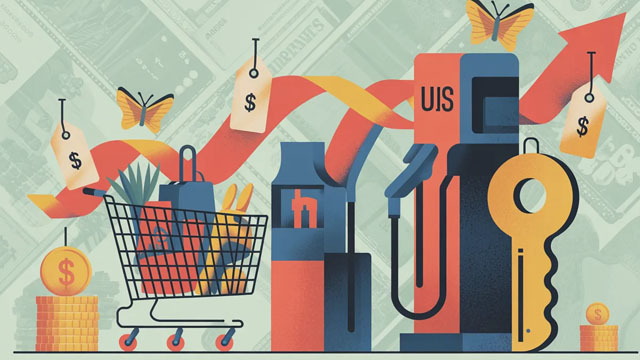
US retail sales fell more than expected in July, declining 0.6% month-over-month against a forecast of a 0.1% rise, with significant drops in auto and non-store retail sales. Despite the disappointing headline figures, an economist from BofA Securities views this as a 'one-off blip' due to factors like Prime Day timing and a heatwave, suggesting underlying consumer spending remains resilient.
- US July retail sales fell 0.6% M/M, significantly below the estimated 0.1% rise.
- Retail sales ex-auto fell 0.3% M/M, and the 'control group' sales (used for GDP) fell 0.4% M/M.
- Key weak areas included motor vehicles & parts (-1.8%) and non-store retailers (-2.2%), while clothing and general merchandise stores saw increases.
- US 2-year and 10-year Treasury yields declined following the report, while equity futures remained marginally positive.
- BofA Securities economist Aditya Bhave considers the dip a 'one-off' event, citing Prime Day's shift to June and a July 4th heatwave, maintaining a view of strong underlying spending.
The market opened mixed on Friday, August 14, 2026, with the S&P 500 hitting a record high and on pace for a third winning week, despite disappointing retail sales data for July. The Dow was down slightly, while the Nasdaq was up. Data breaches are also on the rise, with AI playing a growing role.
- Retail sales for July were a significant miss, dropping 0.6% against an expected 0.1% gain, the biggest month-over-month drop since May 2025.
- The S&P 500 index topped 7800 yesterday and opened at a record high today, on pace for a third winning week, while the Nasdaq is also set for a winning week. The Dow is down 32 points for the day and in the red for the week.
- Credit Suisse shares popped over 10% after being announced as the next addition to the S&P 500 index, and Workday shares surged nearly 18% yesterday on acquisition talks.
- Data breach notices for the first half of 2026 have already surpassed last year's total, with artificial intelligence cited as a contributing factor.
Julian Emanuel of Evercore ISI discusses the current stock market, noting its unusual characteristics like high negative beta and investor complacency despite record highs. He warns that while the long-term trajectory is higher, a bear market will eventually occur, intensified by AI. He advises hedging against potential volatility, especially given low VIX and rising bond yields.
- Market is at record highs but exhibits unusual characteristics like high negative beta and loose financial conditions, fostering investor complacency.
- Emanuel expresses concern about the market's current state, anticipating increased volatility due to rising bond yields and potential Fed rate hikes.
- He recommends hedging strategies, such as building cash and utilizing inexpensive index protection, to mitigate portfolio risk.

Adam Farstrup from Schroders advises investors to diversify their equity exposure beyond the concentrated 'AI trade'. He suggests maintaining long positions in US exceptionalism and technology but complementing them with value outside the US, cyclicals, and European banks. He notes that inflation data provides the Fed with 'breathing room', but the uncertainty surrounding its reaction function remains a key market risk. He anticipates stocks will continue to rise, driven by either sustained earnings beats or multiple expansion.
- Investors should diversify equity exposure beyond the concentrated 'AI trade' to mitigate risk.
- Opportunities exist in value outside the US, cyclicals, and European bank stocks.
- Inflation data gives the Fed 'breathing room', but its reaction function remains a key market risk.
Oil prices are currently range-bound, but significant upside risks exist from geopolitical tensions in Hormuz and the Red Sea, and potential for increased Chinese demand. Refinery outages pose a critical threat to product supply, keeping gasoline and diesel prices elevated, likely above administration's desired levels by Election Day.
- Oil prices are currently range-bound between $80-$90, with potential upside breakouts driven by reduced flows through Hormuz, increased Red Sea attacks, or a material increase in Chinese imports.
- Current oil price declines are attributed to profit-taking and a 'buyer's strike,' with conviction for buying only returning in the low $70s.
- China is identified as the most important short-term factor influencing the oil market's supply-demand balance.
- High refinery utilization (96%) and delayed maintenance pose a significant risk of unexpected outages, which would keep product markets tight.
- Retail gasoline prices are projected to be in the $4.00-$4.30 range by Election Day, while diesel could remain above $5, potentially reaching $5.50-$6.00 in a worst-case scenario.

Dan Ives asserts that the AI revolution is entering its monetization phase, driven by significant capital expenditure from hyperscalers and enterprises. He highlights strong demand for chips and data centers, validating investor confidence in the long-term growth of the tech sector, which he believes will continue to drive overall market performance.
- AI is transitioning into a monetization phase, with enterprises actively investing in data centers and GPUs.
- There's a 13-14:1 demand-to-supply ratio for chips, indicating robust demand for AI infrastructure.
- Microsoft's earnings validated enterprise commitment to AI, showing a significant multiplier effect for every dollar spent on capital expenditure across the tech ecosystem.
- Software companies like Palantir are early beneficiaries, and Apple is strategically integrating AI into its China business.
- The tech sector is viewed as the primary driver of market growth, with the AI revolution still in its early stages (10-15% through).