Video Analysis

Lori Calvasina of RBC Capital Markets discusses the current market setup, highlighting strong Q2 earnings and generally fine valuations. She notes a bias for growth and U.S. equities to continue leading but cautions that aggressive Fed rate hikes and persistent inflation could significantly dampen future returns, despite the market's ability to absorb a few hikes.
- Strong Q2 earnings have helped the market, with the growth trade getting back on its feet after an 'earnings lull'.
- Valuations are 'fine' and sentiment is 'subdued', but 'annoying questions' about interest rates and inflation persist.
- Historically, up to four Fed rate hikes in a 12-month period are manageable for equity markets (average 13.7% return), but more aggressive tightening could lead to flat or negative performance.

Goldman Sachs Chief Economist Jan Hatzius provides an optimistic outlook on the U.S. economy, forecasting July CPI inflation to be slightly below consensus and indicating that Goldman Sachs does not anticipate further Fed rate hikes this year. He notes that temporary inflation drivers are receding and the economy is growing at a sustainable pace with stable unemployment.
- Goldman Sachs estimates July headline CPI at 0.05% M/M (vs. 0.1% consensus) and core CPI at 0.19% M/M (vs. 0.2% consensus).
- Hatzius believes June marked the beginning of a softer trend for inflation, with temporary drivers like tariff pass-through and oil price impacts diminishing.
- Goldman Sachs does not foresee any further interest rate hikes from the Federal Reserve in the remainder of the year.
- The U.S. economy is considered to be 'doing pretty well,' with GDP growth at a sustainable 2-2.5% rate and low, stable unemployment.
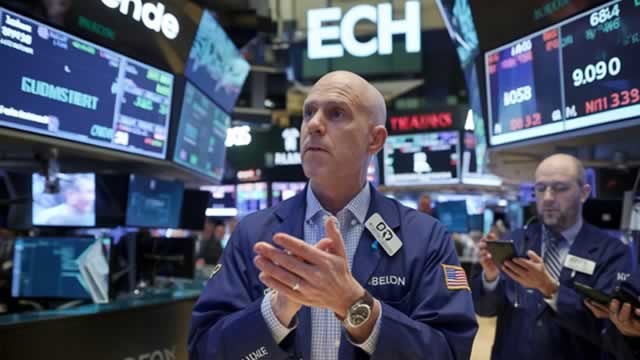
Joseph LaVorgna, Chief Economist at SMBC Americas, argues that the Federal Reserve needs to hike interest rates to combat persistent inflation, which he believes won't subside on its own. He suggests the Fed missed an opportunity to hike earlier and that future hikes will be necessary, potentially leading to higher interest rates, stocks, and a stronger dollar in the near term. The upcoming CPI report and subsequent economic data will be crucial for the Fed's September decision.
- Fed needs to hike rates because inflation won't come down on its own.
- Kevin Warsh missed an opportunity to hike earlier, which could have led to lower long-term rates.
- Interest rates, stocks, and the dollar are expected to be higher in the near-term.
- If core CPI dips tomorrow, the market might price out a September hike, making a November hike politically difficult unless data is 'super compelling'.
- LaVorgna expects the Fed to hike rates before the end of the year.
The panel unanimously agrees that the market's foundation is solid, driven by a durable economy, superb and broad-based earnings growth, favorable fund flows, and significant AI CapEx. Despite some lingering skepticism, experts highlight strong corporate efficiency and non-stretched institutional positioning, suggesting the bull run is sustainable.
- The economy is durable, earnings growth is superb and broad-based across sectors, with favorable fund flows and significant AI CapEx supporting the market.
- Q2 earnings season demonstrated strong performance across 10 out of 11 S&P 500 sectors, with revenue growth being the fastest since 2021 and a record 88% beat rate.
- Institutional positioning is noted as not being overstretched (37th percentile), indicating potential for further market upside despite a prevalent 'yeah but' skepticism among some investors.

Matt Hougan of Bitwise Asset Management discusses how the CoinKite hack reinforces the appeal of Bitcoin ETFs for investors seeking institutional protections. He suggests Bitcoin may be at the bottom of a 'crypto winter' due to its resilience to negative news and growing interest from wealth management platforms, predicting a slower, more institutional bull market ahead.
- Bitcoin ETFs offer institutional protections (regulated custodians, insurance, sharded passwords) that attract investors seeking safety.
- The CoinKite hack is seen as a 'product failure' rather than a fundamental flaw in self-custody, but it highlights the potential safety of ETFs.
- Bitcoin's price has shown resilience to recent negative news, indicating a potential bottoming out of the 'crypto winter'.
- Future growth catalysts include large wealth management platforms adopting Bitcoin, with in-kind transfers into ETFs gaining traction.

The discussion centers on evolving US-Iran relations, with Pakistan's Defense Minister indicating a potential 'arrangement' and Oman mediating talks. The speaker highlights a shift in US strategy, suggesting a reduced presence in the Middle East as the US is now self-reliant on oil and the Pentagon focuses on China. This could lead to a 'very different post-war Middle East'.
- US-Iran are reportedly close to 'some sort of an arrangement' via Omani and Pakistani mediation.
- The US is now self-reliant on oil, reducing the 'catastrophic' impact of Strait of Hormuz disruptions.
- The Pentagon is reportedly interested in withdrawing from the Middle East to focus resources on China.

The analysis highlights Iran's establishment of a 'new navigational order' in the Strait of Hormuz, leveraging wartime disruptions for lasting influence. It suggests a return to pre-conflict shipping routes is unlikely due to reported mines and Iran's desire for control, leading to continued uncertainty and potential impacts on oil markets despite current workarounds.
- Iran has created a new, disruptive navigational order in the Strait of Hormuz, unlikely to revert to previous maritime arrangements.
- Iran aims to convert wartime disruption into lasting geopolitical advantage and control over the Strait, making negotiations difficult.
- Old shipping routes are reportedly mined, and clearing them will be a long and challenging process, further cementing Iran's leverage.

US stock markets closed lower on Tuesday as investors awaited new inflation data and reacted to geopolitical tensions. Key economic indicators like existing home sales and consumer spending showed mixed signals, while mortgage rates continued to rise. The box office, however, reported strong performance from major films.
- Major US stock indices (Dow, S&P 500, Nasdaq) experienced modest losses on Tuesday.
- Investors are awaiting Wednesday's June Consumer Price Index (CPI) report, with expectations of a modest increase in inflation.
- Existing home sales fell in July, and mortgage rates are at their highest in a year, pushing near 7%.
- Geopolitical concerns emerged from reports of a US firing incident in the Strait of Hormuz, while Iran and Oman are reportedly discussing co-management of the strait.
- The global box office is seeing a strong summer, with 'Spider-Man Brand New Day' and 'The Odyssey' surpassing $1 billion.
Salman Niaz of Goldman Sachs Asset Management believes the market is in a 'new regime' of higher macro volatility and data dependency, but not a bond bear market. He emphasizes resilient credit fundamentals and an economy, despite sticky inflation. He also discusses the impact of AI-driven financing on credit markets, viewing it as an opportunity for active managers rather than a widespread disruption.
- The market is in a 'new regime' characterized by higher macro volatility and data dependency, but not a bond bear market.
- Credit fundamentals and the economy remain resilient, with inflation expected to ease towards the Fed's target.
- The 5% threshold on the 10-year Treasury yield is technically and tactically important but not expected to be hugely disruptive.
- AI-driven financing, such as Nvidia's partnerships, is creating supply but is seen as an opportunity for active managers, with limited contagion to broader credit markets.

UBS Global Wealth Management's Suresh Tantia advises caution on memory stocks within the semiconductor sector due to surging DRAM prices and increasing competition from China. However, he broadly recommends buying the dip in semiconductors, favoring equipment manufacturers and foundries, and notes positive foreign inflows into South Korea.
- UBS GWM prefers semiconductor equipment manufacturers and foundries over memory stocks.
- DRAM prices have risen significantly, and growing competition from China is capping valuation re-rating for South Korean memory stocks.
- Despite specific concerns for memory, the overall semiconductor sector is seen as a 'buy the dip' opportunity, driven by structural demand from AI and returning foreign inflows to South Korea.

Bitcoin miners are increasingly pivoting their substantial power and data center infrastructure towards AI compute, driven by significantly higher profitability compared to post-halving Bitcoin mining. This strategic shift offers miners a new, more stable revenue stream and diversification, attracting significant investment and partnerships with AI firms like CoreWeave.
- Bitcoin miners are repurposing their power-intensive data centers for AI compute, seeking higher profitability than crypto mining.
- AI compute can generate $100k-$250k per megawatt annually, significantly more than Bitcoin mining's $20k-$40k post-halving.
- Companies like Core Scientific (CORZ) are leading this transition, signing large deals with AI firms and seeing substantial stock appreciation.

The CNBC Business News Update reports a modest decline in stock markets, with the Dow down 34 points and Nasdaq down 85 points. Oil prices rose due to concerns about the Iran war. Existing home sales fell in July, but median prices increased year-over-year, while the box office saw strong performance from major films.
- Stocks are modestly lower, with the Dow down 34 points and Nasdaq down 85 points (0.3%).
- US crude oil is up about 1% to over $83 a barrel, driven by uncertainty about the Iran war.
- Existing home sales fell 1.7% in July, but the median home price increased 2% year-over-year to $434,100, with mortgage rates hovering around 6.6%.
- The S&P 500 index is up 13% year-to-date, described as a 'very nice market environment' by an asset manager.
- Movies like 'Spider-Man: Brand New Day' and 'The Odyssey' have collectively made over $1 billion at the global box office.
Analysts discuss expectations for upcoming CPI data, noting core measures are key for Fed policy. European markets are showing strong, broad-based growth, matching the S&P 500. US earnings growth is high but faces sustainability risks, while emerging markets present a mixed picture with uncertainty in South Korean and Chinese equities.
- CPI expectations indicate a slight month-over-month increase but a year-over-year decline, with core measures (ex-housing) being crucial for the Fed's 50/50 rate hike probability.
- European markets, particularly cyclically-oriented sectors like financials and industrials, are experiencing their best earnings season in four years, with the STOXX 600 matching S&P 500 performance.
- US earnings growth is strong (around 50%), but the market's high expectations create a risk of disappointment if the pace of earnings growth decelerates. Emerging markets face uncertainty, with strong South Korean earnings potentially peaking and Chinese profits needing a significant turnaround.

Former US Energy Secretary Dan Brouillette discusses the impact of geopolitical tensions on oil markets, particularly the Strait of Hormuz and Russia sanctions. He notes that disruptions in the Strait create a risk premium for oil prices, while US production has mitigated higher gasoline costs. He also touches on the Strategic Petroleum Reserve and the Jones Act.
- Strait of Hormuz disruptions are keeping oil prices elevated due to an added risk premium, despite President's assertions of open waterways.
- US increased energy production has prevented even higher gasoline prices, keeping them around $4/gallon instead of a potential $7/gallon.
- The Strategic Petroleum Reserve is at its lowest level since 1983, reducing the US's buffer against supply shocks and adding to market risk.
- Iran's ability to control the Strait of Hormuz is described as a 'nuclear weapon' due to its influence over 20% of global oil flow.
- Russia sanctions, including those passed by the Senate, could further impact global energy prices, especially diesel, but may be a necessary cost for a quicker end to the Ukraine conflict.

Consumer spending in July cooled slightly but remains strong, driven by discretionary services and robust wage gains for lower-income households. The 'K-shaped recovery' is converging, with consumers adapting to economic conditions by managing necessity spending and paying off credit card balances, indicating solid financial health despite cost pressures.
- Total card spending per household rose 5% in July, marking the third highest growth in over four years.
- Lower-income households are now driving spending growth, particularly in discretionary services like restaurants, supported by +5.2% YOY wage gains (highest since March 2023).
- Consumers are adapting to economic conditions, with the ratio of necessity spending (gas, groceries) to income coming down, and an increase in households paying off credit card balances in full across all income groups.
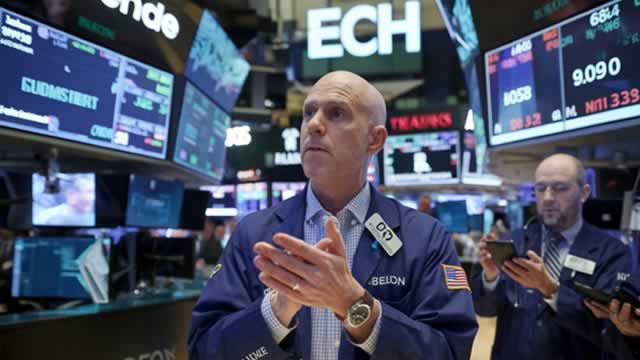
Lowell Baron, CEO of Brookfield Global Real Estate, outlines a bullish investment strategy for real estate, emphasizing opportunistic acquisitions in sectors like office-to-residential conversions and rental housing. Brookfield is actively investing early in the recovery cycle, focusing on complex, under-the-radar transactions where competition is limited, while others remain cautious.
- Brookfield adopts a 'no fear' approach, investing early in the real estate recovery when others are 'sitting tight' due to market uncertainty.
- The strategy targets 'under the radar' opportunities, specifically larger, more complex transactions with minimal competition.
- Key investment areas include office-to-multifamily conversions (especially Class C office buildings), rental housing (built-to-rent communities), senior living, and industrial outdoor storage (IOS).
- Brookfield's competitive advantage lies in building and selling comprehensive 'real estate operating platforms' rather than just individual assets, offering a one-stop solution to buyers.
- The company has already acquired $25 billion in assets year-to-date, demonstrating a rapid pace of investment in high-quality, cash-flowing properties.

Julian Emanuel discusses the current bull market, highlighting that disruptions have stemmed from either AI jitters or macro concerns. He believes the AI revolution is robust, driving capital markets, but warns that rising Treasury yields (especially above 4.8% on the 10-year) and increasing oil prices could create near-term macro headwinds. Despite this, he maintains an optimistic long-term outlook for the S&P 500, with a 9,000 target by 2027 under favorable conditions.
- The AI revolution is alive and well, driving capital markets, but is sensitive to financing costs.
- A 10-year Treasury yield breaking above 4.80% or WTI crude above $95/barrel could cause deeper/longer market volatility.
- Earnings will continue to power the index higher in the medium and long term, led by the AI theme.
- An S&P 500 target of 9,000 by the end of 2027 is considered achievable under the right circumstances, driven by extreme capital market activity and strong earnings surprises.

Sunrise Energy Metals has secured a $400 million investment from the U.S. Department of Defense to develop the world's first primary scandium mine in Australia. This strategic move aims to reduce Western reliance on China for the critical rare earth element scandium, which is vital for defense, aerospace, semiconductors, and 5G/6G technology.
- Sunrise Energy Metals (SRL) received a $400M long-term debt financing commitment from the U.S. Department of Defense.
- The investment will fund the development of the Syerston Project in New South Wales, Australia, to create the world's first primary scandium mine.
- Scandium is a strategic rare earth element essential for high-performance alloys in defense/aerospace, semiconductors, and fuel cells, and is non-substitutable for 5G/6G wireless technology.
- The initiative is part of a broader Western effort to establish secure supply chains for critical minerals, countering China's near-monopoly (85-90% of raw material, 100% of refined production).
- Sunrise Energy Metals is also planning a U.S. stock market listing, potentially including redomiciling, to strengthen its U.S. footprint.

The discussion focuses on the sustainability of AI CapEx spending by hyperscalers, with an anticipation of a future bubble burst during earnings seasons. Significant pressure is also expected on US Treasuries due to fiscal incontinence and policy credibility issues. The impact of oil prices on inflation and European markets is analyzed, suggesting European stocks can cope if Brent crude remains below $100.
- AI CapEx bubble is expected to burst during a future earnings season when hyperscalers adjust capital expenditure plans.
- US Treasuries face significant pressure into year-end and mid-terms due to fiscal incontinence and lack of policy credibility.
- Oil prices, while volatile, are currently manageable for European stocks, but a spike above $100 could derail bullish sentiment.

Sunrise Energy Metals secured a $400 million US investment from the Pentagon to expand scandium production from its Australian Syerston Project. This rare earth element is critical for military, aerospace, and advanced manufacturing, aligning with US efforts to diversify supply chains away from China. The company's stock has seen significant gains following the announcement.
- Sunrise Energy Metals (SRL) secured $400 million in long-term debt financing from the US Department of Defense to expand scandium production.
- Scandium is a critical rare earth element used in aerospace components (lightweight aluminum alloys, 3D printing), solid oxide fuel cells for AI data centers, and 5G wireless spectrum technologies.
- The Syerston Project in Australia hosts one of the world's largest scandium deposits, capable of supplying Western demand for 30-40 years, reducing reliance on China's export controls.
- Sunrise Energy Metals plans to build a metallization plant in the US and is considering a US exchange listing to be closer to customers and access deeper capital markets.
- The company's stock (SRL) jumped significantly, reflecting the market's positive reaction to the strategic investment and the criticality of scandium.