Video Analysis

The video discusses a diesel deal between Trump and Putin aimed at addressing global supply shortages, attributing current issues to underinvestment in refining capacity. It also highlights the rising U.S. mortgage rates, which have hit a three-year high, and stagnant home sales, with recommendations to reduce regulatory costs and achieve fiscal discipline to lower interest rates.
- Trump announced a deal with Putin to deliver up to 36 million barrels of diesel fuel to global markets to alleviate shortages.
- National average diesel prices are $6.28, significantly higher than $3.68 one year ago, with current shortages attributed to underinvestment in refining capacity.
- U.S. 30-year fixed mortgage rates have climbed to 7.4% (from 6.3% a year ago), reaching a three-year high and stalling home sales.
- Proposed solutions for the housing market include reducing regulatory costs for home construction and implementing federal fiscal discipline to lower bond yields and mortgage rates.
The expert discusses skepticism regarding Russia's ability to fulfill a diesel fuel deal with the US due to refinery damage and export bans. He also highlights increased risks and soaring freight rates for oil transit through the Strait of Hormuz due to Middle East conflicts. Additionally, Hurricane Isaias is expected to cause 5-7 million barrels of offshore oil production loss in the Gulf Coast, though refineries are prepared.
- Russia's capacity to export 4.8M tons of diesel to the US is doubted due to refinery damage from Ukrainian attacks and current export bans.
- Oil transit through the Strait of Hormuz faces increased risks and soaring freight rates ($65M-$75M per 2M barrels to China) due to Middle East conflicts and refinery damage.
- Hurricane Isaias is projected to cause 5-7 million barrels of offshore oil production loss in the Gulf of Mexico, but major refineries are expected to operate through the storm due to protective measures.

Baiju Bhatt, CEO of Cowboy Space, discusses his company's mission to build an energy grid and put data centers in orbit. Their first satellite, 'Reason 1', successfully launched via SpaceX, and they are preparing for the first optical power transmission demonstration from space to Earth. The long-term vision involves bespoke rockets that transform into orbital data centers, leveraging continuous solar illumination and radiative heat transfer for efficiency.
- Cowboy Space aims to build an energy grid in orbit and deploy data centers in space.
- Their first satellite, 'Reason 1', successfully launched on a SpaceX rideshare, with communication established.
- The company plans to demonstrate optical power transmission from space to Earth in the coming weeks.
- Future rockets will be purpose-built to transform into data center satellites, reusing components and addressing heat dissipation through radiative transfer.
- Operating in low Earth orbit allows for near-continuous solar panel illumination, overcoming terrestrial intermittency and extending the useful life of chipsets.
The video discusses the current state of financial markets, highlighting a stock market rally despite underlying concerns. Experts point to an 'ominous sign' in the bond market's sell-off and a 'volatility deficit' in equities. Specific company news, including Apple's iPhone order cuts and telecom declines due to SpaceX, contribute to a cautious outlook, while Humana's surge on Medicare ratings offers a positive note.
- The S&P 500 is celebrating a four-year bull run anniversary, but experts warn of an 'ominous sign' in the bond market's latest sell-off.
- AI-related tech companies like OpenAI are projecting significant revenue growth, but there's confusion around metrics and potential delays for IPOs like Anthropic.
- Logitech's CEO discusses the impact of AI on hardware growth, emphasizing the human-technology connection and the company's strong performance despite supply chain challenges.
- Wireless carriers (T-Mobile, AT&T, Verizon) are experiencing significant declines following SpaceX's acquisition of a nationwide spectrum license for cell phone service.
- Apple is facing concerns over weaker-than-expected demand for its new iPhones, leading to component order cuts, while Humana's stock surged due to improved Medicare ratings.

Anastasia Amoroso, Chief Investment Strategist at Partners Group, discusses the current market disconnect where consumer sentiment is low due to rising prices, but it's a 'phenomenal time to be an investor.' She attributes this to strong consumer demand meeting capacity constraints, giving corporations pricing power and leading to record earnings. She also highlights the end of the low-yield era for fixed income.
- Consumer sentiment is low due to rising prices, but corporate earnings are strong due to pricing power amid capacity constraints.
- It's a 'phenomenal time to be an investor' by investing in companies solving capacity bottlenecks and delivering record earnings.
- The era of low yields is over; the 10-year Treasury yield is expected to hover around 5% due to inflation, robust growth, and budget deficit concerns.
- Investment strategy includes public equities (S&P, Nasdaq/AI trade) and private assets (private equity, private credit).

Jared Gross of JPMorgan Asset Management asserts that the current AI buildout represents a massive capital investment boom, not a bubble, comparing it to past industrial revolutions. He outlines the sequencing of benefits, initially favoring 'picks and shovels' suppliers, then shifting to AI providers and broader dissemination, leading to widespread productivity gains. Investors are advised to focus on diversification and active management.
- AI buildout is characterized as a 'massive capital investment boom' on an unprecedented scale and pace, explicitly stated as 'not a bubble' but a 'real economic engine'.
- Benefits are sequenced: initially favoring 'picks and shovels' suppliers (chip sellers, data center builders, energy providers), then moving to AI providers (model builders, hyperscalers), and eventually leading to widespread tech dissemination and global productivity gains.
- While acknowledging that there will be 'losers' and overvalued companies, the overall economic transformation driven by AI is considered profound and real.
- The debt issued by hyperscalers for AI buildout is viewed as a source of diversification in the investment-grade market due to their strong balance sheets, despite some concerns about rapid growth.

The discussion covers former President Trump's announcement of an inquiry into Federal Reserve Governor Lisa Cook, which is seen as a political attack on the Fed's independence. Concurrently, the Fed maintains a hawkish stance with some members advocating for more rate hikes, driven by rising inflation expectations, despite low market odds for an October hike.
- Former President Trump has announced a 'committee of inquiry' to investigate Fed Governor Lisa Cook, which is viewed by some as a politically motivated attack on the Fed's independence.
- The Federal Reserve remains hawkish, with some officials suggesting more rate hikes are necessary to combat inflation, especially as public inflation expectations are rising due to factors like gas prices.
- Despite the hawkish rhetoric, the market currently assigns only a 20% probability to an October rate hike, indicating a potential disconnect or a desire for more data before further action.
The video discusses President Trump's formation of a White House committee to investigate Federal Reserve Governor Lisa Cook over alleged mortgage fraud. This move is seen as part of Trump's ongoing efforts to challenge Fed officials, following a previous attempt to fire Cook that was deemed improper by the Supreme Court due to lack of due process. The legal battle is expected to continue, focusing on the 'for cause' standard for removal.
- President Trump has formed a White House committee to probe Fed Governor Lisa Cook regarding mortgage fraud allegations.
- This action follows a prior attempt by Trump to fire Cook, which the Supreme Court ruled improper due to a lack of due process.
- The allegations against Cook involve minor mortgage fraud, which she claims was an inadvertent error, with other documents containing correct information.
- The legal standard for removing a Fed governor 'for cause' likely requires 'unfitness for office,' a high bar that will be litigated if Trump proceeds with another firing.

The discussion centers on the state of the AI trade, highlighting the long-term opportunity in AI infrastructure despite near-term volatility and a high bar for earnings. Government interest in AI's growth potential to address national debt is also noted, with advice for investors to focus on long-term portfolio strategies.
- AI infrastructure is seen as a key long-term beneficiary, with semiconductor stocks up 80% year-to-date, but near-term volatility and high earnings expectations (63% profit growth by 2027) require selective investing.
- The US administration views AI as an opportunity to 'grow out of debt' and strengthen economic growth, distinguishing it from a financial bubble by its potential for long-term aggregate demand.
- Market breadth is narrow, with the S&P Equal Weight underperforming, suggesting a need for broader profit growth beyond a few leading stocks, and investors are encouraged to focus on personal long-term goals rather than short-term market shifts.

The University of Michigan's preliminary October consumer sentiment survey reveals a decline to 46.3, below estimates, with current conditions falling to a record low of 44.7. Consumers are increasingly wary of high prices and rising interest rates, leading to a sharp decline in buying conditions for durables, cars, and homes. Inflation expectations have also ticked up, indicating continued 'pain on their pocketbooks' for consumers.
- UMich Prelim Oct. Consumer Sentiment falls to 46.3 (Est. 47.6).
- UMich Oct. Current Conditions fall to record low of 44.7.
- UMich 1-Yr Inflation Expectations rise to 4.7% vs 4.6%, and 5-10 Yr Inflation Expectations rise to 3.5% vs 3.4%.
- Buying conditions for major purchases are near historic lows, driven by high prices and higher borrowing costs.
- Consumers, especially middle and lower-wealth individuals, are making spending adjustments, particularly on non-discretionary goods.

Equity futures are higher ahead of Q3 earnings season, with major banks reporting next week. Uncertainty surrounding OpenAI's revenue figures impacted tech stocks, while elevated crude oil prices due to geopolitical tensions and supply chain costs are seen as a factor pushing interest rates higher. Consumer sentiment data is also anticipated.
- Equity futures are higher across major indices ahead of Q3 earnings season.
- Q3 earnings season begins next week, with major banks (JPM, GS, WFC, C) reporting, with strong consumer spending noted as a positive.
- Confusion over OpenAI's annualized revenue figures (initially $50B, now $70B by 2026) caused a tech sector sell-off, affecting companies like MSFT and ORCL.
- Crude oil prices remain elevated around $90 due to geopolitical rhetoric and increased shipping costs, which could push interest rates higher.
- University of Michigan Consumer Sentiment data, expected to be historically low, will be released today at 10 AM ET.

Revolut CEO Nik Storonsky outlines the fintech's aggressive global expansion, leveraging its modern tech stack to quickly enter new markets and secure banking licenses. He details plans to 'dominate' the US market with a full digital banking offering, including credit cards and loans, while also discussing the future impact of AI agents on banking business models.
- Revolut is rapidly expanding, targeting 100 markets this year, with banking licenses in the UK, France, Australia, and a full operation in Mexico.
- The company's modern tech stack allows for quick market launches and lower costs, enabling it to 'eat the pie' of incumbent banks by offering innovative services and forcing competitive pricing.
- In the US, Revolut aims for full banking approval, launching credit cards and loans, targeting younger, affluent, and globally-minded customers, with a primary US stock listing planned.
- Storonsky foresees AI agents transacting on behalf of customers, leading to a significant shift from UI/UX-driven products to backend logic and increased automation in banking.

Global markets are showing a rebound after recent jitters, driven by easing concerns over OpenAI's revenue forecast and a continued strong US dollar. While specific tech and telecom stocks experienced significant pre-market movements due to company-specific news, the overall sentiment is cautiously optimistic as major macroeconomic and geopolitical risks persist.
- OpenAI's expected $70 billion annualized revenue by 2026 is easing concerns around AI investment, leading to a rebound in tech futures.
- The US dollar continues its longest weekly winning streak since early 2023, reflecting global risks from wars, inflation, and AI.
- US visa program crackdowns are impacting major tech and outsourcing firms, with Microsoft and Adobe among those affected.
- Humana (HUM) surged nearly 15% pre-market due to improved Medicare Advantage ratings, while telecom giants Verizon (VZ), T-Mobile (TMUS), and AT&T (T) fell sharply after SpaceX's new mobile service deal.
- Asian markets reversed earlier losses, and European stocks are up, despite ongoing concerns about French bond yields and inflation.

The discussion centers on the U.S. budget deficit, projected to near $2 trillion in fiscal year 2026, driven by entitlement spending and rising interest payments that now surpass defense spending, which is deemed unsustainable. Analysts express concern over the lack of fiscal discipline across both political parties. Separately, the conversation touches on AI companies like OpenAI, whose valuations are largely based on future potential rather than current revenue, akin to a 'bag of hope' for investors.
- The Congressional Budget Office (CBO) estimates the U.S. budget deficit will reach nearly $2 trillion in fiscal year 2026, a 12% increase from 2025.
- Entitlement spending (Social Security, Medicare, and Medicaid) and net interest payments on the federal debt are the primary drivers, with interest payments now exceeding defense spending.
- There is a perceived lack of political incentive for fiscal responsibility, leading to an unsustainable trajectory for government spending.
- AI companies' valuations are currently driven by future potential and investor 'hope' rather than immediate revenue, with a historical parallel to US Steel's early days.

The video discusses a mixed market outlook with tech stocks showing a rebound despite OpenAI revenue doubts and US visa crackdowns on major tech firms like Microsoft. Geopolitical tensions involving Iran and the Strait of Hormuz continue to influence oil prices, while European fiscal concerns and Bahrain's bond crisis add to market uncertainty. London's IPO market sees activity with Airtel Money's listing, and SoftBank seeks significant funding for AI investments.
- OpenAI expects $70 billion in annualized revenue by end of 2026, though its September run rate was $50 billion, causing initial tech stock jitters.
- US Vice President JD Vance accused Microsoft and several Indian IT firms of abusing a key worker visa program, leading to suspensions.
- Brent Crude prices dropped by 1.28%-1.52% after President Trump stated the US would not attack Iran before the midterm elections, despite ongoing attacks in the Strait of Hormuz.
- Bahrain's borrowing costs surged to a six-year high, reflecting fiscal deficits and regional geopolitical risks.
- Airtel Money's IPO in London was oversubscribed, marking a significant event for the city's IPO market, while SoftBank seeks up to $100 billion from Gulf investors for AI.
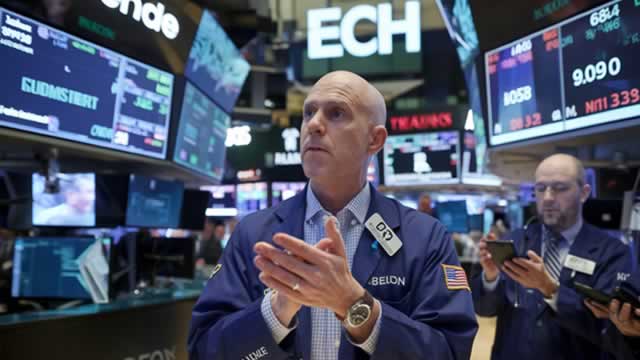
Ray Dalio discusses the challenges faced by central banks, particularly the Bank of Japan, in managing currency and interest rates. He warns that the U.S. economy is entering a tightening cycle with rising interest rates, which will negatively impact growth. Dalio also highlights the risk of overinvestment in new technologies like AI, as people often confuse good technologies with good investments, potentially leading to financial bubbles.
- The Bank of Japan faces pressure to reverse its bond-buying policy due to a weakening yen and losses for bondholders, indicating a difficult balancing act for central banks.
- The U.S. economy is undergoing a classic tightening cycle with rising real interest rates and central bank tightening, which will act as 'brakes' on economic growth.
- Interest rates are expected to rise further until the economy is sufficiently restrained, and the 'cushion' of higher expected equity returns over bonds has diminished.
- People often fail to distinguish between good technologies (like AI) and good investments, leading to excessive capital allocation and borrowing, which can create financial bubbles.
Frances Newton warns that the speed of rising Treasury yields, not just the level, poses a significant 'shock to the system' given record debt. She highlights a market divergence where the AI trade thrives on liquidity while small caps lag, and predicts a breaking point when high yields impact earnings, forcing a Fed response.
- The 'breaking point' for yields is driven by the *rate of change*, not just the absolute level, due to record debt in the system.
- A divergence exists between the AI trade (buoyed by liquidity) and other market segments like the Russell 2000 (down 9%), with the S&P 500 making new highs while the Nasdaq lags.
- Rising yields will eventually affect corporate earnings and valuations, making the current AI trade unsustainable, with the Fed likely responding with liquidity facilities.
- Advises caution in yield-sensitive sectors like utilities and suggests property and casualty insurance equities as an alternative to traditional bonds, which are no longer a quintessential hedge.

The discussion highlights a boom in prediction markets like Kalshi and Polymarket, driven by retail bettors placing high-risk 'longshot' wagers. Despite losing 98% of the time, these bets are popular due to their entertainment value and low cost, raising concerns about potential gambling problems and mispriced contracts.
- Prediction markets (Kalshi, Polymarket) are experiencing rapid growth, fueled by longshot bets.
- Bettors on these platforms lose 98% of the time on longshots, with aggregate losses of 15% on Kalshi and 27% on Polymarket since early 2025.
- The appeal of longshot bets stems from entertainment, a 'dopamine rush,' and low contract prices (e.g., 3-cent contracts), despite the high likelihood of losing.
- Addiction experts warn that longshot bets are particularly problematic for individuals with gambling issues, as they encourage chasing losses and overpaying for unlikely outcomes.
- These platforms are increasingly sports and crypto-focused, attracting a young, predominantly male audience who may prioritize gamified experiences over traditional investment principles.

The discussion centers on President Trump's unusual announcement to pause attacks on Iran until after the midterms, and the broader implications of escalating tensions in the Middle East. Jen Gavito highlights Iran's continued attacks on oil tankers, the economic unsustainability of elevated transit costs, and the potential for further military conflict, emphasizing that diplomacy is the ultimate solution.
- President Trump's public declaration to pause attacks on Iran until after the midterms is an 'unusual' move.
- Iran continues to escalate attacks on oil tankers in the Strait of Hormuz, disrupting traffic and increasing costs.
- Iran is likely using this period to rebuild capabilities and improve negotiating leverage, with diplomacy being the long-term resolution.
- The US would bear consequences for any Israeli strikes against Iran, and the ongoing Houthi attacks in Saudi Arabia are problematic, contributing to economically unsustainable oil transit costs.

The crypto market, led by Bitcoin and Ethereum, experienced a significant pullback this week, driven by a broader 'risk-off' sentiment in global markets and specific news from the TOKEN2049 conference. While regulatory clarity is emerging, its non-legislative nature and persistent macroeconomic headwinds continue to influence crypto trends.
- Bitcoin and Ethereum saw notable declines this week, with Bitcoin down around 3% and Ethereum down around 6%, coinciding with a general risk-off environment.
- The TOKEN2049 conference in Singapore, a massive industry gathering, featured key players from both traditional finance and crypto-native firms.
- A significant takeaway from TOKEN2049 was Tom Lee's confirmation that Bitmain will cease accumulating Ethereum once it reaches 5% of outstanding supply, potentially removing a key source of buying support.
- Emerging regulatory rules from the SEC and CFTC are seen as helpful for clarity, but their non-legislative status means they could be subject to change.
- Despite current selling, positive seasonal trends for Bitcoin (October being a strong month) and technical signals offer some 'buy the dip' sentiment, counteracting negative macro variables.