Video Analysis

Ed Yardeni discusses the bond market's reaction to the Federal Reserve's stance on inflation. He argues that the Fed's hawkish rhetoric on price stability has not been matched by concrete action, leading the bond market to push yields higher as it anticipates future rate hikes.
- The bond market is looking for the Fed to be more vigilant on inflation and to follow through on its commitment to price stability with action.
- The 2-year Treasury note currently suggests the Fed funds rate should be raised three times, indicating market expectations for further tightening.
- Yardeni draws a parallel to 2004, where bond yields rose despite Fed rate cuts, suggesting the bond market can disagree with and override the Fed's stated intentions.
Tim Seymour discusses the recent 'panic phase' in momentum trades, highlighting the impact of global central bank policies, particularly the Fed and Bank of Japan, on bond yields and market dynamics. He notes that while higher yields pose headwinds, oversold sectors like semiconductors, gold, and commodities present potential trading opportunities, supported by market broadening.
- The momentum unwind entered a 'panic phase' yesterday, characterized by forced liquidation and outsized declines.
- Semiconductors (SMH) are currently at key support levels, mirroring their March bottom, and momentum is at its most oversold level in three years.
- Higher global bond yields and hawkish central bank stances (Fed, BoJ) are significant headwinds for momentum trades, with a 5% 10-year yield potentially choking momentum.
- The equal-weighted S&P (RSP) has been outperforming the market-cap weighted S&P 500, indicating market broadening built on fundamental margin and EPS growth.
- The playbook involves playing oversold trades like semis for potential 10% gains, and favoring gold and commodities which could benefit from a weaker dollar.
The video analyzes Bitcoin's surprisingly muted reaction to the recent Fed announcement, interpreting its stability as a bullish sign of maturity and decoupling from traditional macro events. It also highlights Robinhood's higher revenue from prediction markets compared to crypto trading and discusses the broader trend of major digital asset platforms evolving into comprehensive financial ecosystems.
- Bitcoin's resilience after a significant Fed announcement suggests its growing maturity and potential independence from traditional macro drivers.
- Robinhood's revenue from prediction markets surpassed its crypto trading revenue, indicating diversification and new growth areas within the digital asset space.
- Leading digital asset platforms are expanding their offerings to become complete financial ecosystems, providing a wider array of services beyond basic crypto trading.

The video highlights an 'illusion of calm' in cap-weighted indices, masking significant underlying rotations and 'carnage' in momentum and mega-cap tech stocks, particularly semiconductors. Despite this, broader market breadth is healthy. The Fed's recent decision and future rate hike probabilities are also analyzed, with inflation and labor market resilience being key drivers.
- Cap-weighted indices create an 'illusion of calm,' masking aggressive rotations and 'carnage' in momentum and mega-cap tech stocks like semiconductors.
- Broader market breadth, including small caps and financials, remains healthy, suggesting resilience despite sector-specific downturns.
- Fed policy remains data-dependent, with significant probabilities for future rate hikes in the coming months, influenced by inflation and labor market data.
Amos Hochstein discusses the prolonged U.S.-Iran conflict, noting that military options are diminishing and the situation is complex. He highlights the coalescing geopolitical fronts (Iran and Russia-Ukraine) and their significant negative impact on global energy supply and prices, leading to inflationary pressures on the economy. He recommends focusing on diplomatic solutions and alliances to stabilize energy markets.
- The U.S.-Iran conflict is dragging on, with current military strikes showing diminishing returns.
- President Biden faces a critical decision regarding a larger military campaign, which could heavily damage the global economy.
- Ukrainian attacks have significantly impacted Russian diesel exports and refineries, further tightening global energy supply.
- U.S. refineries are running at near 100% capacity with low maintenance, and strategic petroleum reserves (SPR) are lower.
- Hochstein advises worrying about energy prices in four weeks and emphasizes the need for a deal with Iran, focusing on nuclear sites and ensuring the Strait of Hormuz functions.

Kevin Mahn discusses the market's reaction to the Federal Reserve's decision, noting a 'Goldilocks' economic environment despite a 'wall of worry.' He emphasizes staying invested through volatility and highlights his top stock picks in tech, particularly in compute and memory, for long-term growth.
- The Federal Reserve is seen as a 'reformer' under Kevin Warsh, with potential changes in communication and operations, but likely no interest rate hikes this year.
- Despite geopolitical tensions and high gas prices, the current economic environment (GDP, core PCE, unemployment) is described as 'Goldilocks,' suggesting the Fed may not need to intervene aggressively.
- Mahn advises investors to stay invested through anticipated market volatility, as timing the market is difficult and missing key upswings can severely impact returns.
- He is bullish on Alphabet (GOOGL) for its AI advancements, Taiwan Semiconductor (TSM) for its chip manufacturing dominance, and Micron (MU) for memory demand, viewing them as strong long-term plays.
White House National Economic Council Director Kevin Hassett expresses full confidence in Fed Chair Kevin Warsh, believing his job is made easier by recent inflation data showing easing price pressures. Hassett views current GDP figures positively and differentiates the current AI sector from past market bubbles, leading to a generally bullish outlook on the economy and future Fed policy.
- Kevin Hassett has full confidence in Fed Chair Kevin Warsh, describing him as a 'realist' who will follow economic data.
- Hassett believes Warsh's task is eased by recent inflation data, including a negative PCE top-line and a drop in core inflation.
- He sees the underlying economy as strong, citing nearly 4% growth in final sales in recent GDP numbers.
- Hassett does not perceive a market bubble in the AI sector, distinguishing it from the dot-com era by noting that AI companies are currently profitable.
Reformation CEO Hali Borenstein discusses the company's upcoming IPO, highlighting strong growth, a robust business foundation, and ambitious plans for international expansion and increased distribution. She emphasizes the brand's broad and loyal customer base and its unique position in the sustainable fashion market.
- Reformation is going public on the NYSE, citing readiness due to strong business performance and growth momentum (Q1 +30%, Q2 +23-24% YoY).
- Growth strategy includes doubling global store count (currently 70), expanding e-commerce, diversifying product categories, and significant international expansion, particularly in France, UK, and Canada.
- The company boasts a broad and loyal customer base, with 98% two-year revenue retention and customers spanning various age groups (under 25 and over 50).
- Reformation differentiates itself from competitors like Theory, Vince, Aritzia, and J.Crew by offering a fashion-forward, value-oriented, and mission-driven product that makes 84% of customers feel confident.
- The average Reformation consumer earns over $100k annually, providing resilience against broader economic pressures.
Roger Ferguson, former Fed Vice Chairman, believes the Federal Reserve will eventually need to raise interest rates despite their recent decision to hold. He noted that Fed Chairman Kevin Warsh's commentary was less hawkish than anticipated, creating confusion in the market. Ferguson emphasized the need for the Fed to back its resolute words with decisive action to combat persistent inflation, which has been above target for five years.
- Roger Ferguson expects the Fed to eventually raise rates, despite the recent pause.
- He found Fed Chairman Kevin Warsh's recent commentary less hawkish than expected, leading to market confusion.
- Ferguson stressed that the Fed needs to follow through with action, not just words, to address inflation effectively.
- He highlighted that inflation has been above target for five years, indicating a failure in previous Fed policy.
Oil prices surged nearly 7% today after President Trump issued warnings to Iran, stating the regime is 'going to get a beating' following an attempted attack on American forces. This geopolitical tension, combined with tight physical inventory markets, including low Cushing storage capacity, is driving a risk premium back into oil prices, leading to increased volatility and higher gas prices for consumers.
- Oil prices (West Texas Crude) jumped nearly 7% today, settling just below $85/barrel, due to renewed Middle East tensions.
- President Trump's warning to Iran, following an attempted attack on American forces, is a key driver of the price surge.
- Physical inventory markets are very tight, with Cushing storage capacity significantly depleted (under 20 million barrels from a high of 70-90 million).
- Refinery runs are at 97% capacity, and the U.S. is adapting by exporting light crude and importing Venezuelan crude, but volatility remains high.
- The U.S. Oil & Gas Association President notes a 'generational shift' where the Strait of Hormuz may matter less in the long term, but short-term pain for consumers is evident with gas prices above $4.
Mark Cudmore criticizes the recent Fed press conference as a 'disaster,' arguing that Chair Warsh undermined the Fed's credibility by appearing uncertain and inconsistent. This lack of clear communication is expected to be 'bad for the dollar' and 'bad for long-end bonds,' leading to continued steepness in the yield curve.
- The Fed press conference was deemed a 'disaster' due to perceived lack of authority and inconsistent communication from Chair Warsh.
- Warsh's statements undermined the Fed's inflation target and measurement methods, suggesting a 'crisis policy mode.'
- The poor communication is expected to lead to a weaker dollar and higher long-end bond yields, resulting in a steeper yield curve.
Former Kansas City Fed President Thomas Hoenig criticizes the Fed's decision to hold interest rates, stating they are 'well behind the curve' on inflation. He argues that current real interest rates are too low and the Fed's balance sheet is too stimulative, risking further inflation and compromising Fed independence in an election year.
- Hoenig would have dissented from the Fed's decision to hold rates, believing they are 'well behind the curve' on inflation.
- He notes real interest rates are near zero or negative, and the Fed's balance sheet is growing, indicating a highly stimulative environment.
- He expresses concern that election-year politics might prevent the Fed from taking necessary action in September.
- He urges the Fed to move beyond 'tough talk' to 'deeds' to regain credibility and achieve its 2% inflation target.
The discussion centers on the Federal Reserve's decision to hold interest rates steady, despite internal dissent for a hike. Analysts debate the Fed's communication strategy, the impact of supply-side pressures on inflation, and market reactions, noting a potential disconnect between the Fed's stated 2% inflation target and its current policy stance. The market's upward movement in yields suggests expectations for future tightening.
- The Fed held interest rates steady, but three policy makers dissented in favor of a hike, indicating internal disagreement.
- Analysts questioned the Fed's ability to address supply-side inflation pressures (e.g., war, tariffs) with rate hikes alone, and noted a 'cognitive dissonance' in the Fed Chair's statements.
- Market yields, particularly the 10-year and 2-year Treasury yields, have moved higher, suggesting investors anticipate future rate hikes despite the Fed's pause, reflecting an 'inflation premium'.
Morgan Stanley's Jim Caron argues that markets are misinterpreting the Federal Reserve's (specifically Kevin Warsh's) inflation framework. He believes the Fed is looking at alternative, real-time, supply-side indicators that show inflation is already closer to the 2% target. Caron suggests that further interest rate hikes are unnecessary and a policy mistake, as current inflation is driven by supply shocks, not aggregate demand.
- Markets are caught in a 'doom loop' by misunderstanding the Fed's inflation target and policy.
- Caron believes the Fed is looking at 'trueflation' and trimmed mean CPI, which are already around 2%, not traditional core PCE year-over-year.
- High oil prices, tariffs, and supply issues are driving current inflation, which monetary policy (higher interest rates) cannot solve.
- Hiking rates into an oil-driven inflation shock is a policy mistake and amplifies an economic slowdown that is already underway.

The discussion centers on the market's negative reaction to the Fed leaving interest rates unchanged, with key indices dropping significantly. Analysts suggest the Fed is behind the curve on inflation and is providing less forward guidance, leading to market confusion and a 'bear steepening' in bond yields. The market is seen as losing faith in the Fed's approach to tackling inflation.
- The Fed left rates unchanged, leading to a significant market drop (Dow's worst day since April 2025 - likely a typo, implying a recent worst day).
- Treasury yields rose across the curve (especially the long end), gold increased, and the dollar index fell, indicating market concern about inflation and the Fed's perceived inaction.
- Analysts believe the Fed wants the market to 'do the work' on inflation and is not providing clear guidance, leading to a 'bear steepening' and a loss of market faith in the committee's ability to address high growth and inflation effectively.
The Federal Reserve held interest rates steady, but the market reacted negatively with rising long-term Treasury yields and falling equity indices. Analysts criticized the Fed Chair's confusing communication and lack of clear forward guidance, suggesting the market is questioning the Fed's credibility and may force a rate hike in September to combat inflation.
- The Federal Reserve held its benchmark interest rate steady with a 9-3 vote, but three regional Fed presidents dissented in favor of a rate hike.
- Market reaction was negative: 2-year Treasury yields dropped, while 10-year and 30-year Treasury yields rose significantly, with 30-year yields hitting their highest level since 2007.
- Analysts viewed the Fed Chair's press conference as confusing and lacking clear forward guidance, leading to concerns about the Fed's credibility and potential future policy missteps.
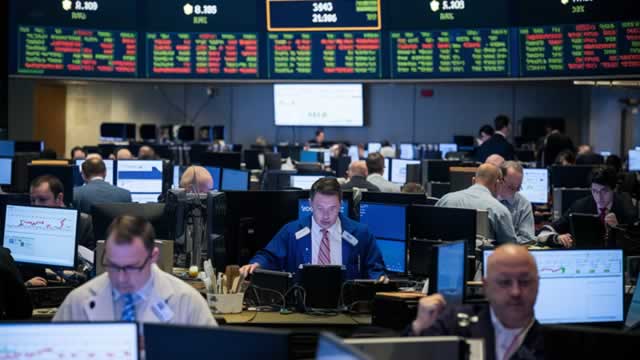
Torsten Slok, Chief Economist at Apollo, discusses how the Federal Reserve's abandonment of forward guidance, as advocated by Kevin Warsh, is leading to increased bond market volatility and higher long-term Treasury yields. He argues that the market is effectively tightening financial conditions in the Fed's stead, challenging the central bank's credibility and potentially forcing future rate hikes if inflation persists.
- 30-year Treasury yields are rising (e.g., to 5.19%) as the market reacts to the Fed's inaction on rates, tightening financial conditions.
- The lack of forward guidance from the Fed is increasing market volatility and uncertainty about future policy.
- Slok highlights Warsh's emphasis on the Lucas critique, suggesting that historical models are less reliable when policy regimes change, leading to a 'model-free' Fed approach.
- The market's strong reaction to the Fed's 9-3 vote to hold rates constant challenges the committee's credibility and implies a higher probability of rate hikes at future meetings.
Brendan Ahern of KraneShares argues that global investors are overlooking China's crucial role in the AI supply chain and as the 'world's factory'. Despite past regulatory challenges and geopolitical concerns, he believes Chinese technology companies, particularly in semiconductors and AI 'picks and shovels', present significant opportunities for global capital.
- China is a key player in the AI supply chain, providing essential components for servers, computers, and data centers, with semiconductor exports 'through the roof'.
- Investors are currently underexposed to Chinese tech, focusing instead on non-Chinese semiconductor giants like SK Hynix, Samsung, Micron, Nvidia, and TSMC.
- Despite past regulatory 'scar tissue' and geopolitical issues, there are 'green shoots' indicating potential for capital to return to profitable Chinese tech investments, especially in the A-share market.
- Market access for some Chinese companies, like CXMT, is limited for global investors, contributing to the undervaluation.
Federal Reserve Chairman Kevin Warsh addresses persistent inflation, acknowledging public impatience but asserting the FOMC's commitment to achieving price stability. He highlights positive economic trends, including solid growth and strong business investment, while emphasizing the Fed's independent decision-making, using market signals as information rather than constraints.
- Inflation remains elevated relative to the Fed's 2% goal, leading to public impatience.
- The FOMC is committed to delivering price stability, focusing on resolving complex economic questions.
- The economy shows impressive resilience with positive trends and strong growth in business investment, especially high-tech capex.
- The Fed views market prices as a useful source of information but will not be constrained by them in policy decisions.

Federal Reserve Chairman Kevin Warsh reiterated the Fed's unwavering commitment to its 2% inflation target, stating there is 'no soft implicit target' and that the Fed 'will not waver' in delivering price stability. While acknowledging the economy's 'impressive resilience' and 'solid growth', he emphasized that the fight against elevated inflation is ongoing and cannot be quickly resolved.
- The Fed committee voted 9-3 to maintain the federal funds rate at 3.5% to 3.75%.
- The economy shows 'impressive resilience' with 'solid growth' and stable unemployment, despite recent shocks.
- Inflation remains 'elevated' relative to the 2% target, and the Fed is 'resolute' in achieving price stability.
- Chairman Warsh explicitly stated, 'There is no soft inflation target... There's only a target, and it's 2%.'
- He stressed that five years of above-target inflation cannot be cured quickly, reinforcing the Fed's long-term commitment.