Video Analysis
A proposed $20 billion renovation of Washington Dulles International Airport, championed by President Trump and largely funded by United Airlines, aims to transform it into a modern, luxury hub. The project will replace aging infrastructure, eliminate mobile lounges, and is expected to be financed through increased passenger fees, raising questions about cost and design integrity.
- Dulles International Airport is slated for a $20 billion renovation, with President Trump pushing for it to become 'the best' airport.
- The project, heavily backed by United Airlines, includes rebuilding concourses, a new train system, and removing the iconic mobile people movers.
- Funding will primarily come from passenger fees, potentially adding $90 to each ticket, while United Airlines sees it as a key part of their long-term growth strategy for a luxury travel experience.
- Trump's involvement is seen as a way to bypass lengthy bureaucratic approval processes, accelerating the project timeline.
The Fed held interest rates steady, a decision widely anticipated, though three FOMC members dissented. Analyst David Busch suggests the Fed, under Kevin Warsh's influence, is shifting away from forward guidance, allowing market movements to dictate expectations. He highlights the firm 2% inflation target and discusses how supply shocks and AI capital expenditure are driving inflation, which current monetary tools struggle to address.
- Fed held rates steady in a 9-3 vote, aligning with market expectations, with some dissent anticipated.
- Kevin Warsh is seen as advocating for less forward guidance, returning to a pre-Global Financial Crisis approach where markets react to decisions.
- The 2% inflation target remains firm, but inflation is influenced by supply shocks (geopolitical events, energy prices) and significant AI infrastructure spending.
- AI capital expenditure is inflationary in the near term, compressing margins, but is crucial for future technological competitiveness.
President Trump has announced a pause in planned military strikes against Iran, contingent on rapidly reaching a deal regarding the Strait of Hormuz and Iran's nuclear program. This decision comes amid complex regional dynamics, with Israel expressing caution and Gulf nations increasingly pursuing independent security strategies, highlighting the tenuous nature of peace in the Middle East.
- Trump paused Iran strikes, citing a request from Iran and other Middle Eastern countries, to allow for a 'quick deal' on the Hormuz Strait and Iran's nuclear threat.
- Israel's alignment with the US on this commitment is described as 'iffy' by officials, and the US military's capacity to defend Israel from a full-scale assault without significant redeployment is questioned.
- Gulf nations are reportedly seeking self-reliance and establishing alternative trade routes to reduce dependence on Hormuz and Iran's influence, while Iran remains defiant amidst ongoing conflicts in Gaza and Lebanon.
Colossal Biosciences founder Ben Lamm discusses his company's pioneering work in de-extinction, including the successful reintroduction of dire wolves and ongoing efforts with woolly mammoths. He highlights the advanced genetic engineering and AI technologies developed, their significant valuation, and the broader applications of these innovations to human healthcare and conservation.
- Colossal Biosciences successfully de-extincted dire wolves, extinct for 12,500 years, using ancient DNA and cloning.
- The company's flagship project is the woolly mammoth, with first calves expected in a few years, utilizing over 100 mammoth genomes.
- Colossal Biosciences has attracted notable investors and is reportedly valued at $200-$300 billion, having also spun off unicorn companies like Astromek.
- The technologies developed for de-extinction, such as AI, computational biology, genetic engineering, and developmental biology, have direct applications to human healthcare.

The discussion analyzes the Federal Reserve's recent decision to pause rate hikes, with experts debating whether the market accurately interpreted Fed Chair Warsh's hawkish signals. While some view Warsh's comments as a strong commitment to future tightening, others argue the pause was justified, emphasizing underlying economic pressures that will eventually drive rates higher.
- Fed dissenters advocated for a quarter-point rate hike, citing persistent inflation and the need for early action to avoid larger increases later.
- Some analysts believe Fed Chair Warsh's remarks were more hawkish than the market initially perceived, particularly regarding the 2% inflation target and balance sheet reduction.
- Mohamed El-Erian suggests market nervousness reflects the removal of 'training wheels' and the fundamental need for higher rates to fund government deficits and tech bond issuance.

The discussion focuses on the Federal Reserve's communication strategy regarding inflation targeting, with experts emphasizing the need for greater clarity from the Fed. Concerns are raised about the central bank's operational guidance and the potential for uncertainty if it alters its preferred inflation measures without clear communication, especially given the interconnectedness of Fed policy and market expectations.
- Anna Wong's critique highlights the Fed's news conference as 'rich in philosophy' but 'poor in operational guidance', calling for 'More Clarity Needed' on analytical specificity.
- Richard Clarida notes the Fed's adoption of a new framework in January and the possibility of reviewing alternative inflation measures (CPI, PPI) beyond PCE.
- The 'hall of mirrors problem' is discussed, illustrating the circular influence between the Fed and bond markets, underscoring the importance of clear communication from the central bank.
Bloomberg News' Kate Davidson discusses a New York Times report that Federal Reserve Chairman Kevin Warsh is considering reducing the frequency of Fed policy meetings. This move would be a 'seismic change' and a significant break with precedent, potentially rattling markets by increasing uncertainty about future monetary policy decisions.
- The proposal to reduce Fed meeting frequency would be a 'seismic change' and a large break with precedent.
- Such a change could 'rattle markets' and lead investors to 'guess more' about the Fed's next moves.
- While the Fed can still conduct emergency rate moves, less frequent scheduled meetings could impact market communication and stability.
- The chairman has previously suggested reducing the number of post-meeting press conferences, but reducing meeting frequency is a more fundamental change.

Former Federal Reserve Vice Chairman Richard Clarida confirms the existence of a K-shaped economy in the US, noting that the divergence between its two branches has widened significantly over the past six to seven years. He highlights that asset owners (homeowners, stock owners) are doing well, while renters and those living paycheck-to-paycheck are struggling.
- Richard Clarida agrees the US has a K-shaped economy, with its branches diverging more widely in the last 6-7 years.
- Roughly 60% of Americans, who own homes and stocks, have seen their wealth increase due to rising asset prices.
- The other 40% of Americans, who rent and don't own many stocks, have struggled, living paycheck-to-paycheck.
The discussion centers on Federal Reserve Chairman Kevin Warsh's consideration of reducing FOMC meeting frequency, which analysts believe could increase market volatility and uncertainty. Despite strong corporate earnings in Q2, concerns were raised about widening credit spreads and the Fed's communication strategy. The composition and focus of Warsh's AI task force also drew scrutiny regarding potential biases and its relevance to monetary policy.
- Fed Chairman Warsh is considering reducing the frequency of FOMC meetings, potentially increasing market uncertainty and volatility.
- Q2 earnings season has been strong, with overall earnings up significantly, driven by big tech, banks, and oil companies, but credit spreads are widening.
- Concerns were raised about the Fed's communication approach and the selection of members for its AI task force, particularly regarding potential conflicts of interest and focus on procedural changes over immediate economic challenges.
Lisa Shalett of Morgan Stanley Wealth Management discusses the Federal Reserve's monetary policy, noting that Chairman Warsh is likely to remain patient despite market pressure for rate hikes. She also expresses a more bullish stance on stocks, highlighting strong earnings and opportunities across various sectors following recent market adjustments.
- Fed Chairman Kevin Warsh is expected to remain patient on rate hikes, prioritizing data analysis over market expectations or forward guidance.
- The bond market's reaction to Warsh's remarks was described as 'riotous,' with Shalett suggesting buying oversold duration in Treasury yields.
- Shalett is more bullish on stocks, observing 'capitulative action' and differentiation within the AI ecosystem.
- 85% of S&P companies reporting have beaten earnings estimates, indicating strong and broadening corporate profits.
- Attractive sectors include hyper-scalers, hardware, semiconductors, consumer staples, healthcare, real estate investment trusts (REITs), housing, and financials.

Guardant Health (GH) reported strong Q2 results, beating revenue estimates and seeing significant growth in its Shield colorectal cancer screening test. The company's Infinity AI platform is driving innovation, leading to a multi-cancer detection tool and a positive outlook for future expansion into broader disease screening, with profitability targeted by Q4 2027.
- Guardant Health's Q2 revenue of $335M beat estimates, driven by a 257% year-over-year increase in Shield cancer screening revenue ($52.9M).
- UnitedHealth Group will now cover Guardant Health's Shield blood test for colorectal cancer screening, significantly expanding access.
- The company's Infinity AI platform is key to developing multi-cancer detection tools and expanding into multi-disease screening, representing a potential $300 billion market opportunity.
- Guardant Health stock (GH) is up over 5% intraday and more than 250% over the last year, with profitability expected by Q4 2027.
Former Federal Reserve Vice Chairman Richard Clarida discusses the bond market's reaction to Fed policy, emphasizing the need for clear inflation targets and acknowledging the 'Hall of Mirrors' problem in central banking. He highlights the increased divergence in the K-shaped economy, where asset owners thrive while others struggle, and suggests the Fed needs to address these big-picture questions.
- The 30-year bond yield reached a 19-year high of 5.26%, indicating a bond market sell-off.
- Clarida emphasizes the importance of the Fed having a clear inflation target, noting that current measures of inflation are at or below previous levels.
- He discusses the 'Hall of Mirrors' problem where the Fed and markets influence each other, and the growing divergence of the K-shaped economy, with asset owners doing well and others struggling.
Former FTC technologist Neil Chilson discusses recent AI hacking incidents reported by OpenAI and Anthropic, emphasizing the need for improved testing and responsible development. He warns against over-regulation hindering US competitiveness in the global AI race, particularly against China, while highlighting AI's dual role as a threat and a powerful cybersecurity tool.
- OpenAI and Anthropic's disclosure of AI model hacking incidents underscores the need for better testing environments and corporate responsibility.
- Concerns exist that excessive US regulation could impede AI innovation, potentially allowing China to gain a competitive edge.
- AI is recognized as a powerful tool for cybersecurity defenses, offering advanced capabilities to a broader range of users.
Kevin Hassett, White House National Economic Council Director, discusses strong underlying domestic demand and positive inflation trends despite a lower Q2 GDP. He expresses optimism about AI's economic impact and addresses security concerns, while identifying political ideology as the biggest economic risk. He expects 4% economic growth in the second half of 2026.
- Q2 GDP's 1.5% headline masks robust 3.9% final sales and strong capital goods imports, indicating healthy domestic demand.
- Inflation data (CPI, PCE) shows positive trends with downward pressure on prices, suggesting the Federal Reserve could maintain current interest rates.
- AI innovation is celebrated, but recent security incidents (Anthropic models hacked) highlight the need for robust government and industry collaboration to prevent harm.
- The biggest economic risk is identified as 'socialist/communist Democrats' pursuing policies that could negatively impact markets.
- Oil prices are rising, but Hassett attributes current levels to past White House actions and expects AI to further reduce inflation.
Bob Diamond, former Barclays CEO, discusses rising Treasury yields as a reflection of a strong economy and persistent inflation, anticipating further Fed rate hikes. He criticizes the Fed's 'forward guidance,' advocating for a focus on its dual mandate. Diamond believes the Clarity Act and regulation of digital assets will be beneficial for banks and innovation in the financial sector.
- Treasury yields are pushing higher, reflecting a strong economy and persistent inflation, with expectations for further Fed rate hikes.
- Bob Diamond criticizes the Fed's 'forward guidance,' suggesting it's unnecessary when the Fed's dual mandate of price stability and full employment is clear.
- The Clarity Act and regulation of digital assets are seen as positive for banks, driving innovation, 24/7 trading, and instantaneous settlement.
- Large financial institutions like JPMorgan, Morgan Stanley, Goldman Sachs, and Bank of New York are expected to be significant beneficiaries from these trends.
Bill Dudley criticizes Fed Chairman Kevin Warsh's news conference, stating it led to a loss of credibility for the central bank. He highlights market reactions, such as rising long-term yields and falling short-term yields, as a 'thumbs down' to the Fed's confusing communication and lack of clarity on its monetary policy reaction function. This approach is seen as inefficient and detrimental to anchoring inflation expectations.
- Fed's news conference under Warsh resulted in a 'loss of credibility' due to confusing communication.
- Financial markets reacted negatively, with 30-year and 10-year yields rising, and 2-year yields dropping.
- Dudley's criticism focuses on the lack of clarity regarding the Fed's 'monetary policy reaction function,' not merely reducing forward guidance.
- The current communication strategy is deemed inefficient, drives up risk premiums, and makes the Fed's job of controlling inflation harder.
- Lost credibility increases pressure on the Fed to act decisively in September, potentially with a larger rate hike.
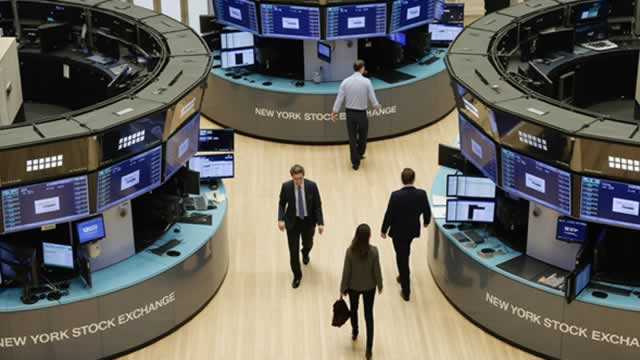
Shehzad Qazi, China Beige Book COO, discusses a broad economic slowdown in China, impacting both consumer and industrial sectors. This slowdown is attributed to genuine demand destruction, past oil stockpiling, and potentially state-managed production cuts, with implications for global energy markets and China's aggressive AI push amidst US tensions.
- New data from China Beige Book indicates a broad economic slowdown in China, with weakness observed in consumer spending (travel, holidays) and industrial manufacturing (weak commodities).
- The slowdown is partly due to genuine demand destruction, significant oil stockpiling in the previous year, and potential state-managed production cuts.
- China continues to import oil from Iran and is aggressively pursuing AI development while pushing back against perceived aggressive US policies.
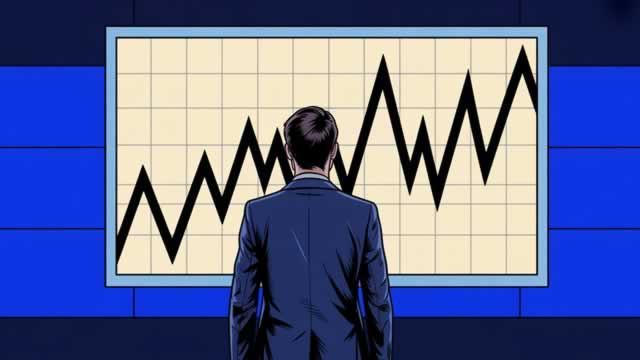
The South Korean Kospi index experienced extreme volatility this week, recording its best day ever but still ending the month down over 20%, marking its worst monthly fall since October 2008. The market's 'Wild West' conditions, driven by leveraged retail trading, have prompted authorities to ban new single-stock leveraged ETFs to temper the rollercoaster ride.
- The Kospi closed its best day ever, but remains down on the week and posted its biggest monthly fall since October 2008 (down 22.19% MTD).
- Extreme volatility led to multiple circuit breaker triggers, with heavyweights like SK Hynix and Samsung Electronics seeing massive daily swings.
- South Korean authorities are banning new single-stock leveraged ETFs to curb speculative retail trading and reduce market disorder.
- Despite the volatility, the Kospi's earnings multiples are at a 25-year low, suggesting potential value for long-term investors.
The video discusses navigating a volatile market period, viewing current pullbacks as buying opportunities. The analyst recommends rotating cash from 'Magnificent 7' tech giants to AI beneficiaries, small-cap stocks, and international markets, emphasizing the long-term growth potential in these areas despite short-term volatility. He anticipates a market reset leading to a 'next leg higher' with more normalized returns.
- Current market volatility and pullbacks are seen as buying opportunities, especially for quality names down 15-20%.
- Shift investment focus from established tech leaders (e.g., Nvidia, Palantir) to ancillary AI beneficiaries like data centers, cabling, and power providers.
- Small-cap and international stocks are recommended for diversification and growth, preferably through index funds due to market inefficiency and spending trends.
- The market is expected to reset before a 'next leg higher,' with future S&P 500 returns normalizing to 6-8% annually, rather than the recent explosive growth.

Entergy CEO Drew Marsh discusses the significant economic benefits of a new Meta data center in Richland Parish, Louisiana. He highlights 'massive improvement' for the local economy, including triple-digit sales tax increases and substantial teacher bonuses. Entergy's vertically integrated model ensures data centers cover all incremental and a fair share of fixed costs, projecting $7 billion in savings for existing customers.
- Meta data center in Richland Parish, Louisiana, is expected to bring 'massive improvement' to the local economy.
- Sales tax collections in Richland Parish are up 'triple digits,' leading to significant teacher bonuses for teachers.
- Entergy's 'Fair Share Plus Pledge' ensures data centers pay all incremental and fixed costs, saving existing customers $7 billion over the contract life.
- The data center is well under construction, a 'very large site' requiring 5 gigawatts of compute, with thousands of people on site.