Video Analysis

The U.S. has escalated sanctions against Iran, threatening 'economic asphyxiation' and secondary sanctions on countries, banks, and companies that continue to engage with Tehran. While military action remains an option, economic pressure is emphasized. Iran dismisses the threats as 'bluster' and vows an 'offensive' response. China, a major trading partner, states it will protect its interests but calls for rational action, while its refiners adjust oil imports.
- U.S. Treasury Secretary Scott Bessent announced 'Operation Economic Outcast' against Iran, threatening secondary sanctions on entities connected to Iran and calling it 'economic asphyxiation'.
- U.S. Defense Secretary Pete Hegseth stated military action is 'firmly on the table' but economic pressure is currently most impactful.
- Iranian officials dismissed U.S. threats, with the Finance Minister calling it 'economic terrorism' and warning of an 'offensive' response.
- China's Foreign Ministry Spokesman Lin Jian urged rational action and restraint, stating sanctions will not resolve disputes, while Chinese refiners like Sinopec are boosting non-Gulf oil imports.
- The Iranian Rial has fallen to a record low against the USD on the unofficial currency market, reflecting severe economic pressure.

Australia's earnings season is described as 'uninspiring' overall, with commodity companies like BHP driving growth. Financials face headwinds from a softer consumer and falling property prices, leading to earnings downgrades. However, opportunities exist in sectors benefiting from structural trends like copper demand and data center build-out, with the ASX potentially acting as a hedge against global AI volatility.
- Overall earnings season is 'uninspiring' with average growth around 5% (excluding commodities), compared to a 10% average.
- Commodity companies, particularly those with copper exposure like BHP, are performing well due to structural trends in electrification and renewables.
- Australian banks are experiencing earnings downgrades due to higher interest rates, falling housing prices, and reduced consumer confidence.
- Opportunities are identified in data center build-out (Goodman, NEXTDC) and companies undergoing cost resets and strategic expansion like Ventia Services and AMP.
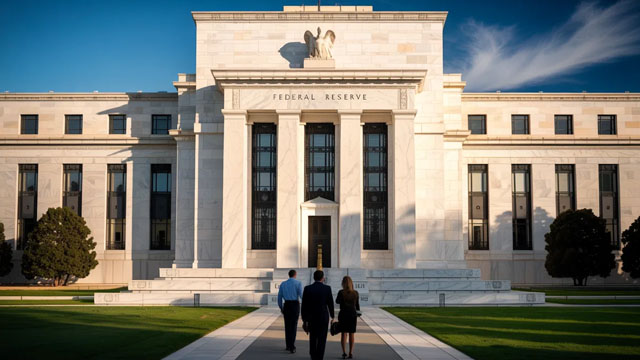
Kristina Hooper discusses the factors driving rising U.S. Treasury yields, including fiscal unsustainability and foreign investor reluctance, which diminishes Treasuries' safe haven status. She anticipates continued upward pressure on long-end yields, leading to downward pressure on long-duration equities, particularly technology and AI. The Fed's potential shift towards less transparency also adds to market uncertainty.
- Rising U.S. Treasury yields are attributed to fiscal unsustainability (war costs, growing budget deficit) and reduced foreign investor demand, diminishing their safe haven perception.
- Continued high yields are expected to exert downward pressure on equities, especially long-duration technology and AI stocks, due to concerns about justifying high valuations.
- The potential for less transparency from the Federal Reserve, as suggested by Kevin Warsh's vision, creates additional uncertainty for market participants.
Julian Emanuel discusses market risks post-Nvidia earnings, highlighting the significance of the 10-year Treasury yield and the conclusion of earnings season as key factors. He maintains a long-term bullish outlook for the S&P 500, driven by FOMO and structural tech trends, while advising patience and recommending negative beta stocks for diversification.
- Macro risks are making a comeback, with the 10-year Treasury yield being the most important chart due to renewed issuance pressure.
- Earnings season, which served as a strong market catalyst, is now over, creating a market setup dominated by macro risk.
- Emanuel's S&P 500 bull case of 9000 by year-end/early 2027 is driven by 'FOMO' and structural tech trends, but he advises patience for ultimate buying opportunities.
- He recommends negative beta stocks (e.g., McDonald's, PepsiCo) for diversification and index-like returns, noting that traditional index hedges have been costly.

The discussion focuses on the US Treasury's strategic debt management, including interventions and the potential use of the Treasury General Account, to influence long-term interest rates. Apollo's Chief Economist, Torsten Slok, highlights the underlying inflationary pressures and fiscal challenges, while also touching on the Federal Reserve's monetary policy outlook and the long-term economic impact of artificial intelligence.
- Treasury interventions and the potential use of the Treasury General Account are attempts to limit rising long-term interest rates, with the 'threat' of action often being impactful.
- Underlying fiscal deficits and persistent inflation continue to exert upward pressure on rates, posing challenges for debt management.
- Issuing more short-term debt (T-bills) increases sensitivity to Fed rate hikes and lowers the weighted average maturity of outstanding debt, potentially increasing interest payments.
- AI is viewed as short-term inflationary due to investment and hiring, but long-term disinflationary, with potential to reverse the K-shaped consumer trend by impacting high-skilled workers more.
The video discusses the rising cost of US government debt, with 30-year bond yields at their highest since 2001 and the national debt surpassing $40 trillion. It highlights how increased interest rates impact everything from equities and corporate debt to mortgages, and how the traditional base of long-term bond buyers is shifting, making the Treasury more reliant on price-sensitive investors.
- US Treasury sold $25 billion of 30-year bonds at a 5.216% yield, the highest since 2001.
- Rising government bond yields increase borrowing costs for the US taxpayer and influence the valuation of equities, corporate debt, and mortgages.
- The US national debt has exceeded $40 trillion, with interest payments now surpassing defense spending.
- Traditional long-term buyers like pension funds are moving away from long-dated government bonds, forcing the Treasury to rely more on short-term, price-sensitive investors like hedge funds.
- Interest rates are expected to remain higher for longer, impacting governments, consumers, and corporations globally.
The market closed mixed on Monday, August 24, 2026, with the Dow up and the S&P 500 and Nasdaq down. Geopolitical news included the Trump administration's anti-Iran global sanctions plan, with warnings to China. Upcoming events include Fed Chair Warsh's speech at Jackson Hole and Nvidia's earnings report, with analysts anticipating a 'buy the rumor, sell the results' pattern for Nvidia.
- Dow up 140 points, S&P 500 down 21 (finished at 7652), Nasdaq down 200 points.
- Verizon (VZ), Charles Schwab (SCHW), Coca-Cola (KO), and Visa (V) hit all-time highs; chipmakers Micron (MU) and Cerebrus were down 5%.
- The Trump administration unveiled an anti-Iran global sanctions plan, signaling China is not exempt, described as 'warning shots' to countries that might leave the dollar system.
- Fed Chair Warsh is expected to deliver a non-committal speech at Jackson Hole on Friday, focusing on incoming data and inflation targets.
- AI chipmaker Nvidia (NVDA) is set to report quarterly results on Wednesday, with expectations of blockbuster results but limited stock movement due to a 'buy the rumor, sell the results' pattern.

Former Philadelphia Fed President Patrick Harker states that Fed Chair Powell must address three key issues at the Jackson Hole symposium: inflation, the Treasury market, and the limits of the Fed's intervention. He emphasizes the need for consistency in policy, arguing the Fed cannot buy Treasuries while simultaneously fighting inflation, and that the inflation problem remains unsolved.
- Fed Chair Powell must address inflation, the Treasury market situation, and the limits of the Fed's actions at Jackson Hole.
- Harker stresses the importance of policy consistency, noting that the Fed cannot be involved in bond buybacks while simultaneously fighting inflation.
- He believes the Fed has not yet solved the inflation problem and that some FOMC members still advocate for further rate hikes.

The video analyzes MicroStrategy's recent sale of $2 billion in stock and its decision not to purchase additional Bitcoin, maintaining its 840,447 BTC holdings. This occurred just before Bitcoin posted its largest weekly dollar gain, suggesting MicroStrategy 'sold the bottom' and missed an opportunity for further accumulation amidst a strong rally.
- MicroStrategy (MSTR) sold $2 billion of stock last week.
- The company did not use the proceeds to buy Bitcoin, keeping its BTC holdings unchanged at 840,447.
- Bitcoin subsequently posted its largest weekly dollar gain, implying MSTR 'sold the bottom' on BTC.
The discussion covers recent Treasury interventions, the upcoming Jackson Hole Symposium, and technical levels for the S&P 500 and Russell 1000. While Treasury actions are seen as short-term fixes for fiscal deficits, underlying economic resilience and tightening credit spreads suggest a risk-embracing environment, with potential rotation into value sectors.
- Treasury's use of the general account for buybacks is a short-term fix, not addressing long-term fiscal deficits.
- S&P 500 is pausing around the 7600 level, with potential for a support bounce if it closes above 7700, or a pullback if 7600 breaks.
- Overall market conditions are bullish, with tightening credit spreads and a weaker dollar supporting a risk-embracing environment.
- A rotation into value sectors, particularly energy, materials, healthcare, and financials, is observed, potentially leading to a 'stock picker's market'.

OpenAI CEO Sam Altman suggests the AI revolution is still in its early stages, akin to the 'Palm Pilot stage,' and that adoption and economic disruption have been slower than anticipated due to market inertia. He identifies compute as the biggest bottleneck and positions OpenAI as a platform company, aiming to power other businesses rather than directly compete with them.
- Sam Altman states AI adoption and economic disruption are slower than expected, comparing current AI to the 'Palm Pilot stage' before the 'iPhone moment.'
- He notes that compute is the biggest bottleneck for AI development and highlights risks such as loss of control and power centralization.
- OpenAI's strategy is to be a platform company, offering APIs and white-label technology to enterprises, rather than building end-user applications that might compete with customers.

Moderna CEO Stéphane Bancel discussed a significant cancer vaccine breakthrough in partnership with Merck, with Phase 3 melanoma trial results meeting primary goals. This news sent Moderna's shares soaring, highlighting the transformative potential of mRNA technology beyond infectious diseases into oncology, rare genetic diseases, and autoimmune conditions. The company also received FDA approval for its first mRNA-based flu vaccine.
- Moderna and Merck's personalized mRNA cancer vaccine (mRNA-4157/V940) combined with Keytruda met primary goals in a Phase 3 melanoma trial, reducing cancer recurrence or death.
- Moderna shares surged over 129% in one week following the announcement, with Merck also seeing a 12% jump.
- FDA approval for the cancer vaccine is anticipated next year, with the first mRNA-based flu vaccine (mRESVIA) already approved for individuals 50 and older.
- Moderna plans to expand its mRNA platform to address kidney cancer, other severe cancers, rare genetic diseases, and autoimmune diseases, aiming for long-term growth and profitability.

Ed Yardeni believes the 10-year bond yield returning to 4-5% is a sign of a healthy economy, not necessarily inflation fears. He notes that corporate bond spreads haven't widened, indicating no significant stress in financing. The Treasury's potential use of its General Account for bond buybacks is seen as a tool to manage yields, preventing them from reaching 5%.
- 10-year bond yield at 4-5% is considered 'back to normal' and a sign of a healthy economy.
- Corporate bond spreads have not widened, suggesting no stress in financing.
- Treasury's potential bond buybacks are a tool to prevent 10-year yields from hitting 5%.
- Factors like political pushback and shortages in semiconductors/electricity might slow down data center spending, which could help the bond market.

Emily Field from Barclays discusses the strong performance of the healthcare sector, particularly biotech, in Q3. She attributes this to a resurgence in M&A activity by large pharma looking to replenish pipelines, reopened capital markets for biotech companies, and significant innovation in promising drug pipelines like cancer vaccines.
- Healthcare is the second-best performing S&P 500 sector in Q3, with biotech driving gains.
- M&A activity is a major theme, as large pharma companies are actively seeking to supplement their portfolios through acquisitions.
- Capital markets are open for biotech, and real innovation, such as recent cancer vaccine data from Moderna and Merck, is fueling investor excitement.

Wall Street opened mixed with major averages showing varied performance. Geopolitical tensions are rising with a new US plan to pressure Iran, while a trade dispute between the US and Canada has escalated with new tariffs. Investors are also monitoring high oil prices and upcoming key economic events.
- Dow up 99 points, S&P 500 down 21, Nasdaq down 160. United Health and Verizon shares saw gains.
- US-Canada trade talks collapsed, leading to new US tariffs on Canadian goods (excluding oil/natural gas), with Canada planning retaliatory tariffs.
- Treasury Secretary Bessent to speak on bond buybacks and a new Trump administration plan to squeeze Iran. Nvidia's quarterly results and Fed Chair Warsh's speech are also anticipated.
- Oil prices remain above $85/barrel, with US national average gas prices at $4.10/gallon.

Guggenheim CIO Anne Walsh sees a buying opportunity for 10-year US Treasuries if yields reach 5% and would 'back up the truck' for 30-year Treasuries at 6%. She highlights massive debt issuance for AI data centers and fiscal spending as factors pushing rates up, but expresses concern about 'obsolescence risk' in long-duration hyperscaler debt and overall credit market risks.
- 10-year US Treasuries are currently in a trading range, but 5% would present a buying opportunity.
- 30-year US Treasuries are primarily driven by inflation concerns; 6% would be a significant buying opportunity.
- The sheer volume of debt issuance, both from fiscal spending and for AI data center buildouts, is pushing long-end rates higher.
- Walsh is wary of 'obsolescence risk' in long-duration hyperscaler debt and advises a thoughtful, diversified approach to investing in this space.
- While the high-yield market has improved in credit quality, the concentration of debt issuance in investment-grade for AI infrastructure raises near-term risk concerns.

Earl Davis of BMO Global Asset Management dismisses the significance of using the Treasury General Account for bond buybacks. He anticipates 30-year Treasury yields will hit 6% before 10-year yields reach 5%, and his firm is a 'big buyer' of 10-year bonds at the 5-5.25% level due to lower duration risk. He sees global steepening yield curves as growth-productive for banks and identifies opportunities in financials, aerospace & defense, and energy.
- Treasury General Account funding for bond buybacks is not considered significant or impactful on markets.
- BMO expects 30-year Treasury yields to reach 6% before 10-year yields hit 5%.
- The firm is a 'big buyer' of 10-year Treasuries at 5-5.25% due to less mark-to-market risk compared to 30-year bonds.
- Steepening yield curves are a global phenomenon (led by Japan) that can be growth-productive for banks.
- BMO is trimming US high-yield credit, buying short-duration investment-grade (IG) bonds, and favors financials, aerospace & defense, and energy sectors.

Kevin McGurn, Interim CEO of Trump Media & Technology Group, discusses the Truth API, a data feed for Truth Social, sold to institutional customers. He defends the service against controversy regarding early access, stating it's a standard practice in social media and aims to expand licensing to retail and AI platforms. He emphasizes the necessity of such platforms for free speech.
- Truth API provides a data feed from Truth Social to institutional customers, including high-frequency trading firms, offering a 50-millisecond advantage.
- McGurn defends the Truth API, stating it's a 'tried and true' technology common across social media platforms like Twitter and Reddit.
- Future plans include licensing the Truth API to retail trading platforms and large language models for AI, aiming to bring information from 'Wall Street to Main Street'.
Aadil Zaman from Wall Street Alliance Group argues that AI-driven economic growth, not spending cuts, is crucial for addressing the growing U.S. fiscal deficit. He advises investors to prepare for potential market corrections by diversifying their tech portfolios beyond the 'Magnificent 7' and focusing on AI enablers and beneficiaries across the broader economy.
- The U.S. fiscal deficit is a primary concern, with economic growth, particularly from AI, seen as the solution over spending cuts.
- A 5% or larger market correction is considered normal and healthy after a tech-driven bull run, presenting opportunistic entry points.
- Investors should broaden their tech portfolios beyond the 'Magnificent 7' to include AI enablers (firms supplying power and infrastructure) and AI beneficiaries across the wider economy.
- An estimated $800 billion of hyperscaler spending is flowing into the economy, creating opportunities beyond the original AI winners.
The U.S. is preparing to unveil new sanctions against Iran, dubbed 'economic D-Day,' aiming to sever all economic lifelines. In response, Iran has threatened to halt all oil exports from the Persian Gulf, escalating geopolitical tensions and posing a significant risk to global oil supply.
- U.S. Treasury Secretary Scott Bessent announced an 'economic D-Day' against Iran, targeting its petroleum trade, financial flows, and international registries to isolate the 'tyrannical regime'.
- The sanctions aim to force foreign institutions, including major buyers like China, to choose between trading with Iran or accessing the U.S. financial system.
- Iran's National Security Chief, Mohsen Rezaee, threatened that if the economic war continues, 'not a single drop of oil will be exported neither through the Strait of Hormuz nor from anywhere in the Persian Gulf,' deeming support for U.S. sanctions an 'act of war.'