Video Analysis

Mark Zandi, Chief Economist at Moody's Analytics, discusses the significant impact of Artificial Intelligence (AI) on economic growth and inflation. He states that AI is a 'juggernaut' powering macroeconomic growth, accounting for at least a quarter of current GDP expansion. While AI contributes modestly to inflation, its long-term impact on productivity is crucial for sustaining current tech stock valuations.
- AI is a major driver of economic growth, contributing at least a fourth to the current 2% GDP growth.
- AI is adding to inflationary pressures through demand for electronics and chips, though its overall impact on core inflation is currently modest (around 0.3%).
- Sustained productivity gains from AI are critical to support the high valuations of AI-related tech companies like NVIDIA, which saw strong after-hours performance.

The discussion covers LeBron James' $300 million loan from insurers advised by Guggenheim, backed by his future earnings, highlighting a growing trend in high-net-worth financing. It also addresses the federal probe into Mark Walter's TWG for misclassifying over $20 billion in investments, with TWG denying fraud and asserting no victims.
- LeBron James secured a $300 million loan in 2018, structured as bonds and backed by his future revenue streams outside of basketball, such as his Nike sponsorship.
- This financing method is increasingly used by ultra-high net worth individuals (athletes, artists) to unlock upfront capital, indicating life insurers' shift towards more unusual and higher-yielding investments.
- Mark Walter's TWG, currently under federal probe for misclassifying over $20 billion in investments, issued a combative statement claiming 'no fraud, no victims' and that the Los Angeles Dodgers are not being sold.
Federal Reserve Bank of Kansas City President Jeff Schmid suggests that monetary policy may still be accommodative and that a rate hike could be justified as early as September 16. He emphasizes the need to address underlying demand elements contributing to inflation and rejects the notion of a Fed credibility issue, advocating for more real-time data for policy decisions.
- Monetary policy may still be accommodative, not restrictive, implying a need for further tightening.
- A bit higher interest rate might make sense, potentially as soon as the September 16th FOMC meeting.
- The October 28th meeting is not off the table for policy action, despite its proximity to the election.
- The Fed's mandate is to keep prices at 2% inflation and maintain full employment, and there's a need for more real-time data to achieve this effectively.

NVIDIA reported strong Q2 earnings and bullish Q3 guidance, driven by robust data center demand. Analyst Dan Niles believes the AI build-out is '100% a bubble' but doesn't expect it to pop for at least another year, despite potential risks from public pushback on data centers and customer over-ordering.
- NVIDIA reported Q2 revenue of $96.22B (up 106% Y/Y) and Q3 guidance of $108B +/- 2%, both beating estimates, largely driven by data centers.
- Dan Niles views the current AI build-out as '100% a bubble,' drawing parallels to the dot-com era, but anticipates it won't burst for at least another year.
- He notes risks such as public sentiment against data centers (due to electricity costs and pollution) potentially restraining expansion, and customers double-ordering chips due to shortages, which could distort actual demand.

The discussion focuses on the July PCE inflation report (headline 3.7%, core 3.3%) and its implications for the Federal Reserve's policy. Experts debate the causes of inflation, with one guest refuting the Phillips Curve and highlighting energy costs and portfolio management fees. The Fed is expected to pause rate hikes. Also discussed are Meta's settlement and Nvidia's upcoming earnings.
- July PCE inflation (headline 3.7%, core 3.3%) is above the Fed's 2% target.
- Energy prices, particularly diesel, are expected to continue driving inflation.
- Economic growth is argued to be deflationary, not inflationary, by one economist.
- The Fed is anticipated to pause rate hikes due to current data, with Jackson Hole expected to be 'much ado about nothing'.
- Concerns about the national debt and lack of political will to cut spending are raised, with bond vigilantes potentially forcing future cuts.
- Meta Platforms (META) reached a $16.68 billion settlement with 29 states over child addiction lawsuits, with more states potentially joining.
- Nvidia (NVDA) earnings are in focus, with expectations of continued accelerating growth in revenue and earnings, driven by AI.

Robinhood Markets CIO Stephanie Guild discusses how market skepticism is leading to lower valuations despite rising earnings expectations, suggesting potential upside. She highlights the impact of 'quantitative intelligence' (AI-driven knowledge) on market efficiency and shares her portfolio positioning, favoring technology, healthcare, and materials while underweighting financials due to evolving industry dynamics.
- Earnings growth expectations for 2026/2027 are up, but P/E ratios have declined, indicating market skepticism despite strong fundamentals.
- Quantitative intelligence (AI-powered knowledge) is making markets more efficient in the long term, but short-term moves are still influenced by capital flows and options trading.
- Gold is seen as a safer 'store of value' in the evolving financial system, while Bitcoin's recent bounce is viewed with caution.
- Portfolio positioning favors Technology, Healthcare, and Materials, with an underweight stance on Financials and Communication Services, anticipating shifts in the financial landscape as tech companies increasingly offer banking-like services.

The discussion focuses on the recent Bitcoin rally, attributing it to global yield creep, concerns about dollar debasement, and the potential for the Clarity Act to pass in the US Congress. Technical analysis suggests Bitcoin is in a bullish trend, having broken key moving averages, with a potential retest of support before further upward movement.
- Bitcoin's rally is driven by global yield creep, concerns over government deficits, and dollar debasement, attracting investors to Bitcoin and gold.
- The Clarity Act, aiming for clear crypto regulation, is pending a crucial Senate vote on September 15th, with strong advocacy from figures like Cynthia Lummis and Donald Trump.
- Technically, Bitcoin has broken above its 50-day and 200-day moving averages, with an RSI at 80, indicating a strong bullish move, though a retest of prior resistance (now support) at $75,700 is possible.

Ankur Crawford of Alger discusses Nvidia's earnings and the broader AI trade, suggesting that current numbers are less important than the long-term outlook. She believes Nvidia is undervalued based on future projections and dismisses concerns about a data center backlash, expecting the benefits of AI to eventually drive market understanding and excitement.
- Nvidia's current earnings and near-term forecasts are less critical than its long-term growth and margin structure towards 2028/2029.
- Despite recent stock performance, Nvidia is considered undervalued, trading at a low double-digit multiple on future earnings, making it a 'coiled spring'.
- Concerns about a 'data center backlash' (e.g., electricity consumption, regulatory intervention) are acknowledged but viewed as non-factual or solvable long-term issues that won't halt AI growth.
Wall Street is increasingly focused on the 2026 midterm elections, anticipating potential market volatility from contested results, a looming debt ceiling debate in 2027, and the implications of a divided government, particularly concerning former President Trump's potential use of executive actions. Markets seek clarity and stability.
- Investors are concerned about contested or delayed election results, which could prolong uncertainty about who controls Congress.
- The US is expected to hit its debt ceiling in 2027, and a divided Congress could lead to demands for spending cuts in exchange for raising the limit, similar to 2023.
- A divided government, especially with former President Trump, could result in more executive actions rather than legislative cooperation, potentially causing market swings.
Southern Company CEO Chris Womack discusses the utility's strategy for meeting the surging power demand from AI data centers, highlighting a 25-year agreement with OpenAI. He emphasizes that data centers bear the cost of new infrastructure, which he believes helps stabilize and potentially lower electricity rates for existing customers, while the company sees a robust pipeline of new projects.
- Southern Company has secured a 25-year agreement to support OpenAI's planned expansion in Georgia, structured with collateral requirements and minimum bills.
- Womack asserts that data centers are creating a 'huge opportunity' and that their investment in new infrastructure puts 'downward pressure' on existing customer electricity rates.
- The utility maintains a significant and undiminished pipeline of data center projects, with rate stability for existing customers across Georgia and Alabama through 2028.

Keith Lerner of Truist Wealth believes the bull market remains intact despite an expected choppy period as the market shifts focus from earnings to macro factors like inflation and interest rates. He recommends adding to equities for underweight investors and highlights specific sectors like AI/Tech, Financials, Healthcare, and Energy.
- The bull market and uptrend are intact, with a healthy reset in valuations.
- Market focus will shift to macro factors (inflation, interest rates, economy), leading to a potentially choppy period.
- Recommends adding to equities, particularly during seasonal weakness, and likes sectors such as Financials, Healthcare, and Energy.
- AI/Tech remains a dominant theme, with Nvidia's earnings being a key barometer for the sector and broader market sentiment.
- Monitors the 10-year Treasury yield (ideally below 4.80%) and tight credit spreads as indicators of economic resilience.

The discussion centers on the bond market's influence on financial markets, highlighting concerns over rising yields, inflation, and the growing national debt. Analysts criticize past Treasury decisions and warn of a shift from market tailwinds to headwinds, suggesting a challenging economic environment ahead. Gold is viewed as a 'fear trade' amidst these uncertainties.
- The bond market is seen as the primary driver of current and future market action, with yields rising due to increased government and corporate borrowing.
- Criticism is leveled at the Treasury for missing opportunities to refinance long-term debt at lower rates, exacerbating future interest payment burdens.
- The shift from low interest rates and inflation (market tailwinds) to higher rates and increased corporate borrowing (headwinds) is noted as a significant change for the stock market.
- The discussion touches on the long-term solvency of Social Security and the need for bipartisan solutions to address national spending and debt.

Jeff Currie argues that crude oil prices are 'noise,' and product prices (diesel, gasoline) are the true 'signals' for inflation and affordability. He highlights numerous global 'choke points' for fuel products, including the Strait of Hormuz, China's reduced exports, Russian refinery issues, and weather-related disruptions, which are driving up product costs despite falling crude prices. This situation points to significant inflationary pressures and economic challenges.
- Crude oil prices are dismissed as 'noise'; product prices (diesel, gasoline) are the real 'signals' for affordability and CPI.
- Global choke points like the Strait of Hormuz, China's reduced product exports, and Russian refinery issues are creating significant bottlenecks for fuel products.
- Weather-driven events (Red Sea, Rhine River, Panama Canal) are further exacerbating supply constraints for various commodities.
- These bottlenecks are leading to higher product prices, contributing to inflation, and making the Fed's rate hikes problematic for affordability.

Matthew Sigel from VanEck discusses Bitcoin's recent rally, attributing it to a historical 4-year cycle and 'capitulation signals' that typically precede strong one-year performance. He suggests that a potential Democrat administration would not harm Bitcoin and addresses regulatory concerns, noting increased visibility and regulation of leverage in the crypto market compared to past cycles.
- Bitcoin's rally aligns with a historical 4-year cycle and a series of 'capitulation signals' observed in the prior three months, historically leading to excellent one-year performance.
- Regulatory changes have brought much of the crypto market's leverage onto regulated rails, reducing the risk of collapses seen in previous cycles like FTX.
- The expert believes that digital assets have the potential to unleash significant productivity enhancements throughout the economy, regardless of the political administration.

Goldman Sachs' Kinger Lau discusses the divergence between China's sluggish consumer economy and its booming AI sector, driven by government focus on high-tech. He anticipates an 'earnings inflection point' for Hong Kong-listed internet giants in Q3, which could boost investor confidence in their AI potential, despite ongoing geopolitical tensions.
- China has strong companies across all five layers of the AI framework, with the government focused on developing a self-sufficient AI ecosystem.
- The Chinese consumer economy remains soft, but the AI economy is robust, particularly due to external demand, creating a divergence.
- An earnings inflection point is expected for Hong Kong-listed internet giants (like Alibaba, Tencent, Baidu) in Q3 (Oct/Nov), which could lead investors to value their AI upside more.
- Equity markets are currently in 'neutral territory' regarding US-China geopolitical tensions, suggesting investors are not overly concerned.

Bitcoin has surged about 25% in the past week, briefly pushing above $80,000 for the first time since May. This rally is attributed to renewed talk of Bitcoin's anti-inflationary properties following Scott Bessent's bond buying plan and positive regulatory developments in the US, including former President Trump's endorsement of the crypto sector.
- Bitcoin's recent 25% surge is its largest percentage gain in approximately three years, pushing its price above $80,000.
- The rally is driven by two main factors: concerns over dollar debasement and Bitcoin's anti-inflationary appeal, alongside positive regulatory signals in the US, including political endorsements for the crypto sector.
- Industry sentiment is bullish, with significant inflows into US Bitcoin exchange-traded funds (ETFs) suggesting a more meaningful and potentially sustainable rally, despite crypto's underperformance earlier in the year.
The discussion centers on Stanley Druckenmiller's and Mohamed El-Erian's strong criticism of Treasury Secretary Scott Bessent's bond buying plan. They argue it's artificial price management, not liquidity management, warning of risks like encouraging excessive risk-taking, discouraging fiscal discipline, and eroding market credibility. The increasing debt issuance from hyperscalers and government deficits, coupled with reduced foreign demand for Treasuries, creates an imbalance that could lead to instability.
- Stanley Druckenmiller and Mohamed El-Erian criticize the Treasury's bond buying plan as artificial 'price management' that distorts market signals and suppresses yields.
- El-Erian warns that artificially repressing yields in the bond market encourages excessive risk-taking, discourages government fiscal action on deficits, and erodes market credibility.
- Significant debt issuance from hyperscalers (e.g., Meta, Microsoft, Alphabet, Amazon, Oracle) and ongoing government deficits are increasing demand for bond financing, while traditional buyers like China and Gulf countries are stepping back.

Economist Jim Paulsen expresses concern that the stock market has 'used up a lot of capacity' with high valuations and complacent investor sentiment. He anticipates waning economic momentum, particularly in consumer spending, which could lead to lower interest rates coinciding with falling stock prices as recession fears replace inflation concerns.
- Stock market valuations (S&P 500 price and earnings) are significantly above historical trend lines, with earnings at unprecedented highs relative to trend.
- Investor sentiment is complacent, with high household equity holdings and low cash, while profit margins and investment spending are at record highs.
- Economic momentum is slowing, especially in consumer and housing sectors, suggesting potential for lower rates but also increased recession fears.

CNBC reports on Wall Street's growing concerns about the 2026 midterm elections, ten weeks out. Key worries include the potential for contested election results, the looming debt ceiling debate, and the implications of a divided government, particularly under a potential Trump presidency, which could lead to increased market volatility.
- Investors are concerned about contested or delayed election results, which could prolong political uncertainty.
- The U.S. debt ceiling is expected to be hit in 2026, potentially leading to political demands for spending cuts in exchange for raising it.
- A divided government, especially with a President Trump, could result in more executive actions and wild market swings, despite investors typically favoring divided power to curb extremes.
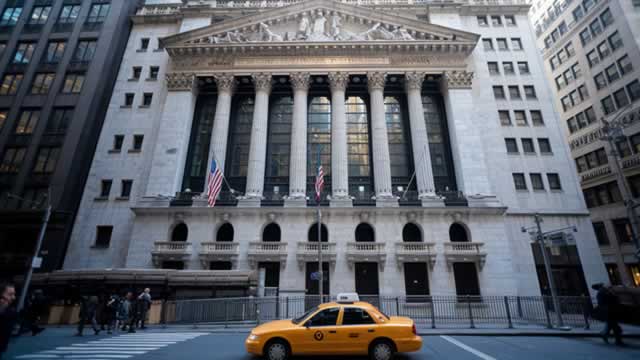
Major US stock indices closed higher on Tuesday, led by Merck and chipmakers like Nvidia ahead of earnings. However, geopolitical discussions between Iran and Oman impacted oil prices, while Canada announced retaliatory tariffs against the US. Consumer confidence and new home sales data disappointed, indicating potential economic headwinds.
- US major averages closed higher, with the Dow up 160 points, S&P 500 up 24 points, and Nasdaq up 171 points.
- Merck shares rose 3.8%, and Nvidia shares were up 2% ahead of its quarterly earnings report.
- Iran and Oman are reportedly discussing a joint shipping route in the Strait of Hormuz, causing US crude prices to tick lower to $82 a barrel.
- Canada announced retaliatory tariffs on US goods, matching US tariffs dollar-for-dollar, excluding energy products.
- Consumer confidence fell to 89.4, missing expectations, and new home sales in July were down 10.5% month-over-month, with rising inventory and falling median prices.