Video Analysis
Bitcoin has surged to $80,000, its highest level since May, driven by the 'debasement trade' and significant inflows into US spot Bitcoin ETFs. Last week saw $1.92 billion in net inflows into these ETFs, the largest in 10 months, signaling a potential end to the 'crypto winter' and a shift in investor sentiment towards institutional products due to security concerns with self-custody.
- Bitcoin surged 26% in the last 10 days, touching $80,000 for the first time since May, fueled by the 'debasement trade' and US Treasury bond purchases.
- US spot Bitcoin ETFs attracted $1.92 billion in net inflows last week, the biggest in 10 months, with BlackRock's IBIT leading the charge.
- The rally suggests a shift in investor behavior, with some preferring the security of Wall Street asset managers for Bitcoin exposure via ETFs, especially after recent hacks on cold wallets.

President Trump's initiative to bring Hyperliquid, a major offshore crypto platform, onshore is an unprecedented move that could lead to the first regulated DeFi platform in the US. This development signifies a significant shift towards integrating 24/7, instantaneous, and decentralized trading into traditional finance, creating both opportunities and regulatory challenges for incumbent exchanges.
- President Trump's announcement to bring Hyperliquid onshore is unprecedented, marking a potential shift in US crypto regulation.
- Hyperliquid is a leading decentralized finance (DeFi) platform, handling hundreds of billions in perpetual futures volume, and its onshore regulation by the CFTC would set a major precedent.
- This move signals the broader integration of crypto technology, including 24/7, instantaneous, and on-chain trading, into traditional finance, prompting incumbent exchanges to adapt and compete.

Canada has announced retaliatory tariffs of up to 50% on $27.6 billion worth of US goods, effective September 8, in response to US tariff threats. Canadian officials, including Ontario Premier Doug Ford, describe the US actions as an 'unprovoked attack' that could harm the auto sector and lead to layoffs in both countries. Fox Business analysts express fatigue over trade wars, with some questioning the economic impact of the specific tariffs and the political motivations behind them.
- Canada to enact tariffs up to 50% on $27.6 billion in US imports, effective September 8.
- Ontario Premier Doug Ford states Canada is under 'unprovoked attack' by Trump, potentially hurting the auto sector and causing US layoffs.
- Analysts discuss whether the tariffs are a significant economic threat, noting some are on 'random things' and auto tariffs don't kick in until January 2027.
- Concerns are raised about the long-term impact on industries and the mutual dependence between the US and Canada.
Energy Aspects' Amrita Sen expresses skepticism regarding Oman's announcement of a temporary corridor for the Strait of Hormuz. She believes the market's immediate bearish reaction in crude oil prices is driven by algorithmic trading reacting to headlines, rather than fundamental optimism about easing tensions or a concrete deal. The underlying geopolitical issues and lack of specifics in the framework make her cautious.
- Amrita Sen is 'very, very skeptical' about the Oman-Iran announcement, citing past instances of similar chatter with no follow-through.
- The statement lacks specific details on practical arrangements to restore safe navigation in the Strait of Hormuz.
- Current oil price movements are largely headline-driven and influenced by algorithmic trading due to thin market liquidity, not fundamental shifts.
- Other oil-producing nations in the region are unlikely to pay tolls, and US sanctions pose a risk for any such payments, highlighting ongoing geopolitical complexities.

Katie Stockton of Fairlead Strategies discusses the technical outlook for Bitcoin, Gold, and Nvidia. She sees Bitcoin in a strong rally with further upside potential, while Gold's relief rally is expected to meet resistance. For Nvidia, a recent pullback suggests a potentially better reaction to upcoming earnings.
- Bitcoin is in a long-term basing phase, with June-July marking the bottom, and has broken out above its 200-day moving average with strong short and intermediate-term momentum.
- Gold is experiencing a counter-trend relief rally with intermediate-term momentum, but is expected to meet resistance and may not be as long-lived as Bitcoin's rally.
- Nvidia (NVDA) is in a short-term oversold condition after a recent pullback, increasing the likelihood of a positive reaction to its upcoming earnings report.
The discussion centers on the negative implications of government and central bank interventions in financial markets. Analysts criticize the Treasury's bond buying as a mistake, arguing it artificially lowers the cost of capital and distorts market mechanisms. Concerns are raised about potential inflationary pressures from trade wars and excessive government spending, leading to a shift towards hard assets like gold and Bitcoin as hedges.
- Druckenmiller and Trennert view Treasury's bond buying as a mistake, artificially lowering capital costs.
- Government spending and trade wars are seen as driving inflationary pressures and undermining market credibility.
- Investors are increasingly turning to hard assets like gold and Bitcoin as a hedge against policy-induced instability.

The video discusses the paradoxical shift where privacy coins, once deemed criminal tools by governments and delisted by exchanges, are now being packaged by Wall Street. Grayscale is converting its Zcash trust into an ETF, ZCSH, on the NYSE, making it accessible to mainstream investors despite its controversial past, while charging a 2.5% annual fee.
- Governments previously treated privacy coins, like Zcash, as tools for illicit activities, leading to their widespread delisting from exchanges.
- Grayscale is converting its existing Zcash trust into an ETF, ticker ZCSH, which will be listed on the New York Stock Exchange.
- This move by Grayscale legitimizes and packages Zcash for mainstream investment, offering access to a previously scrutinized asset at a 2.5% annual fee.
The AI infrastructure boom, particularly data centers, faces political backlash over resource concerns (power, water). However, JPMorgan's Kevin Curtin asserts that financing remains robust, with capital markets providing billions due to attractive risk-reward profiles, enabling a projected $5 trillion buildout over the next five years.
- Political backlash against data centers is growing across states due to concerns about power, water, and utility bills, leading to calls for moratoriums and increased local control.
- Despite these political and community risks, data center financing remains robust, with capital markets actively providing funding.
- The total CapEx for data centers and related chips is estimated at $5 trillion over the next five years (through 2030), with hyperscalers covering about $1.5 trillion and financial markets providing the remaining $3+ trillion.
- The US capital markets are described as the largest, most diversified, and robust globally, adapting to finance this critical industrial revolution through various debt and equity structures.

The discussion highlights a significant shift in the private credit market from borrower-friendly to lender-friendly, exemplified by Thoma Bravo's concessions in debt talks. Private equity firms are grappling with a $3.8 trillion backlog of unsold assets and investor pressure for liquidity, leading to the adoption of new, often expensive, financing structures like continuation funds and structured equity.
- Thoma Bravo conceded 40 creditor-friendly terms in debt talks for its portfolio company, Proofpoint, reflecting a shift to a lender-friendly market.
- Private equity firms face a dilemma with $3.8 trillion in unsold assets and investor demand for distributions amidst higher interest rates.
- New, often expensive, liquidity mechanisms like continuation funds, dividend recaps, NAV loans, and structured equity are being employed to return capital.

Dan Suzuki of iCapital criticizes the Treasury's recent bond buyback and cash-use measures as 'miniscule' and 'symbolic,' insufficient to lower long-term yields. He anticipates a 'higher for longer' yield environment due to significant debt supply and warns of potential future Fed rate hikes if oil prices remain elevated, leading to renewed inflation.
- Treasury's bond buybacks ($64 billion/year) are insignificant compared to past QE ($120 billion/month) and are largely symbolic.
- Drawing down the Treasury General Account (TGA) now could reduce buffer for future debt ceiling issues, potentially increasing term premiums.
- Predicts a 'higher for longer' yield environment due to bond supply and warns that sustained high oil prices could force the Fed to resume rate hikes.

The discussion highlights an inverse relationship between falling crude oil prices and rising stock futures, despite new US sanctions on Iran. Upcoming economic data, including consumer confidence, new home sales, and key inflation indicators like PCE and GDP, are anticipated to significantly impact market direction. Nvidia's earnings are also a major event to watch.
- Crude oil futures are down over 3% today, contributing to a modest rally in equity futures (S&P 500, Nasdaq-100, Dow Jones, Russell 2000 are all up).
- The US Treasury Secretary's 'Operation Economic Outcast' against Iran, involving sanctions on trade partners, is seen as a strategy to hit Iran's economy rather than military action, potentially easing crude oil prices.
- Key economic data releases this week include Consumer Confidence, New Home Sales, Richmond Fed data today, and Durable Goods, GDP, and PCE tomorrow, along with Nvidia's earnings after the bell tomorrow.
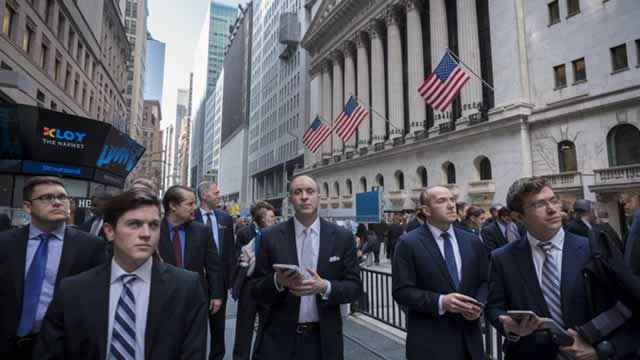
Talley Leger, Chief Market Strategist at The Wealth Consulting Group, expresses a surprisingly bullish outlook for 2026, contrasting it with his bearish stance in 2022. He attributes this to booming earnings, a neutral and supportive Federal Reserve, and accommodative financial conditions. Leger suggests that market pullbacks should be viewed as opportunities rather than concerns, as the economic environment is in a 'Goldilocks' state with encouraging inflation trends.
- The market outlook for 2026 is fundamentally different from 2022 due to 'booming earnings' and a 'neutral to supportive Fed' compared to an 'earnings recession' and aggressive Fed in 2022.
- Financial conditions are accommodative, and there's less reason for the Fed to 'overdo it' and harm the economy, with 10-year Treasury bond yields comfortably below nominal GDP growth.
- The labor market is described as 'Goldilocks' (not too hot, not too cold), and core inflation trends are running as expected, with persistent 'downside inflation shocks' according to the San Francisco Fed's index.

Savita Subramanian of BofA Securities discusses the current market landscape, noting a 'healthier reset' in tech due to multiple compression from rising earnings and falling prices. She expresses optimism for the market but advises against complacency, recommending large-cap value stocks, including tech, as a protective strategy for investors heading into a seasonally turbulent period.
- Market has experienced a 'healthier reset' in 'brothier areas' like tech, semis, software, and hardware, driven by rising earnings and compressed multiples.
- Recommends large-cap value stocks, including tech, as a defensive play against potential S&P 500 downside, suggesting a 'set it and forget it' approach.
- BofA's models are suggesting a higher year-end target for the market, despite concerns about complacency and reduced buybacks.
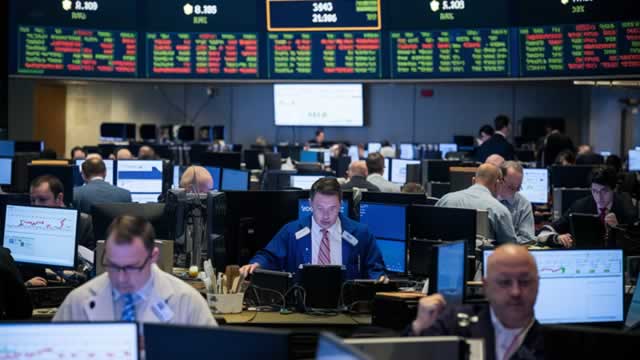
Meghan Swiber discusses the US Treasury's use of buybacks to lower longer-term rates, noting it's a significant shift from historical practice. She questions the effectiveness of buybacks versus direct issuance cuts and highlights the potential for increased fiscal policy uncertainty. The conversation also touches on the upcoming Jackson Hole symposium and the need for clear communication from Fed officials like Kevin Warsh.
- Treasury's use of buybacks is a notable pivot, moving beyond just liquidity provision to controlling longer-term rates, but it creates fiscal policy uncertainty.
- Directly cutting issuance at the back end of the curve would be a more impactful signal than buybacks, especially for the 10-year yield which anchors mortgage rates.
- All eyes are on Kevin Warsh's upcoming speech for clearer guidance on Fed policy, inflation thresholds, and how it might influence longer-term yields and financial conditions.

US Treasury Secretary Scott Bessent issued a broad warning about sanctions against countries supporting Iran, but notably avoided specific mention of Chinese banks or refineries. Analysts suggest this was a 'warning shot' rather than an 'all-out economic assault,' likely to avoid escalating tensions with China ahead of an upcoming summit, despite China being Iran's primary oil buyer and trading partner.
- US Treasury Secretary Bessent warned of sanctions against countries dealing with Iran, stating they would have 'no one to blame but themselves'.
- Bloomberg News noted the absence of specific threats against Chinese banks or refineries, despite China being Iran's biggest oil buyer and second-biggest trading partner.
- The current US approach is seen as a 'warning shot' rather than an 'all-out economic assault,' possibly to avoid disrupting an upcoming summit between Xi Jinping and Donald Trump.

Kit Juckes of Societe Generale views the US Treasury's bond buybacks as 'management of the market' rather than direct intervention. He believes this action signals a desire for a weaker dollar, which he notes is currently overvalued on long-term fundamentals. He suggests this is a strategic move to address the dollar's strength.
- US Treasury's bond buybacks are seen as market management, not direct intervention.
- The Treasury is likely signaling a desire for a weaker dollar, a move that suits America's economic goals.
- The dollar is considered overvalued on long-term fundamentals, making a weaker dollar a logical policy aim.

The discussion centers on the falling Brent crude oil prices and the impact of new US sanctions on Iran. While current sanctions already block Iranian oil exports, the expert notes that China's reduced demand for refined products and internal economic pressures in Iran are significant factors influencing the oil market balance. The future of the Strait of Hormuz is also considered in this context.
- New US sanctions on Iran are not expected to incrementally impact oil prices, as Iranian oil exports are already largely blocked.
- China's dramatic reduction in gasoline and diesel consumption, driven by public policy and high prices, is a key factor in balancing the oil market.
- Iran's leadership is facing significant internal economic pressure, including high poverty and 80% inflation, which could make them more receptive to diplomatic engagement.
- The future of the Strait of Hormuz will be defined by who governs Iran, future export volumes (including through alternative mechanisms), and global oil demand trends.

The US Treasury unveiled 'Operation Economic Outcast' to isolate Iran's economy through secondary sanctions on its trading partners, including China, UAE, and Turkey. The move aims to sever Iran's economic lifelines, with the US threatening to cut off non-compliant foreign financial institutions from the dollar system. Iran and some partners have vowed to resist, escalating geopolitical tensions.
- US Treasury launches 'Operation Economic Outcast' to isolate Iran's economy via secondary sanctions.
- Sanctions target Iranian oil sales and digital asset networks, threatening to cut off non-compliant foreign financial institutions from the US dollar system.
- China, UAE, and Turkey are identified as top trading partners, with the UAE already scaling back ties.
- Iran's Economy Minister views this as an 'economic terrorist attack' and warns of retaliation.

The video discusses the US Treasury's decision to proceed with planned long-dated bond auctions despite increasing bond buybacks. This move draws criticism from market figures like Stanley Druckenmiller and Citadel, who warn against market intervention and advocate for fiscal discipline and central bank action on inflation. German officials also commented on rising bond yields, linking them to global uncertainty.
- US Treasury confirms planned long-dated bond auctions will proceed, even as it doubles buybacks of these securities to $4 billion per operation.
- Critics, including Stanley Druckenmiller and Citadel Securities, argue that government intervention in bond markets is unsustainable and that 'harder choices on fiscal policy and central banks willing to get ahead of inflation' are needed.
- German Finance Minister attributes rising yields to global uncertainty, while German Bund yields are trading at a 15-year high, and gold prices signal market unease.

The video discusses US Treasury Secretary Scott Bessent's expanded sanctions on Iran, threatening secondary sanctions on trading partners like China. It also covers Bitcoin's significant rally to over $80,000 and increased investment in robotics due to global labor shortages, with Europe identified as having a manufacturing advantage.
- US Treasury Secretary Scott Bessent announced severe sanctions on Iran, threatening secondary sanctions on any entity doing business with the regime, including China.
- Bitcoin surged past $80,000 for the first time since mid-May, driven by a 20% rally last week and renewed inflows into spot Bitcoin ETFs.
- A Bullhound Capital report highlights unprecedented investment in robotics due to global labor shortages, emphasizing the need for consistent robot deployment.
- Iran's economy minister dismissed the US sanctions as 'economic terrorism' and warned of retaliation, stating that the 'unipolar world is over'.