Video Analysis
Mohamed El-Erian discusses the U.S. Treasury's intervention in the bond market, calling it a 'step too far' with potential unintended consequences. He highlights pressure on traditional buyers of U.S. Treasuries and anticipates continued upward pressure on yields due to fundamental supply-demand imbalances and lack of fiscal consolidation. He also praises Fed Chair Powell's communication on the Fed's reaction function and the long-term impact of AI.
- The U.S. Treasury's intervention in the bond market, particularly regarding yield curve control, is seen as an attempt to 'impose market outcomes' and a 'step too far' that could lead to unintended consequences.
- Reliable buyers of U.S. Treasuries (e.g., China, Japan, Gulf countries, Norway's sovereign wealth fund) are under pressure or becoming less willing to hold U.S. debt, contributing to a 'fundamental imbalance' in bond financing.
- Fed Chair Powell's speech at Jackson Hole was a 'masterclass of communication' for clarifying the Fed's reaction function, warning against excessive forward guidance, and recognizing AI as a potential factor of production with significant supply-side implications.
- Market uncertainty is expected to persist due to conflicting inflation data (actual vs. expectations) and the dual demand/supply impact of AI.
- El-Erian does not foresee immediate fiscal consolidation in the U.S., which will likely contribute to continued upward pressure on bond yields, with the UK, Japan, and France being particularly vulnerable among G7 countries.

The discussion centers on the global energy supply strain, particularly impacting Europe due to geopolitical conflicts and low gas storage levels. Analysts anticipate persistent inflation, including food prices, to remain higher for longer than expected, influencing bond markets and consumer costs. While some resilience in the global economy is noted, the overall outlook suggests significant headwinds and the need for careful portfolio hedging.
- Europe faces significant macro headwinds from high gas and diesel prices, with gas trading at 8x the US price.
- Food inflation, previously low, is expected to kick in next year, adding to overall inflationary pressures and keeping inflation higher for longer.
- Bond markets are reflecting expectations of better growth but more persistent inflation, leading to sell-offs in major economies like the US, Europe, and the UK.

The discussion centers on recent dovish remarks from NY Fed President John Williams and Federal Reserve Governor Chris Waller, suggesting a potential pause in interest rate hikes at the September FOMC meeting if disinflation continues. Analysts interpret these comments as a significant shift, influencing market expectations for a hold, despite some underlying economic complexities and past hawkish signals from Fed Chair Powell.
- NY Fed President Williams and Fed Governor Waller indicate little urgency to adjust rates, leaning towards a September hold if disinflation persists.
- Waller's remarks, including a 'give disinflation a chance' plea, are seen as dovish, contrasting with earlier hawkish tones from Fed Chair Powell.
- Analysts highlight that higher long-term rates reflect Fed expectations and structural factors like AI investment and energy prices, rather than fiscal instability.
- The market is pricing in a lower chance of a September rate hike, with bond yields pulling back sharply after Waller's comments.

The video discusses that recent Venezuelan oil deals will not provide a short-term solution for high gas prices due to the long lead time required for production. The primary driver of high energy prices, particularly diesel, is a global shortage of refining capacity exacerbated by the Russia-Ukraine war. The U.S. Strategic Petroleum Reserve is also at its lowest level since 1982, limiting options for mitigating price spikes.
- Venezuelan oil deals are a 5-10 year venture, offering no immediate relief for high oil and gas prices.
- A significant dearth of global refining capacity, stemming from the Russia-Ukraine war, is driving up distillate fuel prices.
- Diesel prices are at their highest since mid-2022, with further increases expected due to upcoming seasonal demand (harvest, holidays, winter).
- The U.S. Strategic Petroleum Reserve is at its lowest level since 1982, with further withdrawals risking the integrity of the salt caverns.

OpenAI CEO Sam Altman discusses the launch of GPT-6 Astra, highlighting its advanced capabilities for complex tasks and potential to revolutionize enterprise and entrepreneurship. Despite significant losses due to heavy investment in training, Altman expresses strong confidence in OpenAI's financial model and the long-term value creation of AI, while also addressing concerns about AI's impact on human thinking.
- OpenAI launched GPT-6 Astra, touted as its fastest, smartest, and most advanced AI model for complex work and reasoning.
- Altman emphasizes Astra's safety, stating it's their 'most aligned model ever' and scored 100% on 'Exploitbench' security tests.
- He believes Astra will drive a boom in entrepreneurship and small businesses by enabling the creation of complex software and new ideas.
- OpenAI reported significant losses ($12.3 billion in 2Q) but Altman views this as necessary investment for future revenue and profit opportunities.
- Altman argues that AI will empower individuals to 'stretch their brains more' and achieve greater things, rather than causing mental atrophy.
The video analyzes the volatile global bond market, highlighting Fed Governor Waller's remarks on inflation and interest rates, which led to a temporary dovish market reaction. Key upcoming US economic data, including August payrolls and CPI, are emphasized as crucial for future Fed decisions. Concerns about rising US national debt and liquidity issues in private credit funds, evidenced by Blackstone's redemption caps, also feature prominently.
- Fed Governor Chris Waller indicated a willingness to hold rates if inflation eases but would consider a hike if inflation comes in hot, leading to a dovish market reaction today.
- Global bond yields have seen a synchronized rise, driven by factors like fiscal policy sustainability and monetary policy credibility.
- Upcoming US August payrolls and CPI data are critical tests for market sentiment and future Federal Reserve policy decisions.
- Blackstone and Cliffwater are capping redemptions from their private credit funds, signaling potential liquidity concerns within the private credit sector.
- US national debt is at $40 trillion, with a projected $2.1 trillion federal budget deficit for FY26, as lawmakers continue spending plans despite bond market signals.

Katherine Bordlemay of Goldman Sachs anticipates continued 'ping-pong of volatility' in US stocks but maintains a constructive outlook for equities. Strong and broad earnings, coupled with significant investment in AI, are seen as key drivers cushioning the market from rising yields. She advises investors to diversify, focus on quality businesses, and consider 'unloved' sectors and international markets.
- Expects continued volatility but a constructive direction for equity markets, supported by strong and broad earnings growth across sectors, regions, and market caps.
- Higher bond yields are pressuring valuations, but earnings have acted as 'armor,' and hyperscalers view AI investment returns as superior to current bond yields.
- Recommends increased diversification, focusing on quality businesses with strong balance sheets and pricing power, and exploring 'unloved' sectors like healthcare and international developed markets.
- AI leadership is dynamic; advises being nimble with investments in hardware and software, taking profits when overextended and adding back opportunistically.

The video discusses several bullish signals for Bitcoin, including a potential 'golden cross' and dropping USDT dominance, suggesting a bear market bottom. It highlights increasing institutional adoption with a major UK platform now offering crypto products and a new tokenized sports team equity project. Regulatory battles in the US and strict new rules in Thailand are also covered, with the host maintaining an optimistic outlook on crypto's long-term trajectory.
- Bitcoin's 'golden cross' and dropping USDT dominance signal a potential bear market bottom.
- Hargreaves Lansdown, a top UK investment platform, is now offering Bitcoin and Ether ETNs, indicating growing institutional adoption despite initial reluctance.
- Socios plans to issue tokenized sports team equity, allowing fans to own minority stakes in their favorite teams, a development seen as a significant Web3 innovation.
- Regulatory disputes in the US, including a CFTC vs. CME lawsuit over crypto perpetual futures and a prediction market case heading to the Supreme Court, are framed as steps towards eventual regulatory clarity.
- Thailand's new strict crypto rules, requiring 5-year data retention and self-custody wallet checks, are criticized as impractical and overly restrictive.

Collin Martin and Kasey McCurdy discuss the recent rise in Treasury yields, attributing it to shifting Fed policy expectations from rate cuts to potential hikes, driven by a strong economy and persistent inflation. They emphasize the continued value of bonds for portfolio diversification, noting current high yields as a good starting point. Upcoming jobs and CPI reports are highlighted as critical for the Fed's next moves.
- Rising Treasury yields are primarily due to market expectations for Fed rate hikes, not cuts, reflecting a strong economy.
- Bonds remain crucial for portfolio diversification, with current 4-5% yields offering a good starting point for future returns.
- Upcoming August Jobs Report and next week's CPI data are key catalysts for the Fed's September meeting decision.
Whole Foods Market CEO Jason Buechel outlines an ambitious 10-year vision for the grocery chain, focusing on opening hundreds of smaller 'Daily Shop' stores and leveraging Amazon's technology. The strategy aims to meet evolving customer shopping habits, offer competitive pricing on high-quality products, and integrate seamlessly with Amazon's broader grocery ecosystem.
- Whole Foods plans to open 'hundreds' of smaller 'Daily Shop' stores (9,000-12,000 sq ft) to cater to more frequent, grab-and-go shopping missions, with 12 already open in London and the US.
- The company emphasizes competitive pricing for like-for-like products, asserting that Whole Foods has been the lowest-priced US retailer every year since 2017, while maintaining high quality standards.
- Amazon's technological integrations, such as Dash Carts and Alexa for shopping, are enhancing customer convenience and efficiency, contributing to a seamless grocery experience across online and in-store channels.
- The strategy is part of a broader Amazon Worldwide Grocery Stores initiative, focusing on expanding reach, improving customer experience, and delivering exceptional business performance through innovation and value.
Emily Roland suggests a contrarian approach, advocating for a strategic shift into bonds, particularly intermediate-term, as they are currently 'hated' but offer attractive yields. While remaining constructive on equities, she recommends leaning into quality and value stocks, including mid-caps, as market sentiment and economic data present a tricky stretch.
- Bonds are currently 'hated' but offer attractive 5-6% income, making them a contrarian buy, especially in the intermediate part of the curve.
- Economic data is 'okay but not great,' with signs of slowing in the labor market and rolling over economic surprise index.
- Despite a 'greatest bull run in history' for stocks, a shift towards quality, value, and mid-cap equities is advised, moving away from high-risk, momentum-driven stocks.
- The market faces a collision of high capital demand from hyper-scalers and central banks removing liquidity by raising rates.

The market is experiencing a mixed picture influenced by Fed comments, economic data, and corporate earnings. Christopher Waller's dovish stance on interest rates for September is providing some support, while upcoming jobs data is expected to show disinflation. However, rising crude oil prices are reigniting inflation concerns, and while some tech earnings like Snowflake are strong, others like Broadcom are seeing muted reactions due to high expectations.
- Fed's Christopher Waller supports holding interest rates steady at the September meeting, signaling a potential shift from a hawkish stance.
- Upcoming August jobs report is anticipated to show further disinflation, with average hourly earnings year-over-year potentially dropping to 3.0%.
- Crude oil prices briefly crossed $93 per barrel, raising concerns about inflation, though they have since pulled back slightly.
- Nvidia announced a $13 billion deal to acquire Hugging Face, highlighting continued investment in AI.
- Snowflake's strong 2Q earnings led to a significant surge, while Broadcom slipped despite beating estimates, possibly due to already high valuations.

Federal Reserve Governor Chris Waller stated that his next interest rate decision will be 'heavily influenced' by upcoming August inflation data. He indicated a willingness to support holding policy rates if disinflation continues, but would consider a rate hike if inflation comes in hot, emphasizing the data-dependent nature of the Fed's approach. The market reacted with rising treasuries, interpreting his comments as slightly dovish.
- Fed Governor Chris Waller's future interest rate decision is 'heavily influenced' by August CPI data.
- Waller is open to holding policy rates if disinflation continues, but would consider a hike if inflation 'comes in hot'.
- Current Fed policy is assessed as only 'slightly restricting demand', indicating a potential need for further tightening.
- The market interpreted Waller's comments as dovish, leading to a rise in treasuries.

The discussion centers on the Japanese Yen's recent appreciation against the US Dollar and the potential for further intervention by Japan, possibly with US involvement. Analysts are also watching the Bank of Japan's (BOJ) upcoming policy meeting for an accelerated tightening cycle and the Japanese Government Pension Investment Fund (GPIF) for shifts in its investment strategy, which could significantly impact global bond markets.
- The Yen has seen a sharp rebound, with USDJPY dropping from 160 to 158, leading to speculation about intervention.
- Multilateral intervention (with US involvement) is considered more effective than unilateral intervention due to the US's vast dollar reserves.
- The market anticipates a potential oversized rate hike (50 basis points) from the BOJ, as the current pace of 25 basis points every six months is deemed insufficient.
- Japan's GPIF held an unusual meeting, prompted by calls from the Prime Minister to invest more domestically, which could lead to significant shifts from foreign assets (like US Treasuries) back into Japanese bonds.

Jacob Manoukian of J.P. Morgan Private Bank discusses the bond market sell-off, suggesting it could signal stronger economic growth and AI productivity, enabling the economy to handle higher interest rates. He believes the Fed is willing to tolerate current inflation levels, which, alongside nominal GDP growth, could support a continued equity market rally despite bond market volatility.
- The bond market sell-off is getting attention, but the 10-year yield is only up 5 basis points since early August.
- Rising bond yields could indicate a stronger growth environment or the impact of AI productivity, allowing the economy to handle higher rates.
- J.P. Morgan's thesis is that the Fed will tolerate current inflation, and 1-2 rate hikes won't fundamentally alter the market regime.
- An inflation overshoot regime likely means elevated bond market volatility but a continued strong earnings growth and equity rally.
- Driving nominal GDP growth, even with some inflation tolerance, is seen as a politically less costly way to manage the debt-to-GDP ratio and boost corporate earnings.

Peter Boockvar discusses the strengthening Japanese yen, attributing it to potential Bank of Japan intervention and a looming rate hike. He believes rising Japanese yields are pulling up global yields. Boockvar also foresees persistent inflation driven by a commodity bull market, suggesting the Fed is 'boxed in' and its actions are less impactful than market forces.
- Japanese yen strengthening, likely due to BOJ intervention and anticipation of a rate hike on September 18th, with 160 as a 'line in the sand'.
- Rising Japanese bond yields are acting as a 'magnet' drawing up European and US bond yields.
- Persistent inflation (3-4% is the 'new 1-2%') is expected due to a full-fledged commodity bull market in energy and agriculture.
- The Fed is in a 'rate tweaking cycle' and is 'boxed in' by persistent inflation and large fiscal deficits, making its influence on the yield curve less relevant.

The discussion covers rising Treasury yields, with differing views on whether they signal economic strength or fiscal concerns. AI regulation, job market trends, and geopolitical tensions are also key topics. Lloyds of London reports solid first-half results despite rising risks, highlighting the impact of the Middle East conflict and climate change on the insurance market.
- Treasury yields are hovering near multi-year highs, with debate on whether this reflects a strong economy or concerns over government debt.
- The US is pursuing a 'light-touch' approach to AI regulation, while AI infrastructure development is driving significant capital demand.
- The ADP jobs report showed lower-than-expected private sector payroll growth, but utility and technical services jobs are projected to grow significantly.
- Lloyds of London reported a £3.5bn first-half profit, navigating rising geopolitical tensions and climate risks, with estimated losses of £1.4bn from the Middle East conflict.
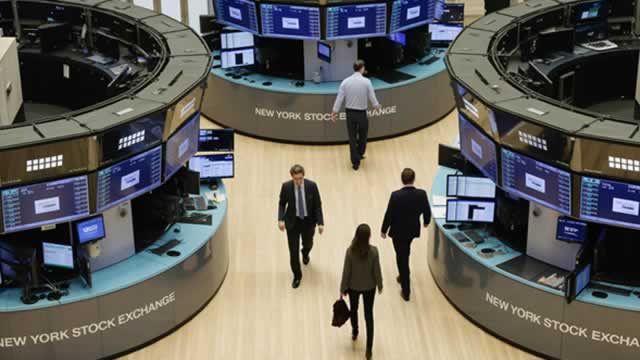
Valtrion CEO Rob Luna discusses the current 'Tech Tantrum' where Big Tech has lagged the S&P 500 for most of the year. Despite market worries, he advocates for buying into smaller-cap technology names that are enabling productivity and AI, seeing these as rare opportunities for future growth.
- Big Tech has underperformed the S&P 500 for 92% of the year (2026 mentioned, likely a typo for 2023).
- Rob Luna recommends buying into technology, especially smaller-cap names that are enabling productivity and AI, as a long-term investment strategy.
- Specific stock recommendations include GitLab (GTLB), Braze (BRZE), and Monday.com (MNDY), highlighting their strong financials and AI-enabling capabilities.

Matt Caruso discusses strong growth in Nvidia, Dell, and Palantir, viewing recent pullbacks as buying opportunities. He highlights key market indicators like the XLP:QQQ ratio and bond yields to signal shifts between defensive and aggressive investing strategies.
- Nvidia (NVDA) is a 'bullish outlier' with phenomenal growth, expanding its lead in AI, and still has plenty of upside.
- Semiconductors (SMH) and Dell (DELL) are seen as top-shelf quality, with current weakness presenting accumulation opportunities.
- Palantir (PLTR) is viewed as a leader with a 'massive opportunity,' and recent drops are buying chances.
- The XLP:QQQ ratio and bond yields (TYX) are key indicators for market rotation; a decline in XLP:QQQ and TYX below 51 would signal a return to aggressive growth investing.
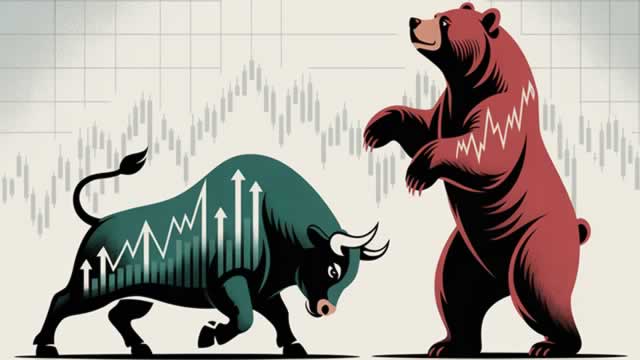
Treasury Secretary Scott Bessent and Larry Kudlow discuss the US economy, asserting that higher Treasury yields reflect robust economic growth, a CapEx boom driven by tax incentives, and trillions in capital flowing into the US, rather than inflation fears. They emphasize that the US is a premier destination for capital due to its pro-growth policies.
- Economic growth is 're-accelerating,' leading to higher bond yields.
- Tax incentives, including 100% expensing on equipment and factories, are fueling a capital expenditure boom.
- Trillions of dollars in capital are flowing into the United States from global markets.