Video Analysis

Adam Linton discusses the outlook for European and UK bond markets, expecting yields to continue rising due to persistent inflation and hawkish central bank policies. He notes the ECB's hiking path and potential for a policy mistake by the Bank of England amid fiscal risks. For the US, he views the upcoming payrolls report as unlikely to be a game-changer, with the Fed remaining focused on inflation.
- European bond yields are expected to continue rising, driven by ECB rate hikes and persistent inflation, with potential for curve flattening.
- UK gilts are at risk due to acute energy exposure, elevated shop prices, and upcoming fiscal risks, challenging the Bank of England's assumptions.
- The US August Nonfarm Payrolls report is unlikely to be a game-changer for Fed policy, as the central bank remains focused on inflation, with the CPI report having the final say.
US Treasury Secretary Scott Bessent stated that China was the sole dissenter at the G20, preventing a joint communique due to its large and 'unsustainable' trade surplus and opposition to language on 'non-market policies'. This highlights persistent trade tensions between the world's two largest economies, despite an anticipated meeting between Xi Jinping and Donald Trump.
- China's record $1.2 trillion trade surplus was a key point of contention at the G20.
- The G20 Chair's Statement called for countries with excessive external surpluses to remove distortions that constrain domestic consumption and lead to overreliance on exports.
- Despite the G20 disagreement, a meeting between Xi Jinping and Donald Trump is still expected in Washington in September.
Tom Lee presents a contrarian bullish outlook for September, expecting a strong month for stocks despite historical seasonality and widespread caution. He anticipates inflation fears to subside with upcoming economic data, potentially leading to a Fed pause. Lee believes the current 'wall of worry' creates a buying opportunity, supported by the underlying strength of the AI trade.
- Tom Lee is contrarian bullish for September, expecting a strong month for stocks despite historical seasonality.
- He anticipates inflation fears to quell with upcoming jobs report, August CPI, and FOMC decision, potentially leading to no September Fed hike.
- Lee notes that current widespread caution creates a 'wall of worry,' which historically presents buying opportunities.
- He also highlights the ongoing strength and strategic importance of the AI industry, expecting a rebound once current issues are addressed.

The discussion analyzes Treasury Secretary Bessent's optimistic outlook on AI's potential to drive disinflation and productivity within six months, a view deemed plausible due to rapid technological advancements. It also covers bond yields and the US's capacity to impose sanctions on Chinese banks over Iran trade, underscoring the resilience of the US financial system.
- Treasury Secretary Bessent's optimistic forecast for AI-driven productivity and disinflation within six months is considered plausible given the rapid pace of technological change.
- The US financial system is deemed strong enough to withstand potential secondary sanctions on Chinese banks over Iran trade, despite geopolitical tensions.
- Bond yields are discussed in the context of the Fed Chair's confidence in the credit market, suggesting less need for the Treasury Secretary to offer extensive assurances.

The discussion centers on the 'K-shaped economy,' attributing wealth inequality to quantitative easing (QE) which has disproportionately benefited asset holders (Baby Boomers) over younger generations (Gen Z). It highlights consumer spending trends, the Federal Reserve's monetary policy, and the importance of money supply in economic analysis, suggesting current interest rates are 'about right' despite underlying political and economic bifurcations.
- The K-shaped economy is seen as a result of quantitative easing, which has tripled the money supply since 2008, benefiting asset owners (Baby Boomers) and creating wealth disparity.
- This economic bifurcation is influencing politics, with younger generations (Gen Z) increasingly viewing socialism favorably due to perceived inequality.
- Current interest rates are considered 'pretty normal' relative to inflation, and the economy (excluding housing) is described as 'running pretty hot,' despite rising global debt and demand from AI investments.

Ariana Salvatore of Morgan Stanley discusses the increasing public and political opposition to data center construction, citing concerns over utility costs, water usage, and quality of life. Despite these 'messy' politics, she believes the overall data center capital expenditure story remains robust, though it may lead to conditional and geographically dispersed build-outs.
- Public and political opposition to data centers is growing due to concerns about utility bills, environmental impact (water usage), and local quality of life (large-scale construction).
- Morgan Stanley maintains a constructive view on data center capital expenditure, expecting over $1 trillion from hyperscalers next year, indicating the overall build-out story is robust.
- However, this opposition will likely lead to conditional approvals, timing delays, and geographical dispersion of new data center projects.
- Political risk is more significant at the local and state levels (governorships) than federal, with states like Ohio, Texas, and Pennsylvania being key.
- The broader fiscal trajectory is largely intact regardless of midterm election outcomes, as major tax changes were already enacted.

Larry Kudlow and Scott Bessent discuss the robust US economy, attributing its 'boom' to Trump's free-market policies, including tax cuts and deregulation. They highlight strong growth in manufacturing, construction, and AI, positioning the US as an AI and energy superpower, while cautioning against socialist economic approaches.
- The US economy is experiencing an 'economic boom' driven by Trump's tax cuts and deregulation, leading to significant growth in manufacturing, construction, and corporate profits (S&P 500 profits up 53% year-on-year).
- The US is emerging as the world's leading AI and energy superpower, with increasing domestic oil production and a focus on reshoring critical industries like semiconductors and minerals to enhance national security.
- Bessent criticizes 'big government socialism,' arguing that free enterprise, incentives, and market competition are essential for economic growth, contrasting it with the prior administration's policies.

Nigam Arora warns of an impending 'day of reckoning' for financial markets, driven by escalating global debt and rising interest rates. He suggests investors are underappreciating significant risks, including a potential 30-50% stock market pullback if AI-driven earnings growth proves cyclical rather than secular, and if governments fail to address mounting debt.
- Investors are underappreciating risks associated with AI investments, global debt, and rising interest rates.
- A 'day of reckoning' is anticipated due to excessive global sovereign and corporate debt, which will be exacerbated by higher interest rates on refinancing.
- The US market capitalization is historically high relative to GDP, and a significant market pullback of 30-50% is considered 'pretty easy' if economic growth slows (excluding AI spending).
- The nature of current earnings growth (cyclical vs. secular) is critical; if cyclical, substantial drops in earnings are expected, leading to market corrections.

The discussion focuses on the bond market's reaction to potential Fed rate hikes and Treasury actions. Rick Santelli argues that the market is correctly pricing in rate increases as a normalization from a manipulated decade, dismissing panic and suggesting rates are still too low. Kelly Evans raises concerns about Treasury intervention and parallels with Japan's past bond market issues.
- CME FedWatch Tool indicates a 65-66% chance of a quarter-point Fed hike if the meeting were today.
- Santelli views rising US interest rates as a 'normalization' from a decade of manipulated low/negative rates, suggesting current rates are still 'tame' and should be higher.
- Kelly Evans questions Treasury Secretary Yellen's bond repurchase actions as market manipulation, drawing parallels to Japan's past yield curve control efforts.
- Santelli refutes the Japan comparison, citing differences in debt ownership and magnitude, and credits Yellen for attempting to address Fed-induced market distortions.

David Booth, founder of Dimensional Fund Advisors, explains how financial science has made investing more accessible to everyone. He emphasizes that markets work well for all participants, not just insiders, and encourages ordinary investors to embrace uncertainty, trust the market's long-term efficiency, and focus on sensible, diversified strategies rather than attempting to outguess it.
- Financial science and accessible data have democratized investing, demonstrating that markets are efficient and work for everyone.
- Investors should embrace market uncertainty as a source of opportunity and focus on the quality of their long-term investment decisions.
- Historically, diversified market portfolios have delivered approximately 10% annual returns, suggesting that trying to outguess the market is often futile and costly.
- Diversification, including global markets, is crucial to mitigate concentration risks and achieve a robust investment experience.
- The core message is to trust the market, stay calm, and remain invested for the long haul, seeking trusted advice when needed.
Sylvia Jablonski discusses the September market outlook, noting increased complexity due to geopolitics and a hawkish Fed. Despite potential short-term volatility, she emphasizes that the AI trade is still in its early stages, presenting significant opportunities beyond current leaders. She highlights the 'next gen' AI trade in photonics and memory, and advises investors to dollar-cost average into these areas during pullbacks.
- September's market setup is complicated by geopolitical tensions and the Fed's hawkish stance, potentially leading to volatility.
- The AI trade is still in its infancy, with significant long-term growth opportunities, particularly in photonics and memory (P-RAM).
- Investors should consider dollar-cost averaging into AI-related trades during market pullbacks, focusing on companies supplying AI infrastructure rather than just hyperscalers.
- Specific areas of opportunity include memory providers (e.g., Micron), photonics companies (e.g., Lumentum), and AI-powered infrastructure ETFs (e.g., XIGV).
JPMorgan's Stephanie Aliaga discusses how Big Tech is increasingly using debt to finance the massive AI infrastructure buildout. She highlights that the market is capable of absorbing this high-quality issuance, which could sustain the AI boom due to improving visibility into returns. While acknowledging some risks, the outlook for continued tech debt and AI investment remains positive.
- Tech's new bond issuance is a growing share of the overall debt market, driven by hyperscalers funding AI infrastructure.
- These hyperscalers are high-quality issuers with significantly lower leverage ratios, capable of adding trillions more in debt.
- The market is expected to absorb this new issuance, enabling a more sustainable AI boom due to improving ROI visibility and strong customer demand.
- Operating cash flows are currently neck-and-neck with CapEx, but CapEx is expected to decelerate, providing margin relief.

The video analyzes global bond yields hitting multi-year/decade highs across Japan, Germany, UK, and the US, while Bitcoin remains resilient. Analyst Scott interprets Bitcoin's non-reaction to these macro headwinds as a bullish signal, suggesting a potential decoupling from traditional risk assets after its strongest month since November 2024.
- Global bond yields in Japan, Germany, UK, and the US have reached multi-year or multi-decade highs.
- Bitcoin has shown unexpected resilience, shrugging off the typical negative pressure rising yields exert on risk assets.
- Analyst Scott views Bitcoin's non-reaction as a bullish indicator, suggesting strength and potential decoupling after its recent strong performance.
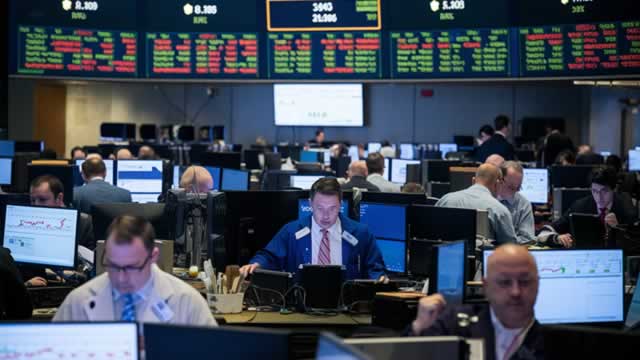
The market is facing a 'gut check' due to rising oil prices and Treasury yields, leading to low dispersion and fewer safe havens. The analyst suggests hedging strategies to mitigate downside risk, noting that interest-rate sensitive sectors are underperforming. He anticipates continued market choppiness and a potential pullback before a year-end bounce, likely after the midterms.
- Rising oil prices and Treasury yields are key drivers causing a market 'gut check'.
- Low dispersion in the market means fewer places for investors to hide from a sell-off.
- Hedging strategies using index or ETF options are recommended to protect against downside risk.
- Interest-rate sensitive sectors like utilities, real estate, industrials, and technology are underperforming.
- Expects continued market chop and a potential pullback, with a bounce opportunity likely after the midterms.

Chris Versace expresses caution for September trading due to geopolitical risks and rising energy prices, but sees potential buying opportunities. He anticipates a Fed rate hike in September based on current inflation data, while closely monitoring upcoming economic reports. Key technical levels for the S&P 500 and a leadership transition at Apple are also discussed, alongside favored tech and non-cyclical sectors.
- Market opens lower in September due to geopolitical tensions (US-Iran) and rising oil/gas prices.
- Fed is likely to deliver a rate hike in September, but August PMI and JOLTS data will be critical for confirmation.
- 10-year yield could reach 5%; S&P 500's 50-day and 200-day moving averages are key support levels for potential buying opportunities.
- Apple's upcoming product event and new CEO John Ternus (a 'product guy') present a chance to reshape the company, with cautious optimism.
- Favored sectors include tech (chips, networking, AI data center infrastructure like Eaton) and non-cyclicals (Boeing, Paccar, healthcare, robotics), with a strategy to buy on weakness.

Jain Global's multistrategy hedge fund, which generated $1.8 billion in gross trading profit over two years (41% gross, 8% net for investors after expenses), is transitioning to manage capital exclusively for Millennium Management. This move highlights the high costs of running multistrategy funds and Millennium's evolving role as both a hedge fund and a capital allocator, offering infrastructure support but also introducing concentration risk for managers.
- Jain Global's fund generated $1.8 billion in trading profit over two years, translating to a 41% gross return but only an 8% net return for investors after accounting for high operational expenses.
- The fund is shifting to Millennium-only capital, with Millennium replacing $5 billion in client cash, and Jain will return client cash by October.
- Millennium's model involves providing consistent capital and infrastructure (trading assistance, data, AI) to external managers/businesses like Jain's, which can increase cost-effectiveness but introduces concentration risk for the managers.
JPMorgan's Kevin Foley discusses the robust state of AI financing and the broader IPO pipeline. Despite some widening spreads in AI-related debt, he emphasizes the deep pool of capital and astronomical returns driving continued investment. The IPO market is also showing strong engagement, with appetite extending beyond just AI-native companies, benefiting from a reduction in public companies and overall market growth.
- AI financing is tapping into a deep pool of capital (north of $80 trillion) across various debt markets, with higher spreads but not deterring projects due to astronomical returns.
- The IPO market is incredibly engaged, driven by a reduction in public companies and significant growth in global equity markets (from $70T to $160T in 10 years).
- The IPO pipeline is widening beyond just AI, with a broader appetite for diverse companies, indicating AI is not crowding out other sectors.

Shein's shares experienced a challenging debut in Hong Kong, falling by as much as 10% before settling at a 7% decline. This performance reflects investor concerns about the company's growth, profitability, valuation, and external factors like US tariffs, European regulations, and competition from Temu.
- Shein shares fell by up to 10% on its Hong Kong debut, currently down around 7%.
- Key investor concerns include growth, profitability, valuation, US tariffs, and European regulatory changes.
- The company reported $99 million in losses for Q1 this year, a reversal from $400 million gains a year ago.
- Sustainability of the business model, labor practices, and competition from Temu are also weighing on the stock.

Financial markets are starting September with a bearish tone, driven by rising global bond yields, elevated crude oil prices due to geopolitical tensions, and increased expectations for a Fed rate hike. The semiconductor sector is experiencing a significant pullback, and Amazon faces a major FTC lawsuit, adding to the negative market pressures.
- Equity futures are lower, with September historically being the worst month for market performance.
- US 10-year Treasury yield is at its highest level since January 2025, with global yields also rising significantly.
- Crude oil prices are at five-week highs near $88/barrel, fueled by geopolitical tensions in the Middle East.
- Semiconductor stocks are broadly falling, with higher yields stunting gains in the tech sector.
- Amazon is being sued by the FTC and 22 states for allegedly deceiving advertisers and inflating prices.

Global bond markets are experiencing a significant sell-off, with US 10-year Treasury yields hitting a 20-month high and Japanese yields reaching a 30-year high, driven by inflation fears and geopolitical tensions. US Treasury Secretary Scott Bessent downplayed concerns, while Shein's Hong Kong IPO struggled, reflecting a substantial valuation drop. Apple faces new challenges with a CEO transition and the need for a clear AI strategy.
- US 10-year Treasury yields are at a 20-month high, and Japanese 10-year yields hit a 30-year high, indicating a broad global bond sell-off.
- US Treasury Secretary Scott Bessent sees no issue with the bond market and stated no sanctions relief for Russia until the war in Ukraine ends.
- Fast fashion giant Shein's Hong Kong IPO was priced at a valuation significantly lower than its 2022 private market peak, highlighting investor caution.
- Apple is transitioning CEOs, with John Turnus replacing Tim Cook, and faces the challenge of defining its AI strategy and next big product.
- Anthropic reportedly signed a $35 billion deal with Lambda for a data center in Texas, while US politicians express concerns over AI data center construction and energy demands.