Video Analysis

Bitcoin has seen a significant 22% surge in the last three weeks, driven by short covering and healthy spot buying, with call options indicating further upside interest. However, the analyst warns of 'incredibly high' implicit leverage in altcoins, reminiscent of pre-liquidation levels in October 2021, urging caution for the broader crypto market.
- Bitcoin's recent 22% rise is supported by short covering and genuine spot buying, with options market showing bullish sentiment.
- Implicit leverage in altcoins is at 'incredibly high' levels, comparable to those seen before a major market liquidation in October 2021.
- While Bitcoin and assets like Ethereum and Robinhood-related tokens show strength, investors should proceed cautiously with altcoins due to elevated risk.

The video covers diverse crypto market developments, including Circle's acquisition of Tazapay to expand USDC payments, Iran's use of crypto for foreign trade, and the launch of Grayscale's Zcash ETF and a staked Tron ETF. It also highlights Robinhood's entry into prediction markets and a meme coin crash as a cautionary tale.
- Circle's acquisition of Tazapay aims to expand global USDC payments infrastructure, integrating 60+ banking partners and 100+ payout markets.
- Iran is easing currency controls, allowing exporters to use cryptocurrencies like Bitcoin and Tether for imports to bypass sanctions.
- Grayscale's Zcash ETF (ZCSH) has surpassed $500M in assets, indicating growing institutional interest in privacy-focused cryptocurrencies.
- Wall Street is embracing crypto staking with the launch of the first staked Tron ETF (TRXS), offering yield to investors.
- Robinhood is expanding into prediction markets through a multi-year deal with Crypto.com and OG.com, routing event contracts and taking minority stakes.
- A political meme coin related to Hunter Biden's laptop crashed 85% after a brief surge, serving as a warning against speculative investments.

Amrita Sen discusses the significant rise in crude oil prices, with Brent crude hitting $100/barrel, driven by 'eye-watering' inventory drawdowns and increasing demand from China. She believes crude is poised to move sharply higher due to a lack of market buffers, despite some long-term recession concerns.
- Brent crude hitting $100/barrel for the first time since July, with expectations for it to continue rising.
- Massive crude inventory drawdowns, with over 130 million barrels drawn since mid-August and 550 million barrels since the start of the conflict.
- China's demand is picking up, and product markets are tight, leaving 'no buffers left' in the crude market.
- While the front end is bullish, long-term concerns include a potential recession driven by high product prices.

The video discusses the U.S. Treasury's $6 billion debt buyback, deeming it insufficient to curb rising yields. The analyst anticipates re-accelerating inflation due to oil prices, likely prompting a Fed rate hike in September. He advises investors to hold cash and defensive positions to navigate short-term volatility and capitalize on dips for long-term gains.
- U.S. Treasury's $6 billion longer-dated debt buyback is considered 'underwhelmed' and unlikely to significantly calm bond markets.
- Inflation is expected to re-accelerate, largely driven by rising oil prices, which could force the Fed to tighten policy in September.
- Investors should maintain extra cash and defensive positions (like gold) to hedge against anticipated short-term market gyrations and prepare to buy dips for long-term growth.
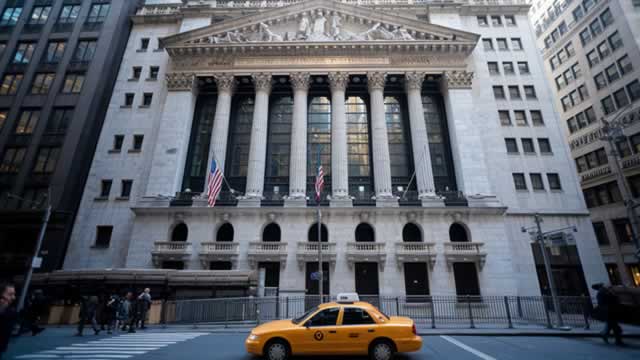
The discussion centers on the current state of financial markets, with a focus on rising bond yields, strong earnings growth, and the performance of AI-related stocks. Analysts debate the 'danger zone' for bond yields and the underlying sentiment in the market, noting a shift from broad market movements to sector-specific rotations.
- The bull market in stocks is considered intact, but the bond market is nervous, creating volatility in equities.
- Stronger-than-anticipated earnings growth (20-30%) allows the market to sustain higher bond yields, pushing the 'danger zone' for the 10-year yield to 5.5% or even 6%.
- There hasn't been a global market sell-off, but rather a rotation out of momentum/AI stocks into other sectors like healthcare and financials.
- Concerns exist about a potential pick-up in broad market correlation and the changing financial characteristics of large tech/AI companies, which are becoming more debt-laden.
- Upcoming political events (midterms) and the Federal Reserve's actions are seen as potential triggers for increased market anxiety.

The CEO of Citizens Financial Group, Bruce Van Saun, expresses a bullish outlook on the US economy, citing resilient growth, low unemployment, and a declining inflation trajectory. He notes that while consumers are cautious, they continue to spend, supported by a strong labor market. He believes further Fed rate hikes are unnecessary and could choke off a healthy economy.
- The US economy is remarkably resilient with ticking up GDP growth (2.5% expected for next four quarters) and steady low unemployment.
- Inflation is on a gradual declining trajectory, and consumers are absorbing higher costs like gasoline, remaining resilient in their spending.
- Business conditions are excellent, with open capital markets and broadening demand for funding beyond just AI/data centers.
- Van Saun personally doubts further Fed rate hikes, arguing there's no new evidence of accelerating inflation and current inflation is supply-side driven.

Morgan Stanley's Mike Wilson maintains a bullish outlook on financial markets, asserting that we are still in a bull market despite near-term risks from rising oil prices and interest rates. He advises investors to upgrade portfolios towards quality stocks and use energy as a hedge, while also considering gold and crypto for inflation protection.
- Higher oil prices and interest rates are identified as the main near-term risks to equities, but are seen as manageable hurdles rather than signs of a market collapse.
- The market is transitioning from an early-cycle recovery to a mid-cycle phase, characterized by broadening out beyond mega-cap tech and into other sectors benefiting from operating leverage and AI adoption.
- Investors should focus on upgrading portfolios to quality stocks, owning energy as a hedge, and considering gold/crypto for inflation, rather than reducing overall equity exposure.

Blair Jacobson, Co-President of Ares, discusses the current financial market environment, highlighting rising bond yields and geopolitical concerns. He emphasizes Ares's focus on long-term secular trends, particularly the generational AI CapEx supercycle, and expresses confidence in the resilience of their private credit portfolio. Despite short-term volatility, he sees strong demand-driven growth in AI infrastructure and positive underlying performance in private credit.
- Long-term fixed income investors are focused on rising bond yields (US 5%, UK 6%), influenced by central bank actions, politics, and kinetic wars.
- Ares focuses on long-term secular trends like aging populations, AI, digital infrastructure, supply chain, and energy transition, underwriting resilient individual companies.
- A 'generational AI CapEx supercycle' is underway, driven by exponential compute demand, with significant financing from hyperscalers and private capital providers.
- The private credit market is seen as 'quite positive,' with underlying portfolio companies showing 8-10% earnings growth, 45-50% loan-to-value, and accruals within historical tolerances, despite slowed inflows.

The video discusses escalating geopolitical tensions in the Gulf, driving oil prices near $100 a barrel and fueling inflation fears. Central banks are expected to continue rate hikes, while Wall Street closed lower. The AI CapEx super cycle is seen as a long-term demand story, but concerns about financing costs and rising default rates in private credit markets are also highlighted.
- Geopolitical tensions in the Gulf, including Iranian attacks on vessels, are pushing oil prices towards $100 a barrel, raising inflation fears.
- Central banks (ECB, Fed, BoE) are expected to continue rate hikes due to inflation, with BoE Governor Andrew Bailey warning of 'upside inflationary risks'.
- Wall Street closed lower, with Asian markets showing a mixed picture, as investors await key US inflation data and Fed decisions.
- The AI CapEx super cycle is seen as a strong demand-driven trend, but concerns exist about circular financing and potential disruption to software business models.
The video analyzes the Japanese Yen's recent strengthening and Scott Bessent's challenge to traders to 'bet against the Yen.' Analysts express skepticism about the Yen's sustained strength, citing Japan's economic vulnerabilities, including its reliance on imports, growing trade deficit, and high debt-to-GDP ratio, which could have ripple effects on global financial markets.
- Scott Bessent's 'I am the house' comment dares traders to bet against the strengthening Yen.
- Concerns exist that an unwinding of Yen carry trades could lead to selling US Treasury holdings, pushing up yields.
- Japan's economy is heavily reliant on imports, making it vulnerable to rising oil prices and a growing trade deficit.
- Underlying economic fundamentals, such as high debt-to-GDP and increasing interest spending, question the sustainability of a firm Yen.

Mark Cudmore discusses Scott Bessent's challenge to Yen traders, suggesting it's a misstep that could provoke the market. He then emphasizes that the commodity bull run is significantly underestimated, driven by both structural demand (AI, climate, rearmament) and supply-side issues (geopolitical conflicts), predicting further pain for bonds.
- Scott Bessent's public dare to bet against the Yen is seen as a 'big blunder' that might force the Bank of Japan's hand.
- The current commodity bull cycle is 'incredible' and 'underestimated,' with much more upside due to demand and supply factors.
- Structural demand drivers include the AI revolution, climate change initiatives, and global rearmament efforts.
- Supply-side constraints from geopolitical conflicts (Middle East, Russia-Ukraine) further fuel commodity price surges, leading to 'more pain for bonds'.

The video discusses the escalating conflict in the Middle East, specifically between the US and Iran, and Houthi attacks on Saudi energy facilities. These events have led to significant concerns about oil supply disruptions, pushing Brent crude prices close to $100 a barrel, with further upside potential if the situation worsens. The Strait of Hormuz remains a critical chokepoint.
- US forces destroyed five Iranian crude oil carriers after Iran targeted a US Navy warship with ballistic missiles.
- Iran has vowed retaliation against US forces and energy assets, including tankers, in the region.
- Houthi rebels claim attacks on Saudi energy facilities in Abha, Najran, and Jazan, leading to some site halts.
- Brent crude is nearing $100/barrel, driven by the escalating conflict and the risk of deeper supply disruptions, especially concerning flows through the Strait of Hormuz.
- Tensions are also impacting fuel prices (diesel, natural gas), which have seen significant increases, particularly as the Northern Hemisphere heads into winter.
The discussion centers on OpenAI's GPT-6 Astra model as a game-changer for AI, highlighting key investment bottlenecks identified by Morgan Stanley: compute, memory, and networking. Spear Invest founder Ivana Delevska emphasizes the growing importance of optical interconnects within AI data centers and identifies specific stocks poised to benefit from this trend, particularly as models become more self-training.
- GPT-6 Astra is seen as a game-changer, driving demand for compute, memory, and networking infrastructure, with NVIDIA's GPUs being a critical component.
- The market has seen recent pullbacks in AI-related stocks, presenting attractive entry points, especially for companies involved in optical interconnects for data centers.
- Optical interconnects are evolving from long-distance data transmission to critical roles within servers (scale-up) and connecting data centers (scale-across), with significant growth expected from 2027 onwards.
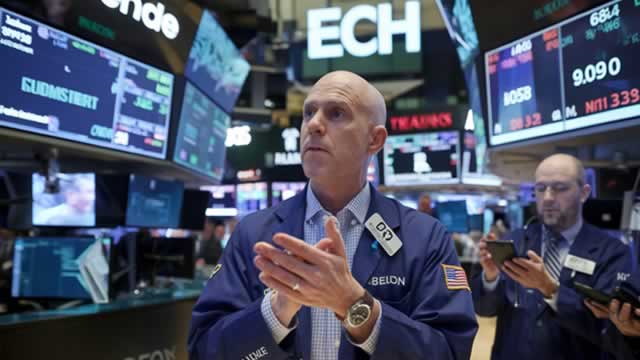
The Fox Business segment discusses the destruction of five Iranian crude oil carriers by CENTCOM following an Iranian attack on a US warship, alongside reports of Iran firing cluster munitions on Jordan. This escalation in geopolitical tensions is driving up crude oil and diesel prices, with diesel reaching an all-time high in the U.S. Experts debate the impact on global markets, the effectiveness of economic pressure on Iran, and the potential for increased inflation due to rising transportation costs.
- CENTCOM destroyed 5 Iranian crude oil carriers after Iran targeted a US warship.
- Iran is reportedly firing cluster munitions on Jordan, escalating regional tensions.
- Crude oil prices are rising, with diesel prices in the U.S. reaching an all-time high, fueling inflation concerns.
- The economic squeeze on Iran is causing them to lash out, creating market instability and questioning America's fortitude to endure the economic consequences.

A $320 million hack on the Bitcoin-linked Liquid Network, caused by a software bug, has exposed vulnerabilities in the crypto infrastructure. While about 85% of the Bitcoin was returned by 'white-hat' hackers, the incident has dealt a significant blow to the credibility and confidence in the digital asset space.
- Liquid Network hack resulted in $320 million being drained due to a software bug, not direct theft.
- Approximately 85% of the stolen Bitcoin was returned to investors by 'white-hat' hackers.
- The incident is seen as a 'big dent' to crypto's reputation and highlights ongoing security challenges, despite improving underlying technology.

Stewart Glickman discusses the escalating energy market tensions, noting that while $90/barrel crude oil is currently tolerable, sustained prices above $120/barrel could significantly impact the global economy and induce a recession. He highlights the widening conflict in the Middle East and attacks on Saudi oil infrastructure as key drivers, emphasizing the unsustainability of current 'safety valves' like redirected oil flows and China's reduced imports.
- Oil prices above $120/barrel, if sustained for a couple of weeks, could trigger a global recession.
- Geopolitical tensions, particularly Houthi attacks on Saudi oil facilities, pose a direct threat to productive capacity, unlike previous logistical disruptions.
- Every $10-15 increase in oil prices typically shaves off about 0.1% of global GDP, indicating a rapid path to economic contraction.
- An agreement between Iran and Oman regarding the Strait of Hormuz is seen as the best-case scenario to calm the market and normalize oil flows.

The discussion centers on current market dynamics, upcoming economic reports like CPI, and the Federal Reserve's potential actions. Panelists debate whether strong corporate earnings and the resurgence of momentum stocks, particularly the 'Magnificent 7', can outweigh macro headwinds such as rising oil prices and bond yields, with a generally positive outlook prevailing.
- Macroeconomic concerns include rising WTI crude ($92.30) and Brent crude ($97.55), record high diesel prices, increasing US Treasury yields (2-year at 4.394%, 10-year at 4.798%, 30-year at 5.252%), and the looming CPI report.
- Despite market dips, panelists highlight the resilience of momentum stocks and the 'Magnificent 7' (MAG7), with some noting that MAG7's performance has caught up to the S&P 500 after a period of underperformance.
- Strong earnings are seen as a significant tailwind, with HSBC raising its S&P year-end target to 8,100 and Deutsche Bank reporting a bullish shift in investor sentiment for the first time in seven weeks.
- Specific stocks like Nvidia (NVDA) and Microsoft (MSFT) are mentioned for their strong fundamentals and potential for continued growth, while Amgen (AMGN) is noted for a significant intraday drop.

The video discusses the ongoing AI buildout, addressing concerns about circular financing and potential market crashes. Liz Harrow, a Shakti VC partner, argues that strong demand from enterprises and consumers, coupled with the utility of AI in reimagining various industries, validates the significant investments. She emphasizes the application layer as the key area for future growth and investment, despite the emergence of cheaper models and initial market concentration.
- The unprecedented AI buildout is driven by strong demand from enterprises and consumers, leading to 'future-proofing' investments in infrastructure like GPUs.
- While some AI companies may be overvalued, the overall buildout is necessary due to scarcity of resources and the potential for new revenue lines in application layers.
- Investors should focus on AI companies at the application layer, particularly those reimagining large, archaic industries with ubiquitous and frequent use cases.

Ruchir Sharma warns that the current AI boom could be a financial market bubble at risk of popping if the U.S. 10-year Treasury yield decisively breaches 5%. He highlights that unlike past bubbles, the current excesses are primarily on the government's balance sheet, with rising debt servicing costs and large fiscal deficits posing a significant threat to broader capital markets.
- The AI boom is identified as a potential financial market bubble that could burst if the U.S. 10-year Treasury yield surpasses 5%.
- The current financial excesses are concentrated on the government's balance sheet, with debt servicing costs approaching $1 trillion (over 3% of GDP), the highest among major countries.
- This situation could 'short-circuit' the AI boom, as rising interest rates and government borrowing needs put pressure on the capital markets.

Analysts discuss the critical importance of upcoming inflation data (PPI and CPI) this week for the Federal Reserve's interest rate decisions. While a strong jobs report suggests the Fed has room to hike, they anticipate a measured approach with 1-2 rate increases rather than a prolonged 'rate hiking cycle.' Negative real wage growth is noted as a consumer challenge but an aid for inflation control.
- PPI and CPI data are the most important releases this week, influencing Fed's rate hike decisions.
- A strong August jobs report, combined with potentially elevated inflation data, could make the Fed comfortable with a September rate hike.
- The Fed is expected to implement 1-2 rate hikes this year/early next, but not embark on a sustained 'rate hiking cycle,' which is historically constructive for markets.