Video Analysis
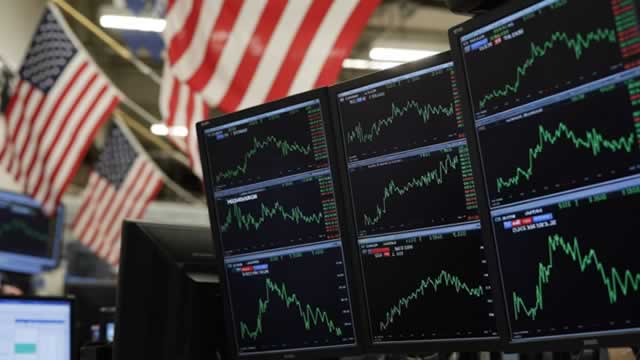
Federal Reserve Governor Kevin Warsh discusses the central bank's commitment to achieving price stability following a 25 basis point rate hike. He reaffirms the Fed's dedication to bringing inflation down in a timely manner, despite acknowledging varying economic projections among FOMC members.
- Warsh emphasizes the Federal Reserve's commitment to delivering price stability.
- He clarifies that the longer-term inflation projections (out to 2029) are not his personal forecasts but those of his colleagues.
- Warsh states that today's policy action demonstrates the Fed's seriousness in achieving its 2% inflation target on a timelier basis.

Neil Dutta of Renaissance Macro expects the Federal Reserve to implement more than one additional rate hike, citing revised economic forecasts with lower unemployment and higher core inflation. He highlights persistent inflationary pressures from various sectors and expresses concern for equities, believing the current setup is not favorable for market performance.
- Dutta anticipates the Fed will deliver more than one additional rate hike from current levels.
- This expectation is based on the Fed's revised forecasts, showing a lower unemployment rate and higher core inflation.
- He points to ongoing inflationary pressures from computer/consumer electronics, rising oil/gas prices, and accelerating food prices.
- Dutta is concerned about the outlook for equities, stating that continued rate hikes and a slowing consumer do not present a good setup for the market.
Bob Michele of JPMorgan Asset Management believes the bond market, particularly the long end of US, Japan, and Australia bonds, has overshot its bearishness, reaching a 'point of maximum pain' and presenting a 'good buying opportunity'. He sees central banks, including the Fed, starting to establish credibility, which should lead to stabilization.
- The bond market's front end is pricing in approximately four rate hikes, while the long end has become excessively steep.
- JPMorgan Asset Management was buying long-end bonds (US, Japan, Australia) this morning, believing they have gone 'too far' and are 'too cheap'.
- Central banks (ECB, Fed, BoJ) are starting to establish credibility, and the long end of the yield curve is beginning to stabilize.
Fed Chairman Kevin Warsh described the recent quarter-percentage-point interest rate hike as a 'sober, serious, and responsible decision.' He emphasized a disciplined, data-dependent approach to monetary policy, declining to provide forward guidance on future rate adjustments.
- The FOMC raised interest rates by a quarter percentage point.
- Chairman Warsh characterized the rate hike as a 'sober, serious, responsible decision' made after careful preparation.
- He stated he is not in the 'forward guidance business' and will not prejudge future policy decisions, indicating a data-driven approach based on observed economic conditions.

Federal Reserve Chairman Kevin Warsh announced a 25 basis point hike in the federal funds rate, setting the target range at 3.75% to 4%. He noted that economic activity is expanding at a solid pace, with resilient spending, strong productivity, and robust capital investment. Despite elevated inflation, the committee is committed to achieving price stability and a timely return to the 2% inflation goal.
- Fed raised the federal funds rate by 25 basis points to 3.75%-4%.
- Economic activity is expanding at a solid pace, with strong productivity and robust capital investment.
- Inflation remains elevated, with many categories posting increases above 3%, and the Fed is committed to price stability.
- 16 of 18 FOMC members project at least one more rate hike this year, with 8 members seeing the Fed funds rate rising to 4.38% by next year.

Federal Reserve Chairman Kevin Warsh announced the FOMC's decision to raise interest rates, citing a strengthening and resilient American economy. He emphasized that inflation remains 'too high' and the Fed's commitment to price stability and its 2% target is paramount, indicating a continued hawkish stance.
- The American economy is strengthening with new hiring, private sector earnings, and business capital investment, alongside robust credit flows.
- Labor markets are strong, with a low jobless rate (around 4.1%) and increasing job openings and weekly hours.
- Inflation has been running above target for over five years, with recent total PCE at 3.6% and core PCE at 3.2%, indicating that underlying trends have not meaningfully improved.
- The FOMC's unanimous vote to remove a 'dose of accommodation' (rate hike) reflects a strong resolve to achieve price stability on a timelier basis, as the standard for inflation moving to target at sufficient speed has not been met.

CNBC's Rick Santelli analyzes the market's reaction to the Federal Reserve's quarter-point rate hike, noting a mixed response in bond yields and stock markets. He highlights strong economic data and geopolitical concerns as factors influencing yields, while the U.S. Dollar Index receives a bid.
- The market reaction to the Fed's rate hike is described as complex, with stock markets initially up but then showing some weakness.
- Bond yields saw a slight drop initially, with the 10-year hovering near 4.95% and the 2-year being more aggressive, leading to a flattening of the 2/10 spread.
- Strong economic data (Atlanta GDP, retail sales) and geopolitical developments are cited as drivers for bond market movements.
- The U.S. Dollar Index is experiencing a 'nice bid', reflecting interest rate dynamics.
- Monitoring corporate and sovereign issuance is crucial for understanding market nervousness.

The Federal Reserve unanimously raised interest rates by a quarter percentage point, bringing the benchmark rate to a 3.75%-4% range. The committee forecasts faster economic growth and stable unemployment, but anticipates another rate hike this year and pushes the 2% inflation target out to 2029, indicating a sustained effort to achieve price stability.
- Fed unanimously raised benchmark rate by 25 basis points to 3.75%-4% range.
- 16 committee members anticipate another rate increase this year, with 8 seeing another hike next year.
- Long-run neutral rate raised to 3.2% from 3.1%.
- Faster GDP growth forecast for this year (2.3%) and next (2.4%).
- Unemployment forecast to remain at 4.1% through 2029.
- PCE headline inflation forecast at 3.7% this year, 2.3% next year; 2% target pushed to 2029.
The video discusses the failure of the Clarity Act, a significant crypto bill, in the US Senate due to political infighting. The speaker criticizes the political process but highlights the crypto industry's resilience and innovation in response to regulatory uncertainty. The upcoming FOMC decision and potential rate hikes are also noted as key market factors.
- The Clarity Act, a major crypto bill, failed in the Senate with a 49-50 vote, falling short of the 60 votes needed.
- The speaker attributes the bill's failure to Democrats blocking it, allegedly to prevent former President Trump from profiting from crypto, and some Republican 'no' votes possibly influenced by the banking lobby.
- Despite the regulatory setback, the speaker emphasizes crypto's ability to 'opt out' of government interference, citing Circle's launch of its Arc blockchain as an example of building independent financial systems.
- The Federal Reserve is expected to announce a quarter-point rate hike, which would be the first increase since 2023, impacting risk assets.
- DOJ charges against former Robinhood engineers for front-running crypto listings on Hyperliquid are mentioned as an example of 'how not to invest'.

Dale Smothers discusses the upcoming Fed interest rate decision, suggesting the Fed has reasons to hold rates despite market expectations for a hike, especially when stripping out food and energy inflation. He maintains a bullish outlook on the market, particularly the AI trade, and provides specific stock recommendations within the tech sector.
- Smothers argues the Fed could hold rates, citing low core inflation (ex-food/energy) since 2021, despite the market pricing in a 25 bps hike.
- He believes a rate hike, if it occurs, will not 'kill the bull run' as it's largely priced in, and earnings growth continues to drive the market.
- Smothers is bullish on the AI trade, expecting it to continue well into 2028 due to sustained spending and revenue growth.
- Key stock picks include Apple (AAPL), Marvell (MRVL), Palantir (PLTR), and the Innovator Growth Power Buffer ETF (NSEP) for a 'seatbelt' approach to AI investing.
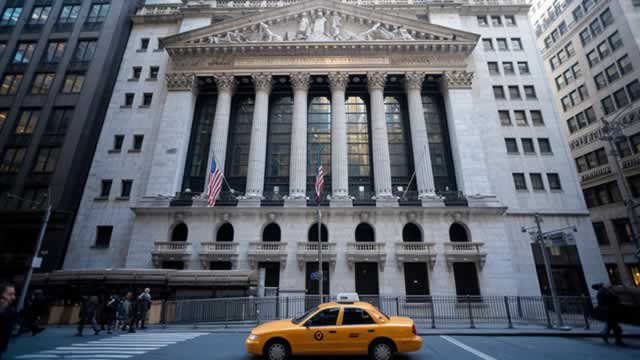
The discussion centers on the upcoming FOMC rate decision, with a 25 basis point hike largely priced in. The key market driver will be the Fed's forward guidance and projections, especially regarding longer-term rates. Technical levels for major indices are at critical junctures, adding to market uncertainty.
- The Fed is widely expected to hike rates by 25 basis points today, with market probabilities for September, October, and December meetings all above 90%.
- The focus for market impact will be on the Fed's forward projections and commentary, rather than the immediate rate decision itself.
- A small risk of the Fed holding rates could lead to a substantial rise in longer-term yields and questions about Fed credibility.
- Key technical levels are being watched, including the S&P 500 at 7600 and the Russell 2000 at a three-month low, with the 10-year yield's reaction to the 5% level being crucial.
The discussion focuses on the upcoming FOMC decision, with a 25 basis point rate hike largely priced into the markets. The key uncertainty lies in the Fed's commentary, which could either be dovish (positive for equities) or hawkish (potential for pullbacks). Recent strong retail sales and rising import prices complicate the Fed's path, indicating a resilient consumer and persistent inflationary pressures.
- A 25 bps Fed rate hike is 'baked in' for today, with the market's reaction largely dependent on the Fed's forward-looking commentary (hawkish vs. dovish).
- August retail sales data showed stronger-than-expected month-over-month growth across core and control groups, indicating a resilient consumer, though not inflation-adjusted.
- Import prices, including non-fuel goods and capital goods, saw significant increases, suggesting persistent price pressures that could favor a hawkish stance from the Fed.
- J.B. Hunt Transport Services (JBHT) revised its guidance downward due to rising diesel prices impacting margins and demand, highlighting potential economic headwinds.
Jeremy Allaire, Circle CEO, remains optimistic about crypto regulation despite the Senate blocking the Clarity Act. He emphasizes the existing GENIE Act, effective January, which legalizes digital dollars like USDC, opening a $60 trillion market for stablecoins and driving an 'irreversible mega-trend' in finance.
- The Clarity Act's failure to pass the Senate is not seen as the end of the legislation, with potential for future passage.
- The GENIE Act, effective January, will establish federal law for stablecoins, making digital dollars like USDC legal electronic money in US and global financial systems.
- Stablecoins are poised to tap into a $60 trillion market of non-interest-bearing cash and demand deposits, driving exponential growth in money velocity and utility.
- Circle's strategy is robust due to existing legislation, independent of the Clarity Act, and sees digital cash as an accelerating, irreversible mega-trend.
Scott Martin discusses the upcoming Fed decision, advocating for a pause in interest rate hikes as the market has already adjusted. He believes the market performs best without excessive intervention and, despite potential short-term volatility from a hike, maintains a long-term bullish outlook. Energy, consumer staples, and utilities are highlighted as potential opportunities.
- Scott Martin suggests the Fed should pause interest rate hikes, as the market's 10-year Treasury yield movement has already done much of the Fed's work.
- He believes the market and economy thrive when allowed to operate independently, without artificial support or excessive government/Fed intervention.
- Despite anticipating short-term market volatility if the Fed hikes, he maintains a long-term bullish perspective.
- Energy, consumer staples, and utilities are identified as sectors with potential, while consumer discretionary may struggle due to higher borrowing costs and potential downward earnings guidance.
The discussion centers on the Federal Reserve's anticipated interest rate hike, which is largely priced into the market. Strong August retail sales data, with 13 out of 14 categories showing increases, indicates a robust economy. The focus for investors will be on Fed Chair Powell's press conference for any hints on future policy, especially regarding potential further rate hikes beyond the initial expected 25 basis points.
- A Fed rate hike is widely expected and priced into the market.
- August retail sales significantly exceeded expectations (headline 1.2% vs. -0.5% in July), indicating strong consumer spending.
- Markets are currently pricing in two rate hikes by year-end, with the 'dot plot' projections from the Fed also being a key focus for future guidance.
Mark Zandi discusses the significant impact of high energy prices on the U.S. economy, noting that consumers are already feeling a pinch and drawing down savings. He anticipates the Federal Reserve will raise interest rates, a move he personally disagrees with given the current soft economic conditions.
- The U.S. economy is already feeling the strain from high energy prices, with the typical American household spending nearly $1,000 more on fuel.
- Consumer spending is currently being maintained by drawing down savings, as the cushioning effect of tax refunds has passed.
- Zandi expects the Federal Reserve to raise interest rates today, but he personally believes they should hold policy steady due to a soft economy, struggling job market, and inflation expectations that remain well-anchored.
US August retail sales significantly exceeded expectations across various categories, indicating a resilient consumer despite higher gasoline prices. Import prices also rose more than anticipated, suggesting persistent inflationary pressures. However, equity and bond markets showed a muted reaction, as participants are largely 'fully priced' for the Federal Reserve's upcoming policy decision.
- US August retail sales rose 1.2% M/M (vs. est. +0.8%), with ex-autos and gasoline sales up 1.2% (vs. est. +0.4%), indicating strong consumer spending.
- Import prices increased by 0.7% M/M (vs. est. +0.5%), with ex-petroleum prices up 0.8% (vs. est. +0.3%), suggesting ongoing inflation.
- Despite the strong economic data, equity futures and bond yields showed minimal movement, as the market is considered 'fully priced' for potential Fed actions.
Apollo Global Management President Jim Zelter discusses the 'unprecedented' scale of AI infrastructure build-out, highlighting significant opportunities for private capital, particularly in debt financing. He reiterates his view that interest rates will remain 'higher for longer' but notes the economy's resilience and strong conditions for credit investors. He also touches on Apollo's recent partnerships in sports and technology.
- The AI infrastructure build-out is of 'unprecedented' scale, presenting enormous financing opportunities for private capital.
- Apollo focuses on debt financing in resilient sectors like mainstream sports and AI infrastructure, citing low obsolescence and strong margins of safety.
- Interest rates are expected to be 'higher for longer,' but the economy and markets have shown resilience, creating an 'amazing time' for credit investors.

The video discusses the impending Fed rate hike, emphasizing that the market's focus is on the accompanying commentary for hawkish or dovish signals. Geopolitical developments in the Middle East and US-China relations are noted as potential sources of market optimism, particularly concerning oil prices. Additionally, a Reuters report about Intel and SK Hynix collaborating on memory chip manufacturing in the U.S. is highlighted.
- Fed is expected to hike interest rates by 25 basis points, with market attention on the tone of the announcement and future guidance.
- Retail sales data and geopolitical talks (China-Iran, US-China trade) are influencing market sentiment and oil prices.
- Reuters reports SK Hynix and Intel are in talks to make memory chips in the U.S., potentially diversifying supply chains.
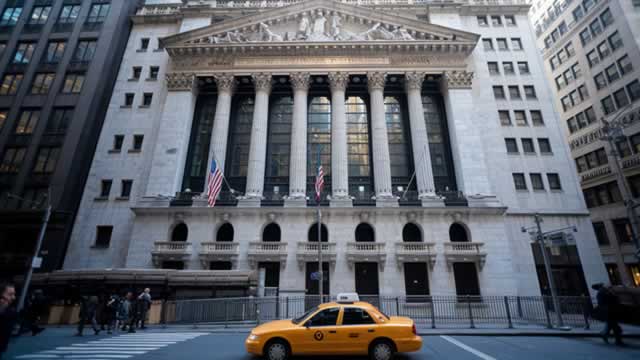
Stephanie Link from Hightower Advisors discusses current market volatility, attributing it to the Fed's upcoming decision, rising oil prices, and bond yields. Despite these concerns, she maintains a bullish outlook, citing consumer resilience and strong earnings, recommending investors embrace volatility and add to positions.
- Fed decision on interest rates is a key driver of current market volatility.
- The economy is 'hanging in' with resilient consumers and good credit quality.
- Recommends embracing volatility and adding to positions, particularly in specific stocks and sectors like banks and consumer discretionary.