Video Analysis
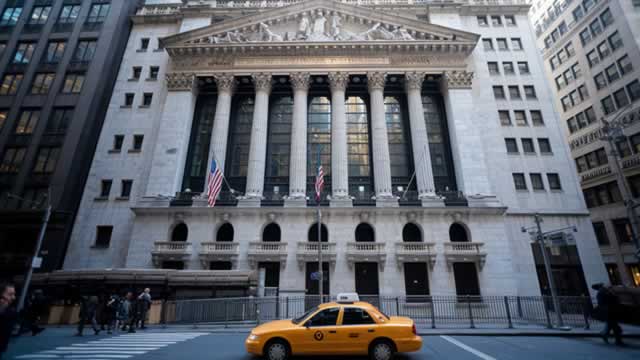
Michael Reinking discusses the Federal Reserve's recent 25 bps rate hike, noting the unanimous decision was a surprise. He highlights the 'confusing story' in the Fed's inflation projections, which suggest a 'timely' return to 2% inflation by 2029. Despite a hawkish Fed, the market is reacting positively today, driven by falling oil prices and solid corporate/AI news.
- The Fed's 25 bps rate hike was expected, but the unanimous decision by the FOMC was a surprise.
- Reinking finds the Fed's projection for inflation to return to target in a 'timely fashion' (by 2029) to be a 'stretch'.
- Market is 'off to the races' today, reversing yesterday's sell-off, driven by lower oil prices and positive corporate/AI updates.
- Triple Witch Expiration this week and positive gamma positions are contributing to market volatility and dampening effects.

Following the Fed's unanimous 25 bps rate hike, markets initially dipped but are now showing a 'risk-on' tone. This shift is attributed to easing geopolitical tensions, which are pushing oil prices down, and a rally in the technology sector, especially AI-related power names. However, Lennar's earnings report indicates a challenging housing market.
- Fed's unanimous 25 bps rate hike was more hawkish than expected, but markets recovered with a 'risk-on' tone.
- Geopolitical developments, including China's request to Iran to de-escalate Houthi attacks, are pushing oil prices below $100/barrel, benefiting equities.
- Tech stocks, particularly semiconductors and AI-related power names like Bloom Energy and Generac, are rallying in premarket trading.
- Lennar (LEN) reported a double miss on earnings and revenue, with lower deliveries and a significant drop in EPS year-over-year, reflecting a stalling housing market.

The video discusses the Federal Reserve's recent 25 basis point rate hike, the first since 2023, and its impact on global markets, including a significant drop in the Dow. Fed Chair Kevin Wash reiterated the commitment to price stability, while former President Trump criticized the tightening policy. The Bank of England is expected to hold rates, and experts debate the effectiveness of monetary policy and the underlying strength of the US economy.
- The Federal Reserve hiked interest rates by 25 basis points, bringing the benchmark to 3.75-4%.
- The Dow shed over 600 points, and the 10-year Treasury yield held stubbornly at the 5% mark.
- Fed Chair Kevin Wash pledged to fulfill the bank's mandate for price stability, with the dot plot suggesting one more hike this year.
- Former President Trump criticized the Fed's actions, demanding looser monetary policy and threatening trade restrictions on Europe.
- The Bank of England is widely expected to hold rates, despite August CPI inflation breaking above 3%, and is considering changes to quantitative tightening.

Larry Kudlow argues that economic growth does not cause inflation, emphasizing a booming economy with strong productivity and low unit labor costs. He suggests the Federal Reserve's recent quarter-point rate hike might be a 'one and done' move, contrasting with some economists' views and highlighting positive trends in manufacturing, household income, and poverty reduction.
- Kudlow asserts that economic growth, particularly supply-side growth from business capital expenditure and industrial spending, does not inherently lead to inflation.
- He points to strong economic indicators such as soaring manufacturing profits, record-high median household income, and all-time low Hispanic and Black poverty rates, describing the current economy as a 'boom'.
- Kudlow highlights a 3.1% annual productivity rate over the last two years and 0.4% unit labor costs, suggesting 'no inflation in the guts of the economy' and advocating for a 'one and done' approach to rate hikes.
The video explores the ongoing debate in Silicon Valley and Washington regarding the pace of AI development and the necessity of regulation. Tech leaders are divided, with some advocating for rapid, self-regulated innovation, while others call for stronger safety standards and international cooperation. The discussion also touches on potential political motivations behind calls for AI regulation.
- Mark Zuckerberg (Meta) and Jensen Huang (Nvidia) advocate for rapid AI development, emphasizing industry responsibility and self-regulation over new government laws.
- Dario Amodei (Anthropic) calls for enhanced AI safety practices, transparency, and international standards, suggesting a more cautious approach.
- David Sacks, a White House Tech Advisor, challenges Amodei's stance, questioning the need for regulations that could hinder progress if companies are responsible for their products.
- Fox Business hosts discuss the political timing of AI regulation debates in Washington, suggesting potential efforts to influence elections or shield companies from liability.
- Concerns are raised about the potential for AI to cause societal disruption, including job displacement and the power of algorithms over individuals.
The analyst discusses the Fed's recent 25bps rate hike, deeming it necessary to combat persistent inflation, which is largely driven by supply-side and geopolitical factors beyond the Fed's direct control. He warns of potential consumer demand weakening and margin compression for businesses due to elevated interest rates and input costs like diesel.
- The Fed's 25bps rate hike was expected and aimed at reducing demand to fight persistent inflation.
- Inflation is primarily driven by geopolitical risks (Iran conflict, trade wars) and supply shocks, which the Fed cannot directly control.
- Concerns exist about consumer demand waning and businesses facing margin compression due to high borrowing costs and elevated input prices, particularly diesel.
- Investors should focus on companies with strong fundamentals: solid balance sheets, low leverage, positive earnings, and cash flows.

The Japanese yen has hit a 40-year low, causing economic and political problems for Japan, including rising costs of living. This weakness also impacts the U.S. by increasing borrowing costs on its mounting $40 trillion public debt. The U.S. Treasury Secretary is actively pressuring Japan to manage its currency and interest rates to stabilize global markets and U.S. debt servicing costs.
- The Japanese yen has reached a 40-year low against the U.S. dollar, impacting Japan's cost of living and benefiting its exporters.
- The U.S. Treasury Secretary is actively intervening in the yen's valuation to prevent higher U.S. borrowing costs on its $40 trillion debt.
- Japan faces a balancing act: raising interest rates to strengthen the yen risks stifling fragile economic growth, while continued weakness exacerbates domestic issues and international pressure.

Continental Resources has announced a new oil deal with Venezuela's state-owned PDVSA to develop 30 billion barrels of oil in the Orinoco Belt. Executives Harold Hamm and Doug Lawler express optimism about bringing a 'renaissance' to Venezuela's oil production, aiming for initial output within 18 months, which could contribute to global energy abundance.
- Continental Resources (CLR) signed an MOU with Venezuela's PDVSA for a 30 billion barrel oil development in the Orinoco Belt.
- The deal was facilitated by President Trump's encouragement and Venezuela's new hydrocarbon law, offering improved commercial terms.
- The project is a greenfield development requiring significant, long-term capital investment and new infrastructure, with teams already mobilized and an 18-month timeline for initial production.
- The initiative is expected to utilize local Venezuelan workers and service companies, aiming to restore and potentially exceed historical production levels.
The U.S. Senate failed to advance the Clarity Act, a key piece of legislation for digital asset regulation, causing an initial sell-off in Bitcoin. Despite this regulatory setback, the speaker highlights Bitcoin's technical consolidation above its 200-day simple moving average and favorable historical seasonality for October as potential positive drivers.
- The U.S. Senate failed to secure the 60 votes needed to pass the Clarity Act, a bill intended to provide a regulatory framework for digital assets.
- Bitcoin initially rallied in anticipation but then sold off 4% after the bill's failure, reflecting increased regulatory uncertainty.
- Technically, Bitcoin is consolidating above its 200-day Simple Moving Average (around $74,600), which is a bullish sign, with resistance noted at $80,000.
- Historically, October is a bullish month for Bitcoin, and the four-year halving cycle also suggests a potential shift in favor of bulls.
The video discusses the Federal Reserve's decision to raise interest rates, which the White House, through its Council of Economic Advisers Chairman Chris Phelan, deemed a 'mistake.' President Trump's Truth Social posts called for interest rates to be 1% or less, arguing that inflation is already coming down and the economy is booming. Phelan also criticized the 'frenzy of Fed watching' for overshadowing fundamental economic data.
- The Federal Reserve raised interest rates for the first time in over three years, a move the White House called 'rather unfortunate.'
- White House economic advisor Chris Phelan stated that the Fed's rate hike was a 'mistake' because inflation is already trending downwards.
- President Trump advocated for U.S. interest rates to be 1% or less, citing the U.S. as the 'Best Credit in the World' and a booming economy.
- Phelan highlighted record-low poverty rates and record-high household incomes (inflation-adjusted) as indicators of economic strength.

Federal Reserve Chairman Kevin Warsh states that inflation is too high with upside risks, despite acknowledging a strengthened economy and higher underlying growth. He emphasizes the Fed's independence and focus on long-term trends over noisy data points, signaling a continued commitment to combating inflation.
- Inflation is too high and inflation risks are to the upside, requiring continued attention.
- The economy has strengthened, and underlying growth is higher.
- The Federal Reserve maintains its independence and focuses on economic trends rather than short-term data points.
The Federal Reserve raised interest rates by 25 basis points, with Fed Chair Kevin Warsh adopting a hawkish tone, emphasizing commitment to price stability and acknowledging a strengthening economy. Market reactions included a stronger dollar, falling equities, and a flattening yield curve, reflecting expectations of further tightening.
- Fed unanimously raised benchmark rate 25 bps to 3.75%-4% range.
- Fed Chair Kevin Warsh signaled a hawkish stance, stating 'Inflation is too high and has been for too long' and 'Today's action shows we're serious about taming inflation.'
- Market reacted with a stronger dollar, declining equities (S&P 500 down 0.8%, Nasdaq 100 down 0.4%), and a flattening yield curve (2-year yields up, 30-year yields down).
- Experts noted the Fed's focus on a 'disciplined' approach and the increasing number of inflation categories rising above 3%.
- The American economy 'appears to be strengthening,' according to Fed Chair Warsh.
Jeffrey Gundlach criticizes the Fed's latest decision, stating the press conference was 'devoid of content' and that he would have preferred a 50 basis point hike to 'stun and done' inflation. He highlights that 'true inflation' (import/export prices at 7.8%) and core PCE (3.3%) are still too high and trending higher, expressing concern that the inflation problem is not being fully respected.
- Gundlach believes the Fed's press conference lacked content and that the 25 bps hike was insufficient; he would have preferred a 50 bps hike.
- He argues 'true inflation' (import/export prices) is at 7.8%, significantly higher than core PCE at 3.3%, which is also trending higher.
- He expresses concern about inflation psychology, citing examples like Costco doubling motor oil prices and rationing, indicating potential hoarding behavior.
Harold Hamm's Continental Resources is poised to announce a significant oil deal in Venezuela, marking a rare international venture for the US shale pioneer. This move aligns with the US administration's efforts to revive Venezuela's oil sector following political changes, with other major companies like Chevron and GE Vernova also pursuing deals in the region.
- Continental Resources, led by Harold Hamm, is set to announce an oil investment deal in Venezuela.
- The US administration is actively pushing American companies to help revive Venezuela's oil sector.
- Harold Hamm, a prominent US shale pioneer and 'oil bull', is making a notable international move for the first time.
The FOMC unanimously voted to raise the federal funds rate by a quarter percentage point to a range of 3.75% to 4%. This decision aims to address elevated inflation and support a timely return to the 2% target, while acknowledging the economy's solid expansion, resilient domestic spending, and robust capital investment.
- FOMC raised federal funds rate by 0.25% to 3.75%-4% to combat elevated inflation.
- Economic activity, domestic spending, productivity growth, and capital investment are expanding at a solid pace.
- Inflation remains elevated, with core PCE and CPI prices above 2% target, but the Fed aims for price stability without harming labor markets.

Larry Kudlow discusses the positive impact of pro-growth policies, such as low taxes and light regulation, on the U.S. economy, highlighting strong GDP estimates, surging retail sales, and robust productivity. He argues that this business-led growth is inherently counter-inflationary, despite a hypothetical Fed Chairman acknowledging elevated inflation inherited from previous administrations.
- Pro-growth policies (low taxes, light regulation, abundant energy, strong dollar) are presented as keys to prosperity.
- Current economic indicators like GDP estimates (5.1% for 3Q 2026), retail sales (up 6.0% year-over-year), and productivity (over 3% annually) show robust growth.
- Kudlow asserts that growth, particularly business-led capital investment and increased employment, is counter-inflationary, contrasting with the Fed's focus on high inflation.
The discussion focuses on the Nasdaq-100's (NDX) historical reactions to Fed rate decisions, noting frequent reversals of initial 'knee-jerk' moves in the following week. It also highlights the growing dispersion between software (IGV) and semiconductor (SMH) sectors, despite overall low implied volatility in NDX options, suggesting potential future catalysts like the upcoming election could increase market uncertainty.
- NDX often reverses its initial direction in the week following an FOMC decision, with the last decision seeing a 2% drop followed by a nearly 9% gain.
- The market dislikes uncertainty, and the Fed's commitment to less transparency contributes to this, making options market forecasts valuable.
- Implied volatility for NDX options is currently muted (around 19% near-term) but rises to the mid-20s for longer timeframes, reflecting anticipated future catalysts.
- There's a persistent and expanding 'teeter-totter' effect between the Software (IGV) and Semiconductor (SMH) sectors, indicating high dispersion under the index's calm surface.
Fundstrat's Tom Lee and Solus' Dan Greenhaus discuss the Federal Reserve's 25 basis point rate hike. Lee believes the market is overreacting and advises buying the dip, anticipating a rally as inflation temporary effects fade. Greenhaus agrees the hike won't derail the economy but notes weakness in sectors outside of AI-driven investment.
- Tom Lee suggests the market is overreacting to the Fed's 25 bps hike and recommends buying the dip, expecting a 'big rally' as temporary inflation effects fade.
- Lee anticipates core PCE to drop to a '2' handle and expects cyclicals, tech, consumer discretionary, and financials to perform positively.
- Dan Greenhaus thought the Fed could have waited but agrees the hike won't derail the economy, noting that outside of data center build-out, the economy (especially construction) is not booming.
The discussion centers on the Federal Reserve's impending rate decision, with markets widely expecting a hike. Speakers highlight concerns about persistent inflation, rising borrowing costs, and the political implications of the Fed's actions ahead of the midterms. Strong retail sales are noted, but the overall sentiment is cautious due to economic pressures.
- The Federal Reserve is expected to hike interest rates for the first time since 2023, with market odds at approximately 95%.
- Rising borrowing costs, including mortgage rates and diesel prices, are a significant concern for consumers and businesses, impacting key battleground states.
- Trucking stocks are experiencing declines due to warnings of higher diesel and hiring costs, reflecting broader economic challenges.
- The political dimension of the Fed's decision is emphasized, with former President Trump advocating for lower interest rates despite inflationary pressures.
Federal Reserve Chairman Kevin Warsh discusses the rationale behind the Fed's decision to raise the federal funds rate. He emphasizes the predominant focus on price stability, acknowledging that inflation is too high and has been for too long. Warsh highlights the strengthening economy, persistent inflation trends, and geopolitical factors as key considerations leading to the unanimous policy action.
- Fed's predominant focus is on price stability; inflation is too high and has been for too long.
- Economic activity is expanding at a solid pace, and job gains have kept pace with the workforce.
- Today's policy action aims to support a timelier return to the 2% inflation goal, driven by strengthening economy, elevated inflation trends, and geopolitical considerations.