Video Analysis

Tom Lee discusses the Federal Reserve's upcoming meeting, expecting them to hold rates and potentially shrink the balance sheet instead of hiking, which he sees as paving the way for future rate cuts. He emphasizes the AI trade as the most important market story, believing it's in good shape despite longevity doubts, which he considers a bullish sign. He also notes concerns about margin debt.
- Fed is expected to hold rates this week; future rate cuts are likely if the balance sheet is shrunk.
- AI trade remains the most important market story and is in 'very good shape.'
- Questioning AI's longevity is a bullish sign, indicating the market is not at a top.
- Margin debt needs to work off high levels, contributing to stock stalling.

NBCUniversal (Comcast) and YouTube (Alphabet) have announced a multi-year global streaming partnership. Starting in early 2027, YouTube Premium subscribers in the US will gain ad-supported access to Peacock, with content directly integrated into YouTube. This strategic deal is expected to significantly expand Peacock's reach and marks a new kind of collaboration in the streaming landscape.
- NBCUniversal and YouTube have signed a multi-year global streaming partnership.
- YouTube Premium subscribers in the US will receive access to Peacock (with ads) for free, beginning in early 2027.
- Peacock's content, including Bravo and NBC Sports, will be directly ingested into YouTube, allowing seamless viewing.
- NBCUniversal Media Group Chairman Matt Strauss stated the deal will make Peacock one of the largest domestic streamers, significantly expanding its reach.
- The partnership also extends to ad tech, international content, and NBC Sports producing live sports for YouTube.

Former President Trump advocates for significantly lower interest rates, arguing the US economy is robust and could achieve 8-12% GDP growth. He criticizes the Federal Reserve's current policy, suggesting political influences prevent optimal rate decisions, and asserts the US should have the world's lowest interest rates.
- Trump states 'costs are going down rapidly' and expects further drops after global conflicts subside.
- He believes interest rates 'should be lowered' to unlock 8-12% GDP growth for the US.
- He criticizes the Federal Reserve board as 'very political' and suggests they are not acting in the country's best economic interest.
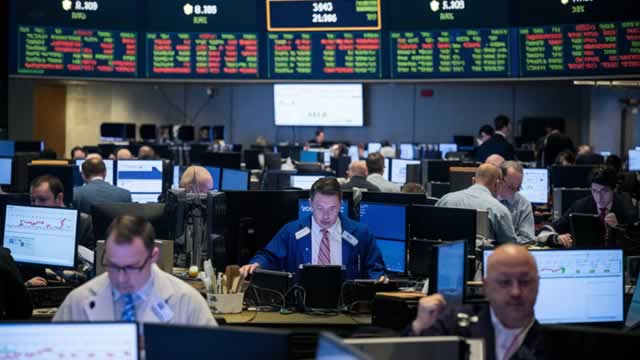
The panel discusses the impact of paused U.S.-Iran attacks on oil markets and the broader economy, alongside upcoming Federal Reserve decisions and corporate earnings. While oil prices have slid, indicating a potential easing of geopolitical tensions, concerns remain about inflation, interest rates, and widening credit spreads. The U.S. economy shows mixed signals with strong durable goods orders but also caution from investors.
- Oil prices slide as U.S. and Iran pause attacks, with crude oil down 6.89% and Brent crude down 7.51%.
- President Trump indicates readiness for 'strong military action' if Iran talks fail, while a U.S. ambassador states the U.S. is 'locked and loaded' but giving diplomacy space.
- Defense stocks like RTX Corporation are performing well, with RTX up +18.85% year-to-date, raising questions about potential munitions restocking.
- The Federal Reserve is expected to hold rates steady this Wednesday, despite U.S. 2-year Treasury yields rising significantly (+24.89% year-to-date), reflecting ongoing inflation concerns.
- Durable goods orders show strength in sectors like aircraft, primary metals, and machinery, indicating a robust underlying economy, but credit spreads for junk-rated companies are widening.
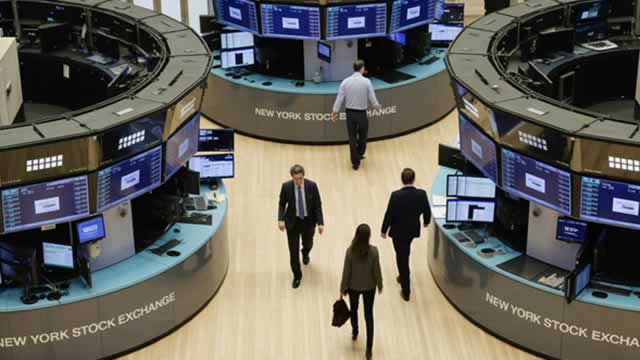
Bonds are a key focus ahead of this week's Fed decision, with a 35% chance of a rate cut. Christian Magoon of Amplify ETFs suggests bond ETFs with covered call strategies, such as TLTP and LQDM, to generate boosted income (targeting 12% yield) and hedge against rate uncertainty. For those preferring to sit out the drama, the SOFR ETF is highlighted for its attractive overnight cash rate.
- Fed decision this week has a 35% chance of a rate cut, with an 80% chance priced in for next month.
- Bond ETFs with covered call strategies (e.g., TLTP, LQDM) are recommended to boost income (targeting 12% yield) and hedge against rate cutting uncertainty.
- The SOFR ETF (SOFR) is presented as an attractive option for investors seeking to sit out market drama, yielding 3.6% for an overnight duration play.
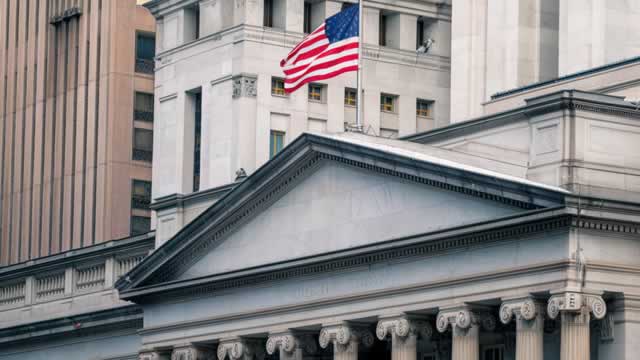
SEC Chairman Paul Atkins discusses the recent surge in IPOs, with over 400 new listings raising $180 billion in the last four quarters, attributing it to a strategic shift in regulatory policy and economic fundamentals. He expresses concern about the long-term decline in public companies and advocates for policies to encourage private companies to go public earlier, allowing broader investor participation in growth.
- 208 IPOs in the first half of 2026, with over 400 IPOs raising $180 billion in the last four quarters (4x the previous period).
- SEC aims to rebuild public markets by addressing disincentives for young companies to go public, enabling average Americans to invest in their growth.
- Noted that there are 40% fewer public companies today than 30 years ago, with many staying private longer due to deep private markets.

The discussion centers on the current market landscape, highlighting the influence of mega-cap tech earnings, ongoing geopolitical risks, and the Federal Reserve's monetary policy decisions. Analysts note strong tech fundamentals and CapEx spending as bullish drivers, but caution about liquidity leading markets and potential political headwinds. The Fed's credibility and response to inflation data are also key concerns.
- Strong tech earnings and CapEx spending by hyperscalers (Amazon, Alphabet, Microsoft, Meta) are seen as bullish for the tech sector.
- Geopolitical risks, particularly in the Middle East, and upcoming elections are creating a 'pause' in market momentum, with liquidity sometimes outweighing fundamentals.
- The Federal Reserve's upcoming decision on interest rates, influenced by PCE inflation data and bond market movements, is critical, with a focus on Chair Powell's credibility.
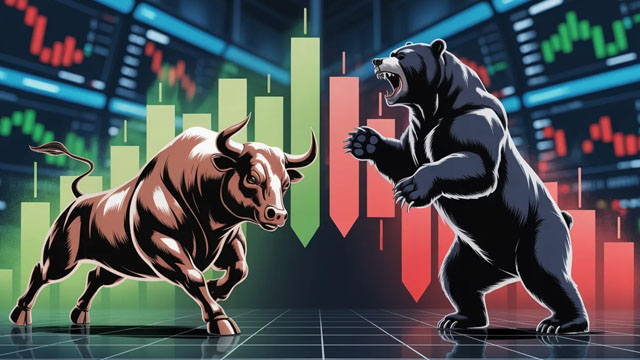
Fanatics has inked a deal to acquire a federally regulated derivatives exchange and clearinghouse license from BGC Group Inc. This strategic move allows Fanatics to operate its own prediction market exchange, initially focusing on sports, with plans to expand. The partnership aims to attract both retail and institutional investors, differentiating Fanatics in a competitive, retail-dominated prediction market.
- Fanatics is acquiring a license from BGC Group to operate its own prediction market exchange, starting with sports.
- The deal provides Fanatics with more control over its prediction market offerings and aims to consolidate its consumer base.
- BGC's involvement is to bring institutional interest to prediction markets, which is crucial for market growth and pricing alongside retail participation.

Jeremy Siegel discusses current market concerns including geopolitical tensions, the Fed's upcoming decision, and the impact of AI. He refutes claims of an overvalued market compared to the dot-com era and expresses optimism for a market pop if geopolitical issues resolve, while noting a reassessment of AI-related capital expenditure.
- Refutes claims of the market being the 'most expensive in history,' citing 1999-2000 as far more expensive.
- Identifies three market concerns: Iran (potential 10% S&P pop if resolved), AI (CapEx becoming 'toxic'), and the Fed's Wednesday meeting.
- Expresses concern about 9% annual growth in credit and money supply, which could pressure the Fed to raise rates, though no hike is expected this week.
- Optimistic about AI's long-term potential for efficiency and profit for providers, despite current CapEx concerns.
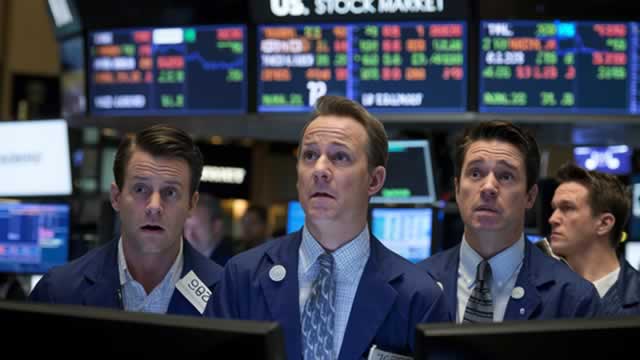
Steven Eisman, known for 'The Big Short,' expresses a cautious market outlook, having reduced his exposure to AI-related stocks like Google and holding cash. He warns of a 'big correction' if the AI trade doesn't fully succeed, highlighting market concentration. He dismisses concerns about oil prices due to oversupply and views the upcoming Fed meeting as irrelevant.
- Eisman has 'lightened up' on AI exposure, selling Google, and is holding cash due to concerns about market concentration in AI.
- He predicts a 'big correction' if the AI trade does not succeed, noting that even diversified portfolios are heavily exposed to tech/AI.
- Eisman is not worried about oil prices, citing oversupply and new pipelines, and considers the Fed's rate decisions 'completely irrelevant' to the current market dynamics.
The video discusses a mixed bag of global financial news, including a temporary de-escalation of US-Iran tensions leading to a dip in oil prices, surging Chinese IPOs, massive AI spending by tech giants with concerns over profitability timelines, and mixed results from AstraZeneca's drug pipeline. Wildfires in Europe and the German economy are also briefly touched upon.
- Oil prices fell 5% after the US and Iran paused strikes, easing Middle East tensions and boosting equity futures.
- CXMT's IPO surged over 500% in Shanghai, making it China's largest listed company by market cap.
- Tech giants like Alphabet, Amazon, Meta, and Microsoft are projected to spend hundreds of billions on AI by 2026, raising questions about when these investments will yield significant profits.
- AstraZeneca reported Q2 revenue in line with estimates and backed its full-year forecast, highlighting a 75% success rate in Phase 3 trials despite one drug's failure.
- Wildfires in France and Spain led to mass evacuations, with French President Macron calling a crisis meeting, as temperatures are expected to top 40 degrees.

The discussion analyzes CXMT's significant share surge on its Shanghai STAR Market debut, attributing it to technical factors like limited free float and regulatory efforts to benefit retail investors, creating a 'scarcity premium'. While the AI theme is strong, the broader memory chip sector is seen nearing a short-term peak, leading to a cautious outlook for average investors despite a potential wave of new tech IPOs.
- CXMT's ~470% surge on debut is primarily due to technical factors unique to China's A-share market and regulatory efforts to protect retail investors.
- Local investors are benchmarking CXMT against larger market leaders, contributing to a 'scarcity premium' for the stock.
- The memory chip sector is approaching a short-term peak, and while the AI theme remains intact, investors are advised against rushing into the sector due to peaking valuations.
- A wave of new Chinese tech IPOs is anticipated, but many of these companies are already richly valued in private capital raising rounds.

Dan Ives highlights strong AI demand, evident in Intel's positive outlook and hyper-scalers' increased CapEx. He views the AI revolution as being in its 'third inning,' with companies needing to invest heavily to stay competitive, despite investor anxiety about spending. Apple is also seen as a key player in the consumer AI space.
- Intel's strong outlook and increased CapEx underscore robust AI demand, positioning it as a 'comeback kid' in the AI revolution.
- Hyper-scalers like Alphabet, Meta, Microsoft, and Amazon are boosting CapEx for AI, which is crucial for long-term competitiveness in this 'arms race'.
- Apple is strategically positioned as the 'toll collector' on the consumer AI highway, with a clear AI strategy and a strong iPhone upgrade cycle.
The discussion highlights how the industrials sector is experiencing significant growth, driven by the infrastructure demands of AI data centers, geopolitical factors, and defense spending. Valuations for industrials are noted to be as high as tech, with strong ETF flows indicating investor interest in these long-term tailwinds.
- Industrials are benefiting from the infrastructure build-out required for AI, including data centers and energy grids.
- Valuations for industrials are currently high, comparable to the tech sector, reflecting strong performance.
- Geopolitics and defense spending are also contributing tailwinds to the industrials sector.
- Strong ETF flows, particularly into actively managed industrial funds, underscore investor confidence in the sector's future.
The discussion highlights persistent energy market volatility in the Middle East due to geopolitical tensions, including a proposed US-Saudi nuclear deal and ongoing Iran negotiations. Key concerns are threats to oil exports from Houthi attacks in the Red Sea and depleted global inventories, suggesting continued upward pressure on oil prices.
- The proposed US-Saudi nuclear deal raises questions regarding uranium enrichment and safeguards, reflecting broader geopolitical competition.
- Iran nuclear deal negotiations are stalled, with the US anticipating prolonged volatility and no immediate resolution.
- Houthi attacks on Saudi oil facilities and shipping lanes in the Red Sea pose significant threats to global oil supply, exacerbating market tightness and leading to price spikes.

Nvidia CEO Jensen Huang predicts a tenfold expansion of the semiconductor industry driven by AI agents and robots, emphasizing the need for a scaled-up supply chain. He detailed a $500 billion business with South Korea's SK Group for memory and AI supercomputers, while also highlighting China's strong AI research and the critical role of both open and closed AI models for innovation and sovereignty.
- Semiconductor industry needs to grow 10x in the next decade due to AI agents and robots.
- Nvidia has a $500 billion business with SK Group, including memory purchases from SK Hynix and AI supercomputer sales to SK Telecom.
- China is a leading AI innovator, producing more AI researchers than the rest of the world combined in any given year.
- Both closed and open AI models are essential for safety, security, innovation, and company sovereignty.
The discussion centers on the impact of geopolitical tensions, particularly the U.S.-Iran conflict, on oil prices and U.S. bond yields, highlighting yields as a critical 'Achilles heel' for the U.S. economy. It also addresses the robust AI trade, emphasizing that while the narrative is intact, investment opportunities are shifting to foundational infrastructure rather than just high-flying tech.
- Geopolitical tensions are driving oil prices higher, but the primary concern for the U.S. remains high bond yields due to overleveraging and upcoming elections.
- The bond market is increasingly proactive in pricing in economic factors and Fed actions, often moving ahead of official announcements.
- The AI story is robust, but the 'bottleneck trade' is continuously evolving, with current focus on memory and infrastructure assets that AI enhances without disrupting.

The Trump administration is replacing expiring tariffs with new Section 301 levies, citing forced labor investigations and extending duties to 60 economies. While markets have largely absorbed these initial tariffs, the administration is laying groundwork for additional trade actions, particularly concerning industrial overcapacity. Legal challenges and ongoing investigations are expected to shape the future of US trade policy.
- New Section 301 tariffs of 10% or 12.5% are now in effect on imports from 60 economies, covering almost all US imports.
- Brazil was hit with 25% Section 301 tariffs this week, though some goods like coffee and beef were carved out.
- An ongoing 'excess capacity' Section 301 case is primarily targeting Chinese industrial overcapacity, but also includes the European Union and other countries.
- Markets have largely absorbed these tariffs, viewing them as a necessary evil for US government revenue, contrasting with past market sell-offs.
- The legality of these broad tariffs is being challenged, with trade lawyers divided on their durability under court scrutiny, especially given the extensive number of countries covered in investigations.

The discussion centers on the future of artificial intelligence, acknowledging its transformative potential while highlighting significant uncertainties. Key concerns include the competitive landscape with China's cost-effective AI models, rising borrowing costs impacting tech valuations and private equity, and the broader implications of inflation and growing federal debt.
- AI is seen as a 'huge contributor' to society and economy, but identifying specific winners and losers remains uncertain.
- Chinese AI models are emerging as cheaper alternatives to US offerings, posing a competitive challenge.
- Rising interest rates, inflation, and increasing federal budget deficits are driving up borrowing costs, affecting tech valuations and private equity investments.
- The market is demanding a 'margin of safety' from companies with high capital expenditures, particularly in the AI sector.

The discussion centers on the Trump administration's proposed sweeping new tariffs of 10-12.5% on 60 trade partners, including China, South Korea, Japan, Taiwan, India, Canada, and the EU. The expert explains that these tariffs are based on Section 301, a historically used statute, making them legally durable. The policy casts a wide net, essentially deeming most trade partners 'guilty' if their forced labor enforcement doesn't match US standards.
- New tariffs of 10-12.5% are to be imposed on 60 US trade partners, accounting for 99% of US imports.
- The tariffs are based on Section 301, a long-standing statute, which makes them legally robust and less susceptible to court challenges.
- The policy's criteria for forced labor enforcement are rigorous, effectively classifying most trade partners as 'guilty' unless they match US standards.
- Countries with existing bilateral deals (EU, Japan, South Korea, Taiwan, Switzerland) may have a rate cap (15%) on these tariffs, offering some flexibility compared to others.