Video Analysis

Tom Nides of Blackstone discusses how global tensions, including US-China trade disputes and political backlashes against data centers, are not hindering capital deployment. He emphasizes Blackstone's continued global investment strategy, highlighting opportunities in Canada, AI, and infrastructure, despite geopolitical 'noise' and low expectations for immediate breakthroughs from high-level meetings.
- US-China leaders' meeting is largely orchestrated, focusing on trade, Iran, and AI, with outcomes likely predetermined.
- Despite 'tariff diplomacy' and geopolitical noise, global capital continues to be raised and deployed, with significant investment opportunities in Canada.
- Blackstone is actively investing in energy, infrastructure, AI, and defense tech, viewing data centers as job creators despite local anxieties.
- Nides advocates for 'guardrails' around AI development, believing smart people will ensure safe and productive technological advancements.
CEOs of OpenAI and Anthropic are briefing the UN Security Council on AI regulation and safety. While acknowledging risks like cybersecurity and bioweapons, they aim for a 'pragmatic middle ground' with common global benchmarks. This contrasts with some tech leaders and the White House, who are wary of extensive global regulation, creating a complex political landscape for AI governance.
- OpenAI's Sam Altman and Anthropic's Dario Amodei are addressing the UN Security Council on AI, advocating for common global benchmarks.
- Amodei has highlighted both AI risks (cybersecurity, bioweapons) and benefits (curing diseases), pushing for international coordination.
- A split exists in Silicon Valley, with some CEOs like Mark Zuckerberg (Meta) and Jensen Huang (Nvidia) opposing regulation, while the White House also rejects a global control system for AI.
The video discusses the Nasdaq Composite's recent record high, driven by the 'Meta Muse' rally, and features Ray Dalio's stark warning that AI is both a transformative productivity force and a dangerous bubble poised for devastating effects. Brian Sozzi also reviews Dalio's past market warnings against historical charts and touches on AI regulation with Gary Cohn.
- Nasdaq Composite reached a second consecutive record, primarily fueled by the 'Meta Muse' rally.
- Ray Dalio warned that AI represents one of the biggest productivity enhancements but also a bubble with potentially devastating consequences.
- Brian Sozzi presented a historical analysis of Dalio's previous market warnings against actual market performance, and Gary Cohn discussed AI regulation.
Treasury Secretary Scott Bessent held an unscheduled meeting with China's Vice Premier He Lifeng to discuss 'unfinished business' ahead of President Trump's state dinner with Chinese President Xi Jinping. Key topics include potential US tariff exemptions on agriculture and low-tech electronics, while China seeks broader tariff reductions and relaxed export controls on advanced technology. US officials expressed caution regarding providing advanced tech to China.
- Treasury Secretary Bessent met with China's Vice Premier He Lifeng in an unscheduled meeting to discuss 'unfinished business' and strategic stability based on reciprocity and fairness.
- The US is considering new tariff exemptions on agriculture, medical supplies, and low-tech electronics, while China seeks more tariff drops and relaxed export controls on advanced technology.
- US officials, including Commerce Secretary Lutnick and Congressman Moolenaar, expressed reservations about easing export controls on advanced technology to China due to national security concerns.
The Bloomberg Brief covers global financial markets, highlighting wavering futures despite the Nasdaq 100's first record high since June, driven by AI enthusiasm. Geopolitical tensions surrounding US-Iran talks and the upcoming Trump-Xi meeting are key concerns, alongside the OECD's raised global inflation forecasts, prompting calls for further central bank tightening. Individual stock movers reflect mixed sentiment, with AI-related companies rallying while others face headwinds.
- US equity futures are wavering, but the Nasdaq 100 reached its first record high since June, fueled by AI enthusiasm and semiconductor stocks.
- Brent crude is fluctuating near $100/barrel, while US-Iran talks are described as 'very good' by Trump, despite Iran's firm stance on the Strait of Hormuz.
- Asian stocks are mixed, with KOSPI up but China AI stocks (e.g., Alibaba down 3%) falling due to regulatory probes, and the Yuan and Yen weakening.
- The OECD raised its 2027 global inflation forecasts for most G20 economies (e.g., US 2.6%, Euro-area 2.9%), urging central banks to tighten monetary policy further.
- The upcoming Trump-Xi meeting in Washington has lowered expectations, with discussions expected on AI, trade, and Taiwan.

Mona Mahajan of Edward Jones discusses the Fed's recent quarter-point rate hike, viewing it as a mid-cycle adjustment rather than a full hiking cycle. She believes the economy can handle further modest rate increases, citing healthy GDP and labor market projections. While acknowledging a K-shaped economy and bifurcated earnings growth, she remains optimistic about the stock market's potential for continued returns.
- The Fed's recent rate hike was a unified move to establish credibility in fighting inflation, leading to an immediate rollover in inflation expectations.
- The current rate hiking cycle is seen as a 'mid-cycle adjustment' with potentially 2-3 more hikes, which the economy is expected to handle without derailing broader economic or earnings narratives.
- S&P 500 earnings growth is projected at 30% this year, primarily driven by tech and related sectors, with a more modest and balanced 15% growth expected next year.
- Treasury yields have risen due to solid economic growth and inflation uncertainty, but core inflation remains contained, and a wage-price spiral has been avoided, which is crucial for the Fed.
Franklin Templeton CEO Jenny Johnson discusses the market's resilience despite geopolitical risks and Fed rate hikes, attributing current strength to strong corporate earnings and consumer spending. She believes AI's full productivity impact is yet to come, but other technological advancements are already contributing. While acknowledging concerns about tech valuations, she maintains a positive outlook based on underlying fundamentals.
- Markets are showing resilience, with strong corporate earnings and consumer spending, despite geopolitical risks and sticky inflation.
- Current productivity gains are primarily driven by existing digital and cloud computing technologies, with the full impact of AI still years away.
- The regulatory environment is perceived as friendlier, contributing to business confidence.
- Concerns about the concentration and valuation of 'Mag 7' tech stocks are acknowledged, but tight credit spreads suggest no immediate default risks.
Mark Cudmore discusses the recent decline in Brent crude prices, attributing it to diplomatic optimism and potential increased oil flows. He notes that lower oil prices are positive for stocks and treasuries, leading to a 'very bullish' market outlook. Despite this, he struggles to identify significant new risks, suggesting that investors might aggressively chase the year-end rally if no negative catalysts emerge soon.
- Brent crude prices are lower for the sixth consecutive day, the longest streak in over a year, driven by diplomacy hopes and potential supply increases.
- Lower oil prices are seen as positive for global bond markets and stocks.
- Cudmore expresses surprise that markets aren't even higher given the bullish outlook, struggling to find new or significant bearish catalysts.
- He anticipates investors may aggressively chase the market higher into October if no negative events occur.
The video discusses a range of global financial market topics, including crude oil prices, US-Iran relations, upcoming US-China trade talks, and the role of AI in technology. Analysts provide insights into equity market performance, interest rate outlooks, and the economic resilience of Europe, particularly France, amidst inflationary pressures and geopolitical tensions.
- Crude prices retreated following a three-hour meeting between US and Iranian officials at the UN, despite President Trump's strong rhetoric.
- Uncertainty surrounds Chinese President Xi Jinping's upcoming visit to Washington, including whether he will bring a corporate delegation.
- AI is a central theme at the UN, with Open AI and Anthropic CEOs addressing the Security Council on safety debates.
- France is increasing support measures due to rising energy prices, with discussions on the country's fiscal outlook and debt-to-GDP ratio.
- Analysts from Goldman Sachs and BNP Paribas offer perspectives on equity market performance, inflation, interest rates, and the profitability of tech and banking sectors.
Corey Ranslem, CEO of Dryad Global, discusses the impact of ongoing conflicts in the Middle East on shipping routes and oil pipelines. Despite reports of Saudi Arabia restarting its East-West pipeline, vessel traffic through the Bab el-Mandeb Strait remains significantly reduced, and full pipeline capacity recovery will take time. Insurers and crews are hesitant to return to pre-conflict levels without a sustained peace deal.
- Vessel transits through the Bab el-Mandeb Strait are down to an average of 30 daily, from a normal 70-90, due to Houthi attacks.
- The East-West pipeline restart is expected soon but at only 30-40% capacity, with full recovery estimated at 6-8 weeks or longer due to damage.
- Insurance premiums and crew willingness to transit high-risk regions will take weeks or months to normalize, requiring a solid, sustained peace agreement rather than temporary ceasefires.
Financial markets are navigating mixed signals, with oil prices falling amid diplomatic overtures between the US and Iran, while European central bankers warn of further rate hikes impacting economic growth. Geopolitical tensions persist, and regulatory changes for major banks like UBS add to market uncertainty.
- Oil prices slide, with Brent crude on track for its longest losing streak in a year, as US-Iran talks show mixed signals and Saudi Arabia restarts a key pipeline.
- ECB officials warn of potential rate hikes that could stifle economic growth, with Eurozone PMI data due to provide further insights.
- UBS faces a crucial Swiss parliamentary vote on capital requirements, with the bank advocating for less stringent options, impacting its profitability outlook.
- Asian stocks show a mixed performance, with chipmakers rising but Hong Kong tech shares, including Alibaba, trading weaker.
- The upcoming Trump-Xi summit agenda includes critical discussions on the Iran war, Taiwan, trade, and AI, with preliminary talks showing some positive signs on AI.
The video discusses a mixed bag of market drivers including renewed US-Iran diplomacy, upcoming US-China talks, and a tech rally fueled by AI optimism. Oil prices are falling due to hopes of de-escalation and Saudi pipeline restarts, while Asian stocks show cautious gains. Geopolitical tensions and regulatory concerns for AI and Chinese tech companies remain key factors influencing investor sentiment.
- US-Iran diplomacy revives hopes, with President Trump hailing 'very good discussions' despite prior threats, leading to a drop in Brent Crude prices.
- President Xi Jinping's upcoming US visit is met with a 'red carpet' welcome from Trump, but expectations for a major trade breakthrough are limited, and Chinese tech shares are down amid LMM probe reports.
- Asian stocks are generally rising, driven by a tech rally that pushed the Nasdaq 100 to a fresh record high, reflecting renewed investor appetite for AI-linked stocks.
- Saudi Arabia is restarting its East-West pipeline, contributing to oil price declines, while Abu Dhabi's XRG seeks to expand its global gas portfolio, eyeing a stake in LNG Canada.
- Nigeria surprises markets with a deep interest rate cut, while South Africa is expected to increase rates, and Africa's ETG Group weighs a $500 million Eurobond.

The Fox Business segment discusses record-high diesel prices in California and nationwide, highlighting the severe impact on businesses and consumers. It explores political blame and proposed solutions, including a potential ban on diesel exports, while also addressing the broader inflationary pressures caused by rising fuel costs across various sectors.
- Nationwide average diesel prices hit a new all-time high of $6.52 per gallon, with California reaching $8.43 per gallon.
- Businesses like moving companies report fuel bills doubling, and high diesel costs are expected to drive up prices for food, transportation, and agricultural harvests.
- Republican lawmakers are urging a temporary ban on diesel exports, but experts warn this could shatter the U.S.'s reputation as a reliable energy investment and discourage future production.
The discussion highlights the nascent stage of AI development and a significant, prolonged chip shortage (GPUs, ASICs) expected to last until 2030. It emphasizes the growing importance of Small Language Models (SLMs) for broader AI adoption beyond data centers and identifies upstream semiconductors and hardware as key investment opportunities due to the persistent supply-demand imbalance.
- AI chip supply is currently 73% undersupplied, with the shortage projected to last until 2030, challenging earlier predictions of a peak in 2028.
- Small Language Models (SLMs) are catching up to LLMs and are expected to drive wider AI adoption, extending demand beyond traditional data centers.
- Upstream semiconductor and hardware companies offer the best investment value due to the deep and worsening supply shortage in AI compute.

Strive CEO Matt Cole presents a highly bullish outlook on Bitcoin, projecting a 50% compound annual growth rate through 2030, which he deems conservative. He anticipates a significant weakening of the dollar due to the debt crisis, further bolstering Bitcoin's value, and highlights Strive's strategy of continuous Bitcoin acquisition.
- Strive CEO Matt Cole projects a 50% Compound Annual Growth Rate (CAGR) for Bitcoin through 2030, considering it a conservative estimate based on historical bull market performance and current macro conditions.
- Cole believes the US dollar, and other fiat currencies, will weaken significantly due to the ongoing debt crisis and government spending, leading to Bitcoin's value potentially going to 'infinity' against the dollar.
- Strive's digital asset treasury model, which involves continuous Bitcoin acquisition, has reportedly outperformed Bitcoin by over 100% this year (2026, according to the graph) and aims to generate a Bitcoin yield for shareholders.

The discussion focuses on the upcoming Trump-Xi summit, highlighting the potential for a trade truce extension as a key outcome. While a formal AI communication line is uncertain, the length of any trade agreement is crucial, with China leveraging its control over rare-earth exports. The visit itself is seen as a win for Xi, and an extended truce would be framed as a success.
- The US-China trade truce, set to expire in November, is a central topic, with China likely seeking a longer extension.
- China's export restrictions on rare-earth minerals provide significant leverage in trade negotiations.
- While a line of communication on AI risks is desired by the US, China has not yet indicated agreement, and concrete outcomes are uncertain.
The video discusses the Nasdaq's second consecutive record close, contrasting with a slight slip in the Dow and a flat S&P 500. It also covers President Trump's announcement at the UN General Assembly to rename 'artificial intelligence' to 'super intelligence' in US documents, citing the term 'artificial' as sounding fake.
- Nasdaq closed at a record for the second straight session.
- Dow slipped while the S&P 500 finished about flat.
- President Trump announced renaming 'artificial intelligence' to 'super intelligence' in US documents.
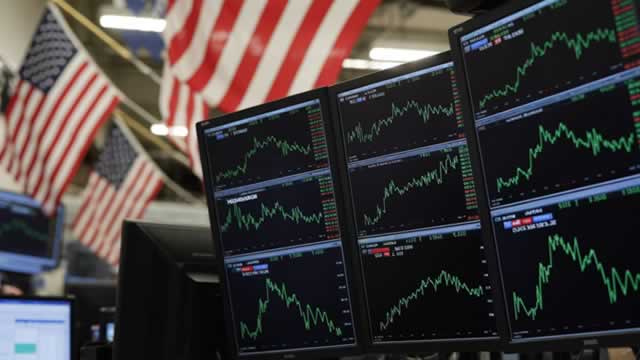
Wall Street experienced a mixed Tuesday, with the Dow down and Nasdaq up, as investors monitored geopolitical tensions and the UN General Assembly. Tech news highlighted Meta's new AI agent 'Muze' and its potential disruptive impact on various sectors, while California prepared for extreme weather events. President Trump's active trading was also noted.
- Wall Street closed mixed, with the Dow down 185 points (Sysco -4.5%), S&P 500 unchanged, and Nasdaq up 122 points.
- US and Iranian officials held a 'productive' three-hour meeting in New York, with President Trump expecting further talks soon.
- Meta's new consumer AI agent, 'Muze,' hit #1 on the Apple Free App chart, potentially threatening companies like Schwab, Expedia, and Intuit.
- California declared a state of emergency in anticipation of a historic El Niño event, preparing for potential flooding and landslides.
The Clarity Act, a comprehensive crypto market structure bill, failed in the Senate due to partisan roadblocks and concerns over ethics. This legislative setback has prompted federal agencies like the SEC and CFTC to accelerate rulemaking under their existing authority, while states are also moving to assert their regulatory powers, creating a fragmented and uncertain regulatory landscape.
- The Clarity Act failed a key Senate vote (49 YEA, 50 NAY), dealing a significant blow to the crypto industry's hopes for comprehensive federal regulation.
- Federal agencies, including the SEC and CFTC, are now expected to aggressively pursue rulemaking under their existing authority to fill the regulatory void, with some already clearing paths for tokenized stocks.
- States are also seeking to protect their ability to enforce their own crypto rules, leading to concerns about regulatory fragmentation and increased legal challenges for the industry.

The video analyzes the global AI race, highlighting US policy favoring 'super intelligence,' China's advancements with Alibaba's new AI chip, and the launch of the Horowitz Andreessen Academy for AI talent. It also touches on the UN's efforts in AI regulation and market responses to these developments.
- US President Trump advocates for encouraging 'super intelligence' and rejects global schemes to control AI, with minimal immediate market reaction to his speech.
- Meta Platforms Inc. saw stock gains after its AI agent 'Muse' topped app store charts, indicating positive market sentiment towards consumer-facing AI products.
- Alibaba unveiled its new AI chip, 'Jianwu V900,' designed to compete with Nvidia, signaling China's aggressive push in AI hardware.
- The Horowitz Andreessen Academy launched as a tuition-free, one-year program in San Francisco, backed by $42 million from A16z and other tech giants, to train young talent for the AI era.
- SoftBank is experiencing high demand for its junk bonds, drawing over $20 billion, to fund its significant investments in AI, including OpenAI.