Video Analysis

Goldman Sachs' Matthew McClure indicates a robust M&A market, driven by strategic imperatives and CEO resilience, with year-to-date volume at $3.8 trillion and record large transactions. The IPO market is also 'wide open for business,' showing broad-based growth, significantly boosted by AI-related companies. Private equity is gaining confidence, with substantial capital ready for deployment.
- M&A volume year-to-date is $3.8 trillion, with a record 49 transactions over $10 billion, driven by strategic goals and CEO confidence in navigating uncertainty.
- The IPO market is 'wide open for business,' with AI-related companies accounting for over 50% of capital raised, despite being only 20% of the number of IPOs.
- Private equity M&A volumes are up 10% year-over-year, with $1.5 trillion in capital waiting to be deployed, indicating growing confidence in the private market.

President Donald Trump announced that the United States has reached a trade deal with Canada, resolving tariff issues. He stated that the 50% tariffs previously imposed on Canada would be removed, calling it a 'very fair deal' that would benefit both countries, especially US farmers and manufacturers.
- US has 'come to a deal with Canada' on trade, leading to the removal of tariffs.
- The agreement is described as a 'very fair deal for both' and 'good for everybody'.
- US farmers and manufacturers are expected to be 'thrilled' by the resolution of trade tensions.
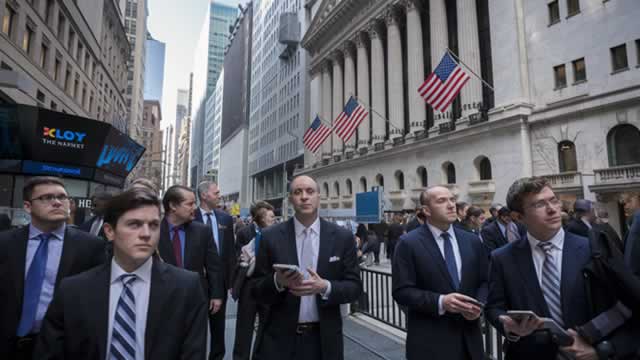
Major stock averages are up, with the Dow, S&P 500, and Nasdaq all in the green. This positive movement is partly attributed to the Treasury Department doubling debt buybacks, which has led to falling bond yields. However, rising oil and diesel prices, along with a drop in overall retail sales in July, present underlying inflation concerns for consumers.
- Major stock indices (Dow, S&P 500, Nasdaq) are up, with Merck, Nvidia, Qualcomm, and Taiwan Semi showing gains.
- The Treasury Department is doubling debt buybacks to steady the bond market, leading to lower Treasury yields after the 30-year hit a 20-year high.
- US crude oil is above $85/barrel, and diesel prices are surging to $5.50/gallon nationally ($7 in California), raising concerns about consumer inflation.
- Retail sales dropped in July, partly due to 'Prime Day' sales pull-forward, but Walmart and Target are expected to show resilience.
- Amazon plans to expand drone delivery, and President Trump paused tariffs on Canada.
The UAE has halted all trade, commercial exchange, and financial transactions with Iran following the detection of two ballistic missiles fired from Iran towards UAE waters. This move significantly impacts Iran's economy, as the UAE has been a crucial commercial gateway. US President Trump also confirmed a collapse in diplomatic talks with Iran, stating the naval blockade remains in full force.
- UAE halts all trade and financial transactions with Iran after missiles were detected targeting maritime navigation.
- Iran denies responsibility for the missile launches, which fell into the sea without casualties or damage.
- The UAE's decision cuts a critical trade and financial channel for Iran's economy.
- US President Trump confirmed no talks are ongoing or scheduled with Iran, and the US naval blockade remains in effect.
- Oil prices (ICE Brent Crude and WTI Crude) showed slight increases amidst these geopolitical developments.
Mohamed El-Erian discusses the Treasury's decision to double long-end bond buybacks, likening it to 'Operation Twist.' He suggests this move is driven by political and social concerns over rising rates and affordability, rather than purely economic factors, and warns of potential collateral damage and unintended consequences despite short-term yield influence.
- Treasury's long-end bond buyback increase is an 'Operation Twist' to influence yields in the short term.
- The move is driven by political and social pressures, such as rising mortgage rates and affordability issues, ahead of elections.
- It is not a long-term solution and carries collateral damage and unintended consequences, including potential issues with the short end of the curve and liquidity management.
- The economy faces a 'race' between AI-driven earnings and the cost of funding, with risks from leverage and pressure on low-income households.
- Conflicting signals from corporate earnings (e.g., Lowe's vs. Target) indicate a complex economic picture.
The expert discusses the significant sell-off in the tech sector, particularly semiconductors and data centers, attributing it to geopolitical uncertainty in the Middle East and rising bond yields. He notes that investors are seeking safe havens and pulling money from high-growth tech areas, with potential future supply chain issues from the China/Taiwan conflict adding to concerns. The market is experiencing unusual correlations and volatility.
- Geopolitical uncertainty in the Middle East and rising bond yields are driving sell-offs in tech.
- Semiconductor and data center stocks are being 'pummeled', with some down 5-13% today.
- The VIX (volatility index) is unusually low given the current market uncertainty, suggesting underlying tension.
- Potential escalation in the China/Taiwan conflict could lead to further supply chain issues for semiconductors.

Gennadiy Goldberg of TD Securities discusses the ongoing pressure on long-end bond yields, attributing it to a combination of supply-side, demand-side, and the Federal Reserve's reaction function. He notes low investor conviction and suggests that while the Fed's base case is a hold, persistent inflation and a strong labor market could push them to hike, which he believes would help flatten the yield curve.
- The long-end of the bond market is experiencing 'death by a thousand cuts' due to supply, demand, and uncertainty regarding the Fed's policy, leading to 'rock bottom' investor conviction.
- TD Securities' base case is for the Fed to hold rates, but strong economic data (e.g., 4% unemployment, 150-200k payrolls, 0.35-0.4% core PCE) could trigger a September/October hike.
- Goldberg believes that further rate hikes would help flatten the yield curve, and that 5% on the 30-year yield serves as a significant line in the sand, with real rates currently appearing attractive.

James Bullard, former St. Louis Fed President, suggests the Federal Reserve should consider a September rate hike or signal future tightening. He argues this is necessary to re-establish credibility in fighting inflation, given persistent PCE projections above 3% and a robust economy with strong GDP, high wealth-to-income ratios, and a low unemployment rate.
- Fed's core PCE projections remaining above 3% for multiple years (2023-2026) indicate a de facto 3% inflation target, necessitating action to reaffirm the 2% target.
- Strong economic conditions, including 4% Q3 GDP, high wealth-to-disposable income, and a tight labor market, provide an opportune moment for the Fed to act.
- Bullard explicitly states a September rate hike is 'not too bad of an idea' or, at minimum, a signal for future hikes is needed to avoid higher longer-term yields and maintain market credibility.
James Bullard views the US Treasury's announcement to increase nominal long-end issuance and conduct buybacks as an important tactical move that caused an immediate flattening of the yield curve. However, he emphasizes that this action does not fundamentally alter the challenges posed by large fiscal deficits and persistent inflation, suggesting further policy intervention is required.
- The Treasury's announcement of increased long-end issuance and buybacks is an 'important tactical move' that led to an 'outsize reaction' in bond markets, with yields falling.
- Despite the immediate market reaction, the move does not change the 'fundamentals' of large fiscal deficits and the Federal Reserve remaining 'on the sidelines'.
- Underlying economic conditions, including unemployment (stated as 4.1%) and core PCE inflation (over 3%), continue to present challenges.
- Bullard suggests that significant policy action, either on the fiscal deficit or monetary policy side, is necessary to prevent excessively high long-term yields.
Marc Segura, President of ABB Robotics, discusses the new era of industrial robotics, driven by the convergence of AI and autonomy, which is expanding applications beyond traditional manufacturing. He highlights Europe's engineering strengths, the role of robotics in addressing labor shortages, and ABB's collaboration with Nvidia on AI training and simulation.
- Robotics is entering a new era, with AI making robots intelligent and autonomous, opening up new market opportunities across diverse industries.
- Europe's strength in the global robotics race is its strong industrial engineering and mechatronics base, which is crucial for physical AI deployment.
- Robots are viewed as a solution to labor shortages, amplifying human capabilities, creating better jobs, and driving business prosperity, rather than replacing workers.
- ABB Robotics is partnering with Nvidia to leverage simulation for training industrial AI models, aiming to cut engineering costs and accelerate deployment.
- SoftBank's proposed acquisition of ABB Robotics is on track for a successful closing by the end of this year.
The discussion highlights volatility in the chip sector, driven by concerns over negative free cash flow from hyperscalers and rising Weighted Average Cost of Capital (WACC) for tech stocks. While SK Hynix announced a significant share buyback, questions remain about the sustainability of returns. Conversely, Unitree Robotics' massive IPO surge in Shanghai underscores strong investor enthusiasm for humanoid AI and China's leadership in the robotics market.
- Chip sector faces volatility due to negative free cash flow from hyperscalers and rising WACC, which is becoming a key concern for tech stocks.
- AI firms are attracting very high yields in the bond market, potentially diverting investment from tech equities.
- Unitree Robotics, a Chinese humanoid robot maker, saw its Shanghai IPO surge 629%, reflecting strong interest in embodied AI, with China dominating 97% of the humanoid robot market.

Edward Yardeni believes that current interest rates of 4-5% are a return to 'normal' and a 'healthy sign of a healthy economy'. He dismisses widespread concerns about high government debt levels, arguing that the economy is resilient and capital markets are properly allocating capital, even suggesting that a 5% yield would be seen as an attractive opportunity.
- Interest rates at 4-5% are considered 'back to normal' and a 'healthy sign of a healthy economy'.
- The economy's resilience, consumer strength, and capital spending are highlighted as positive factors.
- Concerns about government debt are downplayed, with Yardeni stating that 'everything is relative' to the economy's size and that auctions have been well-received.
Kieran Calder of UBP remains bullish on South Korean memory stocks like Samsung and SK Hynix, citing strong demand over supply. He acknowledges China's growing chip capabilities as a competitive threat but believes the broader AI trade will continue to drive productivity and growth across the semiconductor sector.
- Bullish on South Korean memory stocks (Samsung, SK Hynix) due to high demand exceeding supply, despite recent volatility.
- China's increasing chip capabilities, including foundries like SMIC and Hua Hong Grace, pose a growing competitive threat to major memory players.
- The AI trade is seen as a pervasive driver of growth and productivity across the tech sector, with chips currently being the primary bottleneck.
The discussion highlights a 'tug of war' in emerging markets (EM) between strong economic fundamentals and the risks posed by rising U.S. bond yields and high leverage, particularly in Asian tech and U.S. hyperscalers. While some EM countries have shown resilience, a significant U.S. market downturn could challenge their sustainability, especially given concerns about AI investment and associated debt.
- Emerging markets (excluding memory chipmakers) have shown resilience due to strong economic fundamentals and high real interest rates, making some attractive carry trades.
- Rising U.S. bond yields and potential U.S. market wobbles pose a risk to EM, with historical patterns suggesting difficulty for EM to sustain gains during major U.S. risk-off moves.
- Concerns are growing over significant leverage and off-balance sheet obligations among Asian tech companies and U.S. hyperscalers, which could amplify downside risks if interest rates continue to rise.

The video discusses the global bond market rout, with yields on sovereign debt reaching multi-decade highs. It also covers UK inflation data, its implications for central bank policy, and the spillover effects on equity markets, particularly tech stocks. Geopolitical tensions are highlighted as a contributing factor to market uncertainty.
- Global bond yields are holding near multi-decade highs, driven by a significant sell-off in the past week.
- UK July CPI data showed 2.9% year-on-year, with services CPI up 0.6% and core CPI up 2.6%, slightly above expectations but not seen as a major market mover.
- Concerns are raised about the bond market's impact on equities, especially tech and semiconductor stocks like Nvidia and Micron Technology, due to capital expenditure around AI and rising yields.
- Geopolitical tensions, including US-Iran relations and US-Canada trade disputes, are discussed as potential, though currently limited, influences on oil prices and broader market sentiment.
The U.S. Strategic Petroleum Reserve (SPR) has fallen to its lowest level since December 1982, with 293.4 million barrels, amid global oil supply pressures and rising gas prices. While the administration plans to refill the reserve, critics argue the drawdowns were politically motivated and raise concerns about national energy security.
- The Strategic Petroleum Reserve (SPR) has hit its lowest level since December 1982, currently at 293.4 million barrels, due to ongoing releases.
- The administration attributes the drawdowns to global supply disruptions from the Iran war and states that future 'trades' will refill the SPR with 25% more oil than before the operation.
- Critics, including 'United States Secretary of Energy' Chris Wright (as identified in the chyron, though Jennifer Granholm is the current Secretary), argue the releases were politically motivated for midterm elections and express concerns about the long-term stability and integrity of the reserve sites.
- National average gas prices have increased by 90 cents over the past year, currently at $4.06 per gallon for regular unleaded.

Julia Lee, Investment Director at Shaw and Partners Asset Management, discusses BHP's strong operational performance and dividend, but questions its long-term growth beyond copper. She highlights CSL's positive outlook and the Australian healthcare sector as a value rotation play. While Australian earnings season started with high expectations, momentum has moderated, leading her firm to be underweight Australian equities.
- BHP delivered strong results and a higher-than-expected dividend, but future growth in iron ore is declining, and copper M&A is challenging.
- CSL's stock surged due to a positive outlook, with management forecasting 5% growth after market expectations of no growth.
- The Australian healthcare sector is seen as a value play, attracting offshore M&A due to lower valuations, benefiting from rotation out of high-growth tech.
- Overall Australian earnings momentum has moderated from 12% to 11.7% growth, leading to an underweight stance on Australian equities.
Long-term debt costs are rising to multi-decade highs as global competition, fiscal concerns in developed markets, and record corporate bond issuance create a challenging environment. Investors are demanding higher yields, driven by a multitude of factors including central bank communication uncertainty, leading to a significant slump in bond prices.
- US bonds face competition from other countries' bonds (e.g., hedged Japanese government bonds) and record corporate issuance, pushing yields higher.
- Fiscal issues in developed markets (UK, Japan, Germany) and a lack of clear forward guidance from central banks contribute to market uncertainty and increased risk premia.
- The market is demanding higher yields across the board for both government and corporate bonds due to expected supply and concerns about long-term market health.

Shehzad Qazi, COO of China Beige Book, expresses low expectations for the upcoming Trump-Xi summit, viewing it as a continuation of a managed trade truce rather than a comprehensive deal. He highlights the US's significant supply chain dependency on China and China's internal economic pressures, alongside its strategic ambition to become a high-tech superpower and potentially delay substantive agreements until after the US election.
- Expectations for the Trump-Xi summit are low, with any 'deliverables' likely limited to managing trade rather than opening free flow.
- The US remains immensely reliant on China for critical supply chains, a vulnerability highlighted by past actions like rare earth metal export controls.
- Despite internal economic weaknesses, China's government maintains deep pockets and a long-term strategy to become a high-tech superpower, potentially aiming to 'run out the clock' on the current US administration.
- Investors should focus on factors that could break the current trade truce, as traditional models for analyzing China's economy are no longer fully applicable.
Robinhood's Chief Brokerage Officer Steve Quirk discusses retail trading activity, noting a shift towards a 'value bent' among investors. While there was net selling at the end of July, likely due to profit-taking and some market nervousness, overall trading volumes remain strong, and there's a healthy optimism. Bitcoin remains a top prediction market, indicating continued retail interest in crypto.
- Retail investors showed two weeks of net selling at the end of July, a rare occurrence for Robinhood's typically net-buying customer base.
- Top net buys included SpaceX, Broadcom, Alphabet, and Apple, while top net sells included SK Hynix, Western Digital, AMD, and Nebius Group.
- Bitcoin prices are the top non-sports prediction market on Robinhood, indicating sustained interest despite price stability.
- July trading volumes for equities were up 59% year-over-year, options up 66%, and event contracts up 20x, showing strong engagement.